A Letter to Jackson H. Fuchs on His Fourteenth Birthday

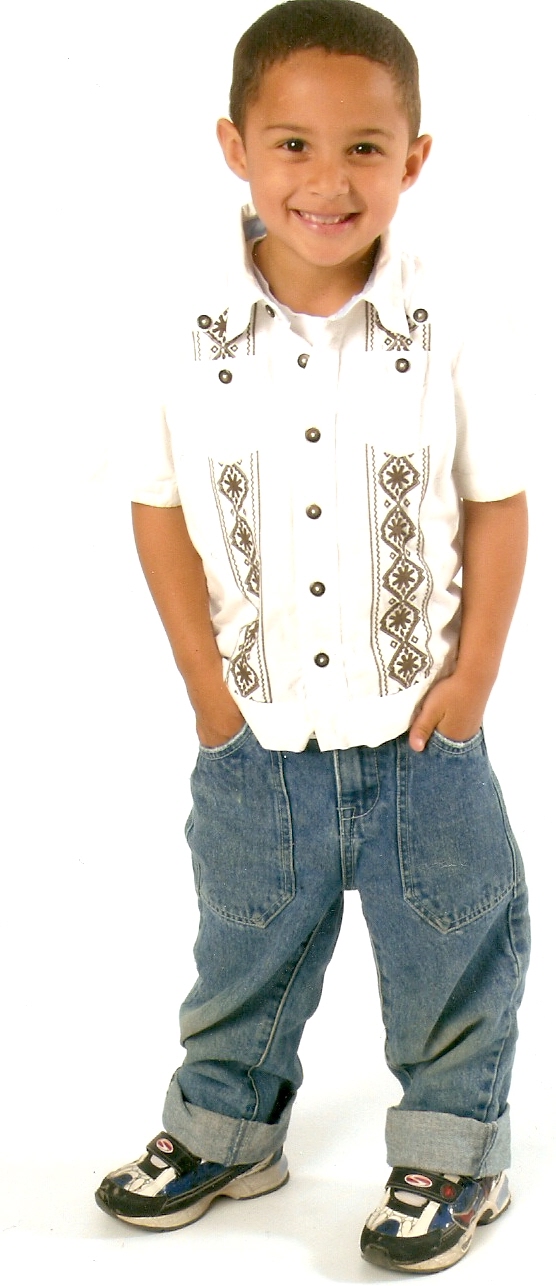
A very young Jackson Fuchs, looking like a Baby Gap ad

Dear Jackson:

Having spent the last fourteen years in the role of your father, I can honestly say there’s nothing in my life I’ve enjoyed doing more.  You have managed to illuminate my world with that “special light” your mother describes, since almost the beginning.  And for me that light shines in a full circle, because I can’t see it without thinking about my father, Hanno, the man from whom you got your middle name.  You somehow give off a very similar light, which is what makes you my son, and one of my favorite human beings on the planet, as well.

Yes, we have our differences on occasion.  There are times when we yell at each other — me the stern parent, you the obstinate teen.  But we always come back together, with a hug, or some other, less obvious expression of our undying love.

Some cultures believe the child chooses its parents.  I don’t know if that’s true, having seen so many BAD matches over the years.  But if it’s true in your case, Jackson, I have just one thing to say:  Thank you.  Thank you for choosing me as your father.  And thank you for shining your beautiful light on my world.

Happy birthday, son.  I love you,

Dad

Danny at Thirty

As I washed my hands in the staff restroom of the large, suburban high school where I work as one of six assistant principals, I fixed on my graying mustache, and a memory came to me in a flash.  I was probably about eleven or twelve, and my mother asked if she could draw me.  My mother was an artist, so the request was not an unusual one; she seemed always to be sketching one of us — my younger brother, our father, or myself.

She liked to do quick pencil sketches.  Her lines were rapid and many, which gave the pictures a kind of unique immediacy.  Of course, my language to describe her work back then was not quite so florid.  I probably thought her drawings were “cool” or “nice.”

One night, as we sat in the living room of our dark-blue shingled split level, my mother sipping, I imagine, her ubiquitous gin and tonic, she came up with a new, peculiar idea.

“I’m going to draw you as I would imagine you’ll look at age thirty,” she proclaimed.

“Thirty?”  It seemed so distant to me.  That would make the year 1993.  Images of flying cars and robot butlers filled my head.

She had me sit in my father’s big, mustard-colored easy chair, and she got to work.

“Get your giggles out,” she commented, as I customarily got attacks of nervous laughter, set off by the way her eyes darted from my face to the paper, where her fingers became shockingly nimble, revealing a part of her life that fascinated me:  her artist’s training.

I realize now that these modeling sessions were a primitive form of meditation for me, as it was necessary to level my breathing, and steady my gaze on a certain point.  Normally, I’d reach a kind of “no-mind” state, akin to being asleep with my eyes open.  On this occasion, however, I imagined what thirty would be like; would I be married?  To Debbie Francis, maybe?  She was my current fascination back then, with sandy blond hair and dimples that made me want to entertain her just to see them appear.  Did we have kids?  Were we rich?  Were we happy?

Ten minutes or so later, she stopped looking up from the paper, continuing to scribble.  “You can move,” she said, her eyes still down.

When I started to make my way over to her, she held the sketchbook against her chest, hiding the picture.

“Oh no.  You’ll need to wait till I’m done.  Go watch some T.V.”

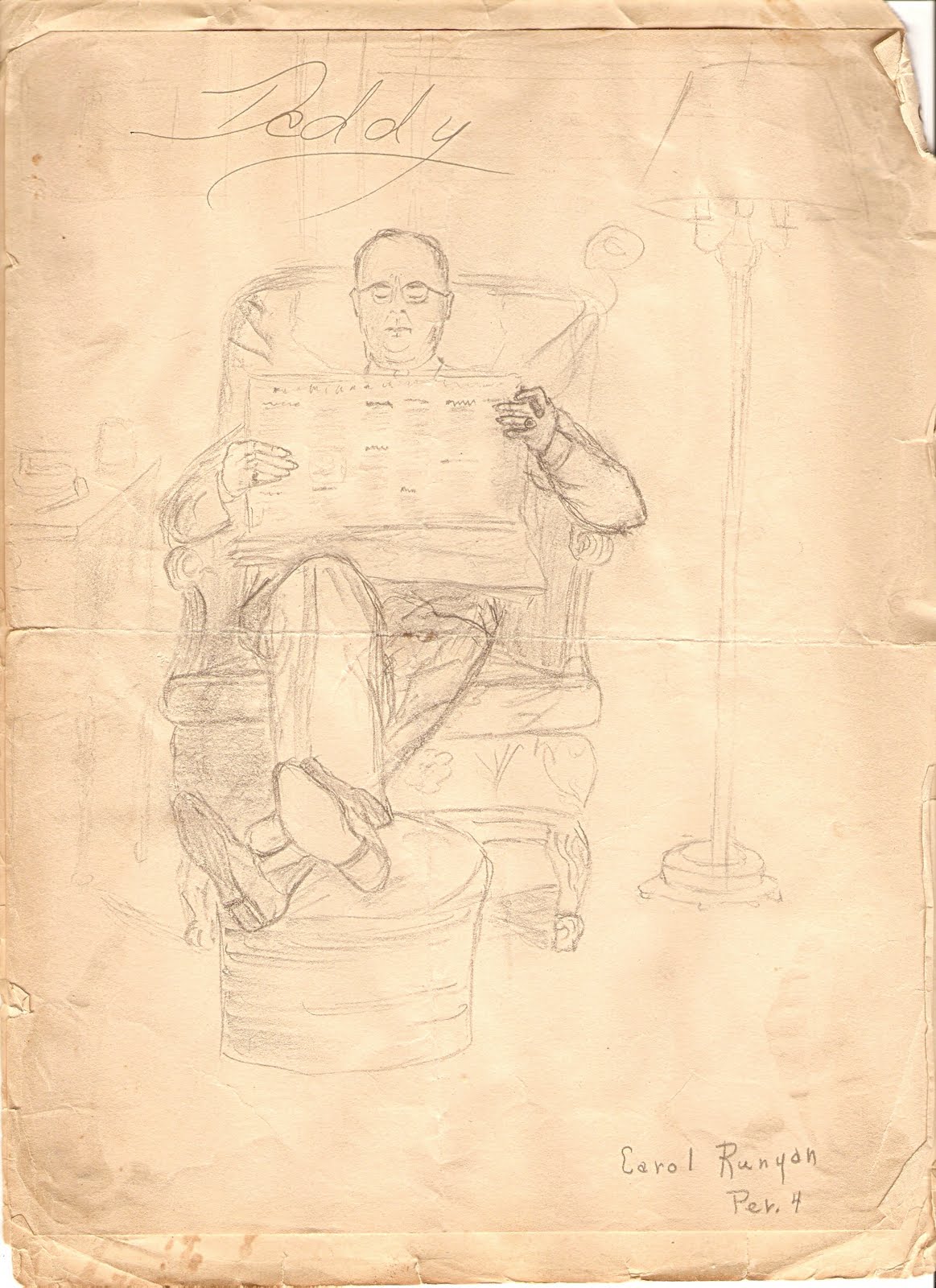
One of my mother’s earliest sketches, “Daddy”
from her high school art class

I bounded down the short flight of stairs to the playroom, where my brother was watching something sports-related.  I’ll place this memory on a Saturday afternoon, so let’s say “Bowling for Dollars,” or “ABC’s Wide World of Sports.”

“Okay,” she called a few minutes later.  “Come on up here.”

When I returned to her, she had on the self-critical scowl she always wore after completing a new piece of work.

“Well, here it is.”

I took the sketchpad from her.  She’d titled it “Danny at 30.”  It was my face, but she’d moved my hairline back a bit, given me some laugh lines at the temple-edges of my eyes, and a dark mustache.  I realized some years later that the picture looked a lot like a studio photo of my dad when he was around that age.

“Thirty,” I repeated.

“What do you think?” she asked.

I didn’t really know what to say, being as her reason for wanting to draw a picture of the Future Me was a mystery.

“It’s nice.”

She giggled at my response.

I wonder now, twenty-five years past the age she was trying to envision, and forty-five
years after the memory of her creation of “Danny at Thirty,” if her motive had anything to do with the fact that a fierce bout with pancreatic cancer would prevent her from ever seeing me at that age.  She died in 1988, a few weeks shy of my 25th birthday, long before I started growing the mustache I now wear as a matter of course.

I wonder, too, making my way down the school hallway back to my office, where that picture is today.

Pre-Election Contemplation: Ruminating Over the U.S. Presidency

My earliest recollections of the world of politics and government are of the Watergate hearings.  They seemed to go on forever, day after day, right into my summer vacation.  My mother sat there, transfixed, smoking, folding laundry, staring at the drama as it unfolded on our Magnavox color TV in the wood paneled playroom.  I was ten years old at the time, just a little younger than my son Jackson is now.  I understood little of what I watched, but I do recall Senator Daniel Inouye, mostly because he had the same name as me, seemed authoritarian and in charge, with his deep voice and gavel, and because he had one arm, which fascinated me.  I also remember seeing Mr. Nixon and thinking he looked like a mean man trying to make faces that would make me think he was nice.  It makes me wonder what Jackson thinks of the candidates he’s been seeing so much of during this crazed election summer.

I thought Jimmy Carter seemed like a nice, gentle man, and I could tell he made my parents happy; I knew they’d voted for him, and they were my parents so he must be good.

Ronald Reagan was president in what you could call my “formative years,” from age 17 to 25.  Thesee were my most political years, as well, when I was very involved in what I saw as righteous/populist causes, such as divesting funds from South Africa as a way to combat apartheid and supporting the Sandinista regime, who were the champions of the poor in Nicaragua in my mind.

So in Reagan’s face I saw the face of the enemy.  He was the actor brought in to play the role of the president by the corporate establishment.

I felt the same way about his Vice President and successor, who continued many of his policies and felt to me like a rich distant uncle who didn’t share his wealth with anyone outside his immediate — dare I say “nucular” — family.  I could barely watch him speak.

As the son of liberal Democrats, I was happy when Bill Clinton got into the White House, despite the itchy suspicion that he was not far from being the same as some of the folks “across the aisle.”

My visceral response to Bill back then in the 1990’s was, quite honestly, “Slick.”

Then came “W.” who I found comical at first, then alarming.  He came to power along with Facebook and You Tube, and all of a sudden anyone could post video compilations of his myriad gaffes and “misspeeches” for all the world to see.  The word:  “Child” or maybe “Puppet,” after I became aware of Dick Cheney and who was really running the country.

As I approached middle age in my late 30’s and early 40’s the world started changing rapidly.  9/11 happened and instilled terror like an injection into the American bloodstream where it flows to this day.  Then, at the end of the first decade of the new millennium, Obama happened.  Despite the world-weary cynicism that often grabs hold of people my age, I got caught up in what Obama claimed he was all about:  HOPE.  I recalled countless conversations with the young men and women of color I had the great honor to work with as a teacher throughout the 90’s that ended with their always steadfast declarations of “There will never be a black president.  Not in my lifetime.”

Their lack of hope broke my heart and the hope I felt, and still feel, by the way, is about the fact that young people of  color, my own children included, can look at Mr. Obama and see themselves as a great leader — maybe not of an entire nation — and, more importantly, as a kind, intelligent, funny, loving and consistent man of substance.  I’ll always be thankful to Barack Obama for the hope he’s given so many previously hopeless people.

And now we have Mr. Trump, whose presence on the political stage gives me a more complex response.  Like many, I started out laughing, but my reaction slowly began to change.  I kept expecting someone to jump out and tell me I’d been “Punk’d.”

That person has not yet materialized, and my reaction has moved ever closer toward dread.  On the other side of the fight for the presidency, we have Hillary Clinton.  I am now, in my 50’s and heading into the downward slope of my time here, and I will vote for Mrs. Clinton because she is a Democrat and because she is NOT Mr. Trump.

My visceral response to her:  Relieved when she’s quiet and contemplative, annoyed when she’s loud, and “tough.”  She is a politician.  Plain and simple.  For good or ill.

I wonder what my boys will remember about these people, and those yet to come, whose ascendance to power changes the world in which we all live.

Someday I’ll ask them.

Written, obviously, shortly before the unthinkable happened…

Portugal Against the World: My Father's Last Tournament by Hanno Fuchs

My father wrote this article in 1986 and submitted it to Tennis Magazine, where it appeared later that year.

Seven years ago, a few months before he died, my father was reminiscing about his nearly 70 years of playing tennis.

He was recalling his first tournament win, a junior mixed doubles title in Switzerland, in 1913.
“Didi Vlasto was my partner,” he said. “I was ten, she was nine. She became a great player later on — Lenglen’s favorite doubles partner. And even at nine years old, she already had that simple, sensible forehand. Six feet over the net every time.”
He held his palm in the air, vertically, and pantomimed a smooth firm-wristed stroke above the arm of his chair.
To my father, a consistent forehand return of serve, with just a touch of topspin, was one of the beautiful things in life. Tennis itself was a beautiful thing in life.
But it wasn’t the only thing.
He saw tennis as he saw the world, with calm, clear, judicious eyes. Tennis fascinated him, his whole life long, by its delicate balance between the ego-fulfillment of one’s own skill and performance, and the ego-subordination of giving one’s self to the rhythms and traditions of the sport itself: “how you play the game.” He saw it as a balance between body and mind, child and adult. Between a reasonable sense of one’s own limitations — and the undying dream of the possibility of that perfect day when those limits are transcended.
This memoir is written in honor and memory of that marvelously level-headed view of the world, that sense of realism and proportion that distinguishes the wisest among us. Not necessarily the most successful, or most powerful, or wealthiest, or most worthy of note; merely the wisest.
It was the summer of 1938 when Herr Doktor Bill Fuchs entered his last tournament. I’ve never known the name of the event, or been able to trace it; I only know it was a tournament in Zurich, in which he had played almost every year since the early 1920’s.
We lived in Portugal at the time, refugees from the Nazis. My father had had a respectable tennis career in Germany. I believe his top ranking had been No. 18, a few years before I was born.
He had started playing when he was around seven years old, very early for those days. His father had built one of the first private courts in the respectable bourgeois city of Karlsruhe, on the Rhine river in southwestern Germany; and had also been one of the founders of the Eislauf & Tennis Verein — skating and tennis club — that still exists there, at a streetcar turnaround on the western edge of town.
Little Bill — named Wilhelm, but nicknamed by a visiting American uncle — watched the players on the red clay courts for hours; then went home to his backboard and imitated the strokes he had seen. That’s about all there was to it — there was no army of eager young teaching pros in those days, much less the elaborate junior programs and academies of today.
But Bill Fuchs had good ball sense, fast hands, and indulgent parents. And several idols who were making headlines in German tennis: Otto Froitzheim, Kleinschroth, and the Australians, Windling and Brookes.
Bill became a good junior player, then a fine team player — matches between clubs, between cities, between states and regions were a large part of German tennis. Eventually he became the number one player at Heidelberg University.
That’s a long way from Stanford or UCLA, but it must have amounted to something, because suddenly he was much in demand for serious tournament events.
He faced Bunny Austin, a name still remembered in England, in a Mannheim v. Cambridge team competition. He didn’t win, he told me some time in the years that followed, but he lost “by a decent score.”
He also played against various of the famous “Musketeers” of France. “Someone had to lose to them in the early rounds,” he said with a rueful smile.
But I still have a photograph taken during a match against Henri Cochet at Strasbourg, where the score was 7-5, 6-3 — certainly a respectable result for the unknown young German, just out of Heidelberg.
Might Bill Fuchs have become a champion?
I doubt it. The judiciousness, the sense that tennis was not alone in his life, would probably have prevented him from reaching the required heights in any case. But what really did him in was — Czechoslovakia.
In a tennis frame of reference, that tiny country is a perfectly logical choice as the locale for some series of events — perhaps a crippling injury, a stunning loss, a draining five-setter on red clay — that could have marked a turning point in a tennis player’s career.
Actually, the impact of Czechoslovakia on my father had absolutely nothing to do with tennis. It had to do with a long winter in a logging camp, deep in the thickly-forested Czech mountains, near a town called Stubenbad. That was the German version of the place name; my father proudly remembered the Czech version as well: Vrutky-Rutka Stubnianske Teplicek. He insisted, against all incredulous protests, that this was the actual, precise name. The truth of that is as difficult to trace as the name of that Zurich tournament, but my father all his life claimed for himself the right of embellishment, when it came to making a story interesting.
He had graduated from Heidelberg that spring, in 1923, with a degree in economics and a Ph.D. dissertation of sorts, on the vicissitudes of the lumber industry.
Lumber was the family business. One’s career path was not so much a matter of individual choice in those days as it was a question of family strategy: Bill belonged in the business. And, the family elders announced, if he’s going into the business, he’s going to spend a winter learning it “in the field.” He’s going to Czechoslovakia, to the lumber suppliers, and put his nose to the grindstone in the woods.
Actually, as my father often recounted later, his nose was mostly in the dinner plate. The Czech foresters were not about to see their young German customer blister his hands or freeze his ears out on those bitter cold mountains.
They fed him endless bowls full of steaming Mittel-Europäisch casseroles, overflowing with great chunks of meat and doughy dumplings, accompanied by thick slabs of black pumpernickel bread with sweet fresh butter. They bade him wash it all down with robust Czech beer, or the fiery local Schnapps. They discovered he was an excellent chess player — so the friendly bottle of Schnapps found its way from the dinner table to the chess table, and the glasses were kept filled late into the winter nights.
Three months and thirty-five pounds later, my father emerged from Czechoslovakia as a certified expert in forestry, and forever on the edge of obesity. If the human appetite is indeed regulated by a mysterious inner clock, my father’s was re-set for life, at the logging camp in Vrutky-Rutka Stubnianske Teplicek.
In 1925, Bill’s marriage to the sparkling Marianne only slightly interrupted his gentlemanly shuttling between the solid, sensible environment of the family lumber business and the vaguely decadent meccas of the middle-European tennis scene of the 1920’s: Vienna, Berlin, Baden-Baden, and the like. In fact, when my dear father and mother honeymooned in the Frisian islands near Denmark, it happened by some strange coincidence to be at the place and time of an annual tournament in which Bill had been a semi-finalist the two previous years!
After the Frisian tournament (I don’t know if the new groom, sporting his new expanded waistline, survived the first round) came a more or less idyllic seven or eight years, if the dying years of Germany’s Weimar republic can be called idyllic. Herr Doktor enjoyed an amiable routine of family business and tournament tennis, only briefly, almost embarrassingly, interrupted by the births of his four children.
The tournament at Zurich was on the calendar every year. Doktor Fuchs was a fixture there — not a very shiny one, perhaps; I don’t know how far he ever came in that event. He and my mother long ago disposed of all the engraved bowls and salvers and ashtrays, but I don’t recall seeing anything as impressive as “champion of Switzerland” among them.
That’s not to say he did poorly in his tournament years. In mixed doubles, for one thing, he compiled quite a few impressive titles. Perhaps he had a flair for it; more likely, just an unusual degree of willingness to commit himself to that particular event, which demanded so much of that tolerance and even temperament that were his nature.
The “idyll” came to a crashing end with Adolf Hitler, in 1933.
No invitation to the Rot-Weiss Tennisverein in Berlin. No national championships. No state or regional team competitions.
While Jewish family councils everywhere shook their heads and mouthed the same foolish certainties —  “we’ll be at this sawmill long after those gangsters are thrown out of Berlin” — my family, like thousands of others, discovered the rude end of assimilation, the beginning of sudden and complete separateness.
Still, Herr Doktor played his tennis. Jewish clubs sprang up, and Jewish tournaments, and Jewish rankings. In 1934, Bill Fuchs was “Jüdischer Einzelmeister,” Jewish singles champion. You could look it up, as Casey Stengel used to say. Or, as my father used to say, “a heck of a way to move from #20 ranking to #1.”
Abroad, however, he was still welcomed at his old haunts. He played less often, but he still played at Strasbourg, Noordwijk,Lucerne. And Zurich, especially Zurich.
After all — just in case the gangsters in Berlin did outlast the lumber merchants in Karlsruhe — Zurich wasn’t a bad place to have a bank account. Or to put some gilt-edged bonds into a safe deposit box. There was still no one, not even my pessimistic uncle Jacob, with his dire visions of “pogrom” around every corner and behind every headline, who could conceive of what it would all lead to. Even the idea of another world war still seemed remote.
But if you’re European, you’re practical. You take some money to Switzerland.
And three years later, when we arrived in Lisbon, that money was all we had.
Bill Fuchs was 35 years old. He hadn’t shed an ounce of those Czech beer-and-dumpling pounds. But he could still play some elegant tennis! He made it to the nationals in Estoril in the spring of 1938 — in mixed doubles, of course. I still have the press photo from the day of the finals: smiling Bill, his chunky, no-nonsense partner, and the beautiful blonde safari hunter from Angola, with her partner. Much younger than Bill, of course — they all were by now. But he still had his chessplayer’s angles on the court, and he had found himself another partner with “a sensible forehand.” In mixed doubles, in Portugal, those two things could take you a long way.
But as for singles… well, finally, we come to the title of our tale: my father’s last tournament. As far as we children were concerned, it was another business trip. Dad had to go to Switzerland, he’d write every day. And he did: I remember the post cards with the coats-of-arms of the Swiss cantons — the bull of Uri, the bear of Berne — in almost every mail delivery.
Years later, I found out the obvious: he went to get the money, of course! What did I think we lived on, those first few years, until he built himself a new career and a new business?
This time, unlike the Frisian honeymoon, I think it really was coincidental that the trip was scheduled the same week as Bill’s favorite Swiss tournament; at least, he claimed it was.  But still — seeing it was the same week, and he did happen to be there — why not give it a shot?
Tournaments were a more casual affair in that genteel amateur era. Sometimes there was a Tilden or Johnston or Fred Perry, or one of the four Frenchmen, or Baron von Cramm. But mostly there were the part-time players, the Count Salms of Vienna, the Rudy Ellinsens of Budapest, or Bill Fuchs.
“Of where?” the Zurich tournament folks asked pleasantly, “still Germany?”
“Absolutely not,” my father said quickly. “I reside in Lisbon, Portugal, and now represent that country.”
“Natürlich, Herr Doktor,” his Swiss friends responded, with genuine sympathy, as they accepted his entry fee.
The morning of the first round, my father left his room at the Schweizerhof in good spirits, cheered by the successful completion of his financial errands, by an ample Swiss breakfast, and by a bright blue autumn sky.
He took a taxi to that forever nameless Zurich tennis club, and climbed out at the main entrance, with his trusty five-racket tennis press under his arm. He looked up into the sparkling sunshine.
And started to laugh.
He laughed loudly, helplessly, then doubled over and gasping for breath. The taxi driver must have thought he was seeing a man lose his mind, in broad daylight, on a cobblestoned street in Zurich.
It was the flags, you see. The neat, colorful, gently flapping flags around the perimeter of the compact little stadium.
“We did our best, Herr Doktor,” one of the tournament officials explained, “but we couldn’t find a Portuguese flag in all of Switzerland. Only at the Portuguese embassy, the only place. This is the embassy’s own flag.”
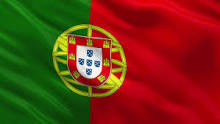
The Portuguese flag consists of two vertical panels, red and green, with a small gold and white shield at the center.
And this Portuguese flag, the embassy’s pride, was so big — so hugely, shamelessly big — one of the flags flying beside it would not have covered that little center shield, the old royal Portuguese coat of arms. It would have taken a dozen of the other flags to match the sheet square footage of that proud Portuguese banner.
It was big. Gigantic.Humungous.
“And so, Herr Doktor, we had to put it in the center, don’t you see? It was the only way it would look — how should I say — in Ordnung… symmetrical.”
One huge Portuguese flag, surrounded modestly by its lesser attendants, like the Stars and Stripes, the Union Jack, the French tricolor. Portugal against the world, for the first and last time in tennis history. Zurich, 1938.
Representing Portugal: the pleasantly portly and delightful Dr. Bill Fuchs.
Representing the world: some skinny 20-year-old American kid named Don McNeill. A year later, U.S. indoor champion; two years later, ranked number one in America. But for now, just a pawn in that unintentional, never-to-happen-again moment in tennis history: Portugal against the world.
The match lasted 30 minutes. The world defeated Portugal, 6-0, 6-1. At age 35, my father finally admitted that his tournament days were over.
But there’s one question I never asked him. One sneaking little suspicion I’ve harbored all these years.
Was it love-and-one… or love-and-love?
Don McNeill isn’t around to ask any more. And Bill Fuchs — well, he would have insisted on his “right of embellishment” to his dying day.
Self-Evident Truths

I am an introspective person, as the title of this blog suggests, but there are times when my “historical context” blares so loudly I have no choice but to bring it to the forefront and do my best to discuss it, to “add my voice,” as it were.  Sitting in silence doesn’t cut it at times like these.

I’ve been preoccupied by all of the high-profile violence occurring in our country… I was about to add  the words “as of late,” but this is a country — like many others — built on violence, forged by inequality, and although we have some lovely language in our foundational scripts and scrolls about self-evident truths, and everyone being equal, someone has always had to be less free in order for the white male power base of the U.S.A. to exist, the way it was designed to exist.

Recently, a couple of changes have occurred in our long-standing modus operandi that have shaken things up and made other truths self-evident — the ones that had remained mostly hidden up till now.  One is that the electorate in this country selected a black president.  Whatever the motives for voting for Barack Obama (the simple fact that he was different, “CHANGE” being the operative word in his 2008 run, or that he represented a thinking, thoughtful America, or that he was “liberal,” or even more to the point, just because he was black), his election terrified a lot of people.  It didn’t matter to them how liberal he really was, and in fact he turned out to be a lot more conservative than some of us had hoped.  The election of our first black present, a momentous occasion to be sure, also mobilized a quiet minority of scared racists who are fueled by the rhetoric of reactionaries like Donald Trump and the so-called “birthers.”

The other major change is in our personal technology.  Thanks to the advent of smart phones and nearly universal access to the Internet, horrifying incidents of police brutality that we’d never have known about now appear on YouTube and our Facebook feeds daily.  And the overwhelming majority of these incidents involve black men.  True, there have been others who have been victims of police brutality, but most appear to be black males.  There are those who may one day read this and take issue with the two words emphasized in the previous sentence.  Because, as others have already stated, they cannot hold BOTH truths at once, but feel a need to take one side or the other.  Those who side “with the police” will begin almost immediately to question the now dead man:  What was he doing? Where was he going? What was he wearing? What kind of person was he?

This is where the inequality — the blatant Lack of Rights — becomes most self-evident:  If you are a black man interacting with the police force, you don’t have any rights.  You don’t have a right to free speech, or to walk in a “nice” neighborhood at night, and you don’t have a right to wear a hoody, or any other clothing you decide to wear.  You are not presumed innocent as a black man.  You are presumed a threat.  This is how it has always been, since the earliest days of our country, when white hegemony kept black people as property to be bought and sold.

None of this is meant to excuse the horrific shooting that happened in Dallas last week.  The answer to police brutality is NOT to brutalize our police.  Instead, we all need to look at these truths as self-evident and to ask ourselves what we’re willing to do as a people in the face of them.  If we don’t, our biggest danger may not be foreign terrorists but ourselves.  If we don’t confront these realities, these truths soon, the FBI will be spending a lot of time with its head on a swivel, responding to the sounds of our well-armed citizenry “locking and loading” in fear-inspired militias all over this country.  Then the only thing ISIS will need to do is sit back and watch us implode on CNN and Al Jazeera.

Diego and His Dogs

A boy, his technology and his dogs
The older of our two boys has an interesting and strong connection with our dogs.  There’s a photo I took of Diego recently in which he’s seated on the floor in our living room, (or “sala,” as we call it here in Casa Reyes-Fuchs) his headphones on, facing the two dogs who are drowsing in the two chairs before him.  Diego is paying attention to them, but not.  He is both attentive and dismissive all at once, and that seems to be just fine as far as Ginger and Ally are concerned.
Of course, the two dogs worship and fawn over me, as they’ve imprinted on me the role of B.A.D. (Big Alpha Dog), but their love of Diego is far more genuine.  Yes, they love Jackson and Jeanette too, but Jackson’s is a “fly-by” kind of love, as he is in a near constant state of motion, so that the dogs wag their tails when he comes by, as if to say, “Okay, we’re not going to get too used to this.”  With Mom, it’s a treat they adore, similar to Diego, but less like a sibling.  They seem to know she’s of the B.A.D. class, as well.  
It’s with Diego, the teenager, the one who I see breaking out of his shell in how he tries to interact more confidently with adults, like the waitress at our local Mexican restaurant who greets him by his name, that our dogs have the true connection.  Maybe he’s a Cesar Millan-style dog whisperer in the making, I don’t know.  Or maybe he’s just found someone who will love him in the unconditional, non-judgmental way in which he needs to be loved.  
And maybe the dogs have found the same thing.

Nighthawks: Sure It's Crap, but it's MY Crap

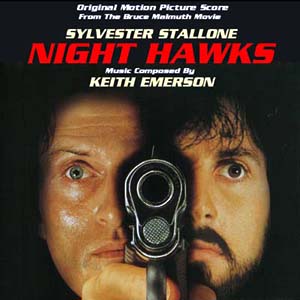
A young (uncredited) Rutger Hauer and a bearded Sly on the soundtrack album cover.  What more could you want?

When I was 17 years old, my girlfriend and I went to the movies and saw an unheralded cop drama called “Nighthawks.”  Like all boys of my generation, Sly Stallone, as much as I would goof on him, was an undeniable hero, due to the enormous impact of “Rocky” in 1976 and “Rocky II” a couple of years later.  We allowed Sly his flops (“F.I.S.T.” and “Paradise Alley”) after the first Rocky, and this was bound to be his post “Rocky II” schlock.  
But I’ll be damned if Maria and I didn’t absolutely love this movie.  What wasn’t to love, after all?  You had young, sexy Rutger Hauer playing international terrorist and man-about-town Heymar “Wulfgar” Reinhardt, and young, sexy Persis Khambatta as his evil minion, Shaka Holland.  You had a bearded Stallone as misunderstood Vietnam vet with “57 registered kills”-turned-misunderstood New York undercover cop specializing in “decoy” detail, Deke DaSilva.  You had the Bionic Fucking Woman, Lindsay Wagner, for God’s sake!  And, oh yeah, Billy.  Dee.  Williams.
We ate it up.  We wrote each other love notes in high school and signed them “Love, Wulfgar,” and “Love, Shaka.”  This was our flick.
Normally, my 5 a.m. routine is to wake up, let the dogs out, put some coffee on the stove and turn on the local news, toggling back and forth to Sportscenter.  As it would happen, I woke up this morning and turned on the set, and there, of all things, was “Nighthawks.” The wife and kids were sleeping in late, and getting them up wasn’t a priority.  So, I watched.  
Rutger Hauer is still riveting.  I realize, now, that he is really what gives “Nighthawks” the energy it has.  The scenes without Hauer feel like an airless room.  The script is “flawed,” to put it kindly.  The great international terrorist makes mistake after mistake, and is far too easily located by Deke.  And the image of Stallone taking off the Lindsay Wagner wig at the end, is just too fucking funny.  
Now.  
Back then it was nothing short of awe-inspiring.  
I’m not calling for a sequel, or wanting to start a fan club.  The world has changed since 1981.  Terrorism is not something to be romanticized as it sort of was back then.  Images of buildings exploding on Wall Street and Picadilly bring very real reminders of loss and pain.  At the end of the day, as they say, “Nighthawks” is, quite simply, a good old-fashioned “B Movie.”  But it was a lot of fun watching it this morning, thinking back on a youth that was better than I deserved, and giggling ever so slightly at the guilty pleasure of a crappy movie I once loved.  

Evocations of Summer

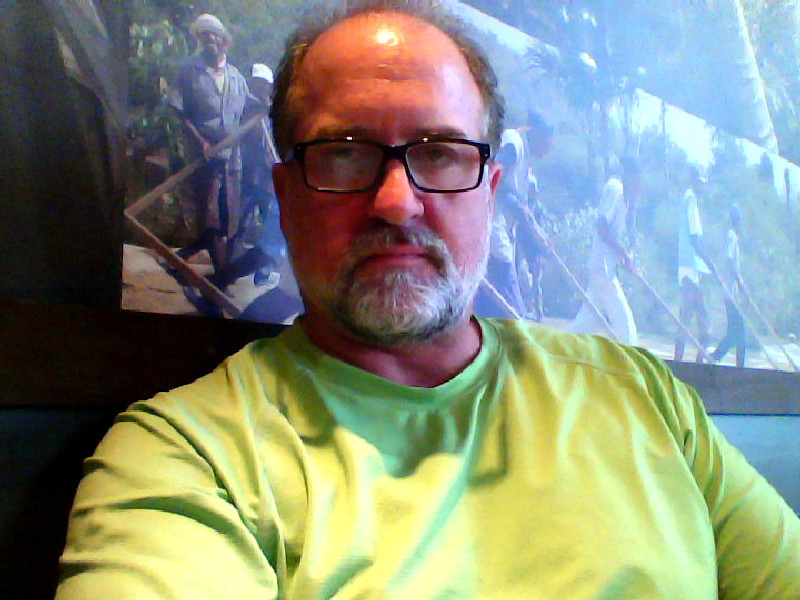
This is who I am now, today, in Central Texas, USA — a middle-aged school administrator on his summer break, sitting  in a local Starbucks, trying to write, and thinking about all the things that summer evokes.  I’ve had the good fortune of a multitude of summers — over fifty of them now — a good forty-five of which contain moments that shine brilliantly in my memory.  Like fish scales or a sunlit lake, they occasionally sparkle.    Breezes bring me back to former summers, as do cloud formations, a young woman’s laughter, or the distant call of a passing freight train.

Words to Live, and Write, By…..

Carver
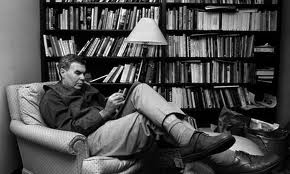
Raymond Carver in his study in Syracuse, New York, Photograph: Bob Adelman/ Corbis Bob Adelman/Bob Adelman/Corbis
“…Reading Ray’s work gave me a sense of confirmation about what I was doing. I felt an immediate affinity for his standards of honesty and exactness, his refusal to do anything cheap in a story, to destroy his characters with irony that proved his own virtue.” — Tobias Wolff, on reading Raymond Carver