"Wow, Texas!"

I get this a lot. From both sides. My friends in the Northeast, some of whom I haven’t “seen” in years (excluding the photos they choose to share with their Facebook world) write it in their e-mails and photo comments. “What’s that like?” Images of John Wayne, oil wells and cattle probably fill their heads. I wonder if they picture me strolling in blue jeans and pointy-toed boots underneath big skies. The other “side” I referred to is made up of the people I meet here who, when they hear I moved my little family all the way from New York say things like, “You don’t have an accent.” “I will if you get me mad enough,” has become my stock answer. With a smile, of course.

We’ve been here for about two and a half years now, and the most common question both Jeanette and I get is “How do you like it in Texas?” Often there’s an inflection or a squint of the eye that suggests we wouldn’t, being New Yorkers. I think this is because of all the preconceived notions both places have bundled up with them. After all, if you think about Hollywood, this country’s leading producer of preconceptions, I’ll bet there are more films set in Texas and New York City than anywhere else, with the possible exception of California.

Rather than unravel all of THAT, the short answer I tend to give is something like, “Great. We love it here.” And we do. But just let me clarify something: Austin is a little different than the Texas you see in the movies. There is no desert here, and the only tumbleweeds I see are the ones in Lubbock, where the rental car people warn you about them because they can leave your car worse off than them if you hit them at speeds.

Austin is an erudite, cosmopolitan, laid-back and beautiful city of about 800,000 inhabitants. That “metropolitan area” population bloats to almost 2 million once you include the neighboring suburbs. It’s a university town, so you’re just as likely to meet people from somewhere else as you are to meet a “native” Texan. The cliche is that UT students love Austin so much that they never leave, so that there’s a glut of waiters and bartenders with advanced degrees from the University of Texas.

We live in Manor, (pronounced “Mainer”) a town just east of the city. (Don’t ask me why it’s pronounced that way. Why do New Yorkers pronounce Houston Street “HOW-stin”?) It’s small, and you do sometimes see fellers with cowboy hats and big belt buckles lazing around in front of the Manor Hotel on the four-storefront strip that makes up “downtown” Manor. They wave to you as you pass. There’s a lot of waving. Which I like.

I won’t speak for Jeanette, but I do remember her coming home from work one day early on in our time here, throwing down her car keys and saying, “Why can’t I just go into a store, get what I need, and get the hell out, without having to hear someone’s life story.” I know, it sounds like a typical New-Yorker response, and it is. But to be fair, these days I have to hurry Jeanette along, because she gets into long, meandering small-talk with people everywhere we go now. She’s given in. That one wasn’t so new to me, because the maternal side of my tree is pure South. My mom graduated from Texas Women’s University in Denton.

The other things that get under her skin are “y’all” and football. She has given up trying to correct our boys on the former; Jackson spent most of the winter break asking, “Are y’all getting me a dog for Christmas.” (We didn’t give in, by the way, cute though he is.) Like my mother before her, Jeanette is prohiting football, which I agree with. I’m doing my best to steer them toward the sports that conflict with the football season and don’t generally leave you with head and knee injuries — golf, tennis, soccer.

But I’ll tell you, it’s a lot easier to hide football from boys in New York than it is in Texas. As someone corrected me recently, “No, it’s not a religion. It’s more than a religion.”

What I do miss are the people I love who we left behind in New York. There are a lot of them. Family and friends. When you’re a couple with two young kids, making new friends takes time, so we still feel isolated and lonely at times. The kids are making their friends, and thriving. Austin is a great town for kids: Massive parks, lots of playgrounds, and “Kids-Eat-Free” deals on every day of the week.

Professionally, we’re both doing well. Diego and Jackson like their school. We are, in a word, happy.

One thing they say about Texas is true: It is BIG. And I could say a lot more about it, and probably will. Some other time.

So, for those of you who have taken the time to mosey on down to the Old-School and check out my blog, I won’t say thank you.

I’ll say, “Y’all come back and see me, y’hear?”
Ghost in a Landscape

In 1996, my colleague and friend Susan Dreyer Leon and I drove up to Syracuse University in order to visit our former student, Melissa Sanez before the start of her first semester there. The trip was exciting for me on numerous levels — I hadn’t been back since graduating ten years before, so just being in the presence of so many triggers of so many memories was a blast by itself. Then there was the fun of showing a good friend around the campus and environs, and sharing with her the many fond memories and stories it brought to mind.

The real rush of being back up there, though, was that it represented a major victory for Melissa. To appreciate the weight of her accomplishment, you have to differentiate her acceptance into S.U. from the experience of most of the other young people around her there. Like me, most werre white and came from a background of privilege. Melissa, on the other hand, is, as she puts it, “Fili-rican” — half Filipina and half Puerto Rican. She grew up in Bedford Stuyvesant, Brooklyn, one of poorest and most dangerous of New York’s neighborhoods at that time.

Melissa came to the school where Susan and I taught, Satellite Academy High School in Manhattan, after having tried Murry Bergtraum, a business-themed magnet. She didn’t leave because she was a failure; instead, she needed a small school, where people could help her work through the myriad “issues” that faced her as a girl.

Without betraying confidentiality, suffice it to say, the circumstances of her home life made her acceptance to my alma mater a huge accomplishment. I’d written her a good recommendation letter, outlining the resilience and perseverance she embodies, along with her academic strengths, which were considerable. I can say, with good certainty, that if I had been confronted with half of the obstacles Melissa was forced to face as a child, I never would have made it into Syracuse.

We treated Melissa like we were her parents, taking her out for dinner, not allowing her to pay for anything, and having her tell us all about all of her summer classes, her friends and professors. Boys. It was a great time.

The one eerie moment came for me when I decided to go off on my own one afternoon to walk across the quadrangle that makes up the center of the campus. The last time I’d made this walk I was what’s euphemistically known as a “fifth-year” senior, a Big Man on Campus who couldn’t walk this walk without multiple students (and other various and sundry hangers-on) calling his name, tossing him a frisbee or inviting him to join them in some really fun, quasi-legal activity.

This time, though, I cross the quad, noting a few new buildings that weren’t there ten years ago, and not one person waved or called my name. For a moment, I felt invisible, like a ghost in a landscape. Instead of allowing the self-pity to creep in, I smiled and kept going.

I think I smiled because the fact about colleges and universities is that they only really belong to you for that brief period during which they’re the center of your life. It was time to pass that along to Melissa, and I was happy to do it.

Melissa graduated in 2000, ten years ago. I went back to watch her receive her degree, but didn’t cross the quad this time.
And I haven’t been back since.

Will You Still Need Me, Will You Still Feed Me…

My father used to say that he knew he was getting older when he realized all of the Playboy playmates and police officers were younger than him. My brother says he first noticed he was aging when he caught himself making “harumphing” noises when he sat down. (“Getting up is one thing, but come on,” as he puts it.)

There are other telltale signs I’ve identified (God, it’s so tempting to create a Lettermanesque list, but I will resist the urge), like when it occurs to you that the Leader of the Free World was a senior in high school when you were a sophomore. That is, as they say, some shit.

And then there’s the general kvetching you try to avoid doing but just can’t. My brother and I used to comisserate on the way that our father and his brother, Geoffrey, would spend all of their time comparing what was going wrong with their bodies. “Dueling Maladies,” I called it.
Sure enough, nowadays (saying “nowadays” is another sign, by the way), on the too-rare occasion that Mike and I get to talk on the phone, what do you suppose the prevailing topic of conversation is? Yep. Dueling Maladies. Version 2.0, baby!

As painful as it was at the time, the gastrointestinal issues that besieged me in the early 2000’s provided for some of the most animated, energetic and energizing kvetch sessions I’ve ever known, before or since.
“You think that’s painful? Try colitis! Now THAT is pain, my friend!”

Then of course there’s music. As a kid I found it ridiculous when the parents of a friend of mine would put on their Elvis or Richie Valens or Big Bopper or whoever, instead of listening to Elton, Bowie, Queen, McCartney, and the Jacksons or the other artists I was starting to buy with my paper route money on 45’s. Even my father was kind of cool, listening to his Simon & Garfunkle on the 8-track.

Okay, by the way, a number of age-indicators just flagged up in that last paragraph. I’ll let you go back and find them as a kind of fun exercise….
Now, of course, with the current technology afforded me in terms of music — MP3, Pandora and the like — I have entered the 21st Century. Is this a sign that I am immune to the aging process? It might be, if I weren’t STILL listening to the same people I was listening to on vinyl and AM radio all those years ago. Yes, I have become those parents of my friend. Listening to music of 25-plus years ago, with a nostalgic glint in my eye and a beer in my hand. The ridicule I will incur at the hands of my children will come swiftly and soon.

The cliche is that it beats the alternative, which is undeniable. I’d rather be aging than dead. My time on the planet is not nearly over, as I’ve planned it out in my cosmic datebook. The thing I need to remember, though, is that in the eyes of the Almighty, my cosmic datebook don’t mean squat. And He’s not about to tell me the real plan. So it’s up to me to live my life, live each moment, even if while doing so my limbs sound like a bowl of Rice Crispies, just after you’ve poured the milk……

Hat

Apparently, my first word was “hat.” Not “mama” or “dada” or “caca” but “hat.” Sounds kind of dull, I know, but I like it because it’s unique, as first words go. I haven’t met anyone else with that one.

I mention it because lately I’ve been thinking about wearing more hats. Not in the figurative sense of like, “Oh, man, that Dan he sure is busy. And as a Specialist at Region 13, he has to wear a lot of hats.” I’m talking about wearing actual hats. It’s kind of a silly thing to be concerned about, I admit to that. Sort of feels like when I decided to smoke cigars at age 35. (That only lasted a couple of weeks. I was too conscious of how disgusting other people found the habit, so I stopped.)

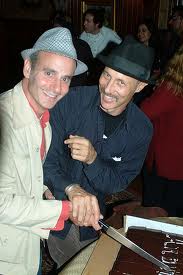
I’m also not referring to the baseball caps that so many men in this country (and abroad now, I guess) are sporting. Not the hip-hop inspired oversized fitted caps, not the tight, worn-out frat boy cap, with the brim bent in the middle. No, I’m talking about the classic hats, like the kinds worn by the actor Jon Gries and filmmaker James Savoca. (see photo, above) Fedoras and the like.

I know what you’re thinking: It’s because he’s going bald. Well, although that may indeed be the case, I’m actually not doing for that reason. (Okay, maybe partly.) I just like the way it looks. It looks cool. Classic.

And it was my first word after all. That’s got to count for something, right?

Right?

Collaboration Is NOT Just a "21st-Century" Skill

The elementary school “Cafetorium” is about half full, as we have come together on a hot summer day for a “visioning meeting” on what we want from the next principal of the school. The Assistant Superintendant running the meeting stands earnestly at the front of the room, in front of the chart-paper easel (a prop with which I am all too familiar), markers in hand, ready to collect our ideas. She has blond hair and looks tired, and for some reason I think about the fact that she is younger than I am.

The group is comprised mostly of parents like me, along with a clot of about eight extremely vocal teachers. The Assistant Supe encourages us to blurt out our thoughts, as she lists them. Parents tend to say words like “caring” and “supportive.” Teachers use similar words, hoping for “positivity” and “honoring what has worked so far.”

Then I raise my hand and drop the bomb: “I’d like the new principal to be able to discuss — at least to some degree — the 21st Century skills discussed in Tony Wagner’s book The Global Achievement Gap.” (I feel the teachers turning in their chairs all at once, eyebrows up, as if to say, Oh boy, this one’s fluent in Edu-Speak.) “I want to know that the faculty are thinking not only about getting my kids to be good test-takers, but also helping them to be good team members, to listen and ask questions and to be problem-solvers.”

The other heads in the parent section begin nodding like bobble head dolls in the back of a pickup truck. A woman loudly backs me up in a way that makes me feel like I’m in a Baptist Revivalist church. Defensively, an older male teacher says, “These tests are not going to go away.” And the usual argument ensues: It’s in the students’ best interest to pass, there are some good things on the test, etc., etc. I just needed to go on record about what ELSE I want my kids to learn. And judging from the bobble heads and “amens,” I’d say I wasn’t alone.

So why does this “debate” still go on? Maybe it’s a fear of being stretched too thin. Maybe teachers are so pushed to their limits trying to get kids to pass exams that there’s nothing left for the “rest” of the child? When I think about collaboration, though, I am hard pressed to think of a time in my professional life when I wasn’t asked to do it — at meetings, in committees and subcommittees and in all sorts of “teams.” And, of course, with my students, in the classroom, as well as in the hallways of the schools where I’ve worked. Maybe there was a time, back at the birth of public education in this country, when we could train young people without this skill, although I doubt it.

I don’t mean to minimize how difficult a job teachers have. Believe me, I know. And I’m pleased to report that the principal they ended up hiring has spoken out publicly in favor of the 21st Century skills. Now it’s a matter of seeing how she makes sure her teaching staff have everything they need to bring this vital information to their students. Meanwhile, I’ll do everything I can to nurture these skills at home — something every parent must do, as well.

Boy Fight, Redux

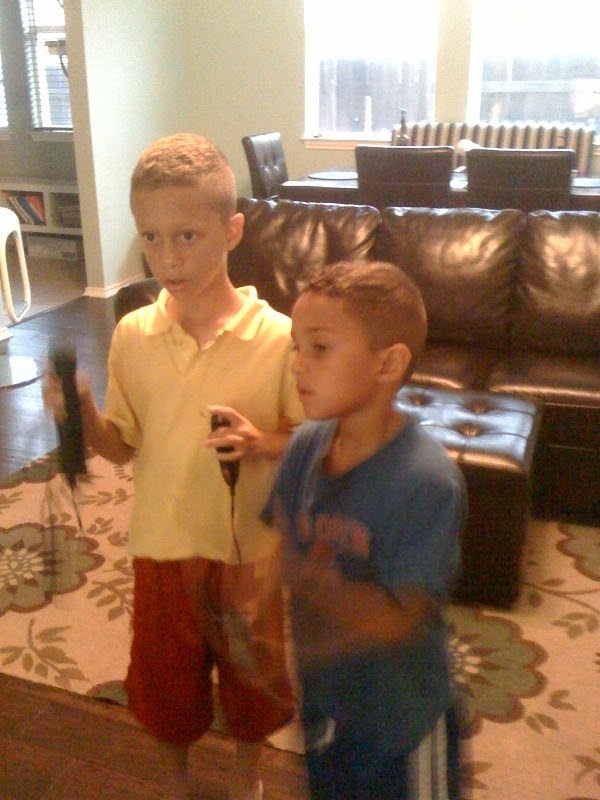
“YOU stop!”

“No YOU stop!”

The argument gets too loud to ignore, and by the time I reach their room, both of my sons are crying and red-faced. They immediately begin pleading their respective cases, in unison.

“He was punching my neck!”

“He’s going to break my bones!”

Even though I have over twenty years of experience in conflict resolution and mediation, I have no idea how to approach this moment. I physically place myself in between the combatants and command them to keep their hands to themselves. A la Bill Cosby, I make some demand that is so utterly unenforceable that I almost have to laugh. (“No one here is ever going to touch anyone else in here EVER AGAIN!”) My voice has raised once more, despite my continuing resolve not to yell. I try the Love and Logic approach: “You’re draining my energy. It’s going to be sad when you ask me for something later and I have no energy to give it to you. It’s going to be very sad.”

They seem to buy this and, despite murmuring insults under their breath, the melee has subsided for the moment. And in the brief ceasefire, I suddenly remember my father, the way he would flail and pull at our limbs to pry my brother and me off of each other. Sometimes we had a handful of each other’s hair and wouldn’t let go; this was not uncommon, and I still recall the throbbing pain and actual bump that would rise from my scalp, after my brother had finally let go.

My father, near to tears often called out to my mother for help. This was usually when my brother and I would look at each other and decide, wordlessly, to let go. We knew that once our mother arrived, the situation would be at a new level. We knew we couldn’t manage her the way we could our dad. Her way of separating us was swift and painful — two quick “baps” with the base of her ring finger, so that the hard metal of her wedding ring sent a nerve-shaking pain that shot down to my feet and back up to my skull.

As my brother and I tell it, the final solution to the Boy Fight problem came when my father bought us boxing gloves. In my memory, my victory was swift — a quick jab to his jaw, and down Mike went, never to challenge me again. Of course, I’m sure it wasn’t such a simple fix, (in fact, when you look at the photograph above, my brother appears to be giving at least as good as he’s getting) and I doubt the same would work for me and my kids today. Jeanette and I will stick with the Love and Logic, and I’ll do my best not to let them “manage” me in the same way Mike and I managed our father. As I grew up, I picked up on a resentment my mother had for my father; it must not have been easy for her, always being the “bad cop.” I am determined not to let this same dynamic play out in my present-day family, because I see the kind of strain it can potentially put on a marriage. But I’ll be damned if isn’t playing out anyway, despite all my efforts.

Genetics are a serious bitch.

Black-eyed Peas

“Just a spoonful,” I remember my mother saying, “and you’ll have good luck this year.” It was a struggle for me as I watched the fleshy, pinkish beans look back up at me from the spoon. I found their flavor dull and pasty. I dreaded the cloying aftertaste of bacon fat.

But because my mother insisted on it so sincerely, in a way that suggested there really was no choice, I did it. One year I asked my father why it was so important to eat the things each January 1st. “Southern tradition,” he shrugged. I didn’t get it. His answer did nothing to help me understand the strange ritual.

It did, however, give me a stock answer of my own, on the rare occasion that a friend or a northeast relative would stop by our suburban New York home on New Year’s Day. “Southern Tradition,” I’d say, approximating my shrug to the one my father had given me. And our guest would of course have to take a spoonful of black-eyed peas of their own.

Now, years later, I find myself living in the South, one state to the west of where my mother was born and raised. I’ve yet to make my pilgrimmage to Little Rock, Arkansas; it has been many years since I was there last — I’d guess it was probably in the early 1970’s. My mother was an only child, and if there’s anyone with a direct line to her branch of the Runyan family tree, I haven’t been able to find them. Still, though, I’m determined to make that trip one of these days.

Here in Texas, the black-eyed pea tradition is very much alive, and I do my best each year to make sure my family members get at least a bite of them. My kids look at me with the same perplexed expression as I’m sure I gave my mother. My wife, born and bred in the Bronx, has embraced the custom, because she knows that it is a way for me to embrace a disappearing piece of my heritage and the heritage of our children. I go to my local greasy spoon, Cafe 290, and order a side of black-eyed peas, “if you’ve got any,” I smile. The friendly waitress smiles back and says “on New Year’s Eve, you better believe we do.” She then turns to the ordering window and calls for “Texas Caviar,” before pouring me a cup of coffee and challenging me with a brain teaser.

I’m happy to be living in a place where friendly waitresses challenge you with brain teasers while you wait for your black-eyed peas. I’m even happier to be living so close to where my mother was born and grew up. It makes her more present for me at times, which is a comfort.

And by the way, I don’t just take a spoonful anymore. Now I eat every last bean in the bowl, and the flavor, though probably not much different than it was on all those January Firsts of my childhood, is a kind of delicious I can’t even begin to describe.

On Kindness and Strength

“I expect to pass through this world but once; any good thing therefore that I can do, or any kindness that I can show to any fellow creature, let me do it now; let me not defer or neglect it, for I shall not pass this way again.” – Etienne (Stephen) De Grellet

I’m not quite sure why certain status updates stop and command my attention to the point of posting a response; there are likely a number of reasons. I’d imagine it depends on my state of mind, if there’s an individual I’ve been thinking about of late, or if something someone writes strikes me as particularly funny, touching or thought-provoking.
As I recently did my usual obsessive check of the Facebook News Feed, I read the following post: “Why do people mistake kindness for weakness.” The person who posted it is someone who I knew on a professional level, for a relatively brief period of time a few years back. She was one of those people, however, with whom I “clicked,” to borrow a cliche. From time to time I’ve met those who, despite how long or how deeply I know them, just feel like they’re cut from the same cloth as I am, in terms of how they look at the world around them.
In other words, I sort of see myself in this person.
Her post made me think not only about the way I see the world, but about the way I choose to live my day to day life. In the profession I’ve chosen — or the calling that’s chosen me, maybe — kindness is a necessary tool. And, interestingly, so is strength. I’m not talking about “power,” or “authority,” although they do certainly enter into the equation of what it means to be a good teacher. (Mostly in the teacher’s ability to share them, I think.)
My students looked to me for a number of things: knowledge, guidance, humor, and, yes, kindness and strength. It became clear to me as I grew into and accepted my role as a teacher that young people in the classroom need more than just whatever content they happen to be presented with.
Students need an adult’s take on how to use the limited time we have on this planet. My students were receiving multiple messages from multiple sources on what it means to be a human being breathing in and out in this world. Like most teens (myself included, way back when), they got a healthy dose of “live-fast-die-young” stuff, because that message has, and continues, to sell to that market.
I chose to model kindness for my students, in the hopes it might give them a piece of what they needed from me, a way to look at the world, and to live in it. A way that would make the world better after our respective walks on her are done, as well as a way to give them that most precious commodity for a young person hoping to make it to adulthood:
Strength.

Is It Good Enough for Your Child?

I have two children, one in second grade and one in Kindergarten in our local public elementary school.

Last summer I attended a meeting to which parents had been invited in order to create a profile for the next principal of the school. I turned to a group of teachers who had come to represent the faculty and said, “I want my children to be taught to be more than just good test takers. I want them to have those skills identified in Tony Wagner’s The Global Achievement Gap — the “21st-Century Skills. I’d like the next principal to be able to speak intelligently about this.”

The teachers’ heads all turned in my direction at once; they weren’t expecting anyone in the parent section of the audience to come out with such a gem of “eduspeak” as I just had. I noticed that one older teacher rolled his eyes at my comment. Not being a fan of non-verbal communication, I asked him if he could put his response to my comment in words. “The tests are not going to go away,” he said.

And he was right. There is no viable alternative to standardized testing here in Texas, and I’ve come to the understanding that getting into shouting matches about the value of testing is a waste of time — at least for now. “I agree,” I responded. “I’m not asking you to stop preparing them for it. I’m asking you to do more.”

Parent heads nodded around me, and I heard one woman mutter, “Yes sir, that’s right,” in a way that made me feel like quoting scripture and hugging a Bible to my chest.

For effect, I repeated the charge, “As a parent, and as an educator, I’m asking all of us to do more.”

I doubt I “converted” that seasoned 5th grade math teacher, but I know that I reached the parents in that room. And if what I said had an effect on just one of the other teachers sitting in the audience that day (and I suspect it did, based on some nodding I saw from that section of the audience, as well), then I know I may have planted a seed of change in that school.

Now the trick is to imagine my children attending every school I work with, from Estacado High in Lubbock to Fred Florence Middle School in Dallas, and to fight the fight for better educational practice just as passionately wherever I go. To plant that seed continuously, over and over.

As Felicia Donaldson, the young principal of Baxter Junior High School in Everman, Texas put it when addressing her entire staff for the first time, “If this school isn’t good enough for your own children, then it’s not good enough for ANY children. And we need to change that together.”

Amen.

As Their World Grows, Mine Becomes More Terrifying

In the beginning, there was the womb. Picture that most traditional of heartwarming images: Mom and Dad-to-be lying in bed, both of them holding the distended belly in their hands, lovingly, speaking in hushed tones about hopes and dreams for the unborn person in there, waiting to make him or herself known to the world. You do that most imaginative of empathic leaps, as you try to picture what it must be like for him in there — so dark, so moist, so comforting.

So safe…

After uterus comes the crib. Although the bars reassure you that your child will sleep safe and sound, they are comical at first… until the climbing begins. Then your imagination fills with images of escape, and what that could entail for your toddler’s cranium. And so their world gets a little wider, with the introduction of the “Big Boy (or Girl) Bed.” This purchase gives way not only to your child’s new sense of self-esteem and maturity, but also to those nights when you wake with a chill down your spine as you see two little eyes peering at you through the peppered darkness from just above the edge of your mattress: for a moment, you think of the toy clown in Poltergeist. But no, it’s just your little one, not so little any more, come to ask you for water, or if you could shove over and make room…

Eventually, there is the backyard or playground, and you marvel at how they run and play, throwing and climbing, running and falling, with no apparent regard for personal safety. A far cry from the womb, this space still affords a modicum of safety, you believe; it is self-contained, surrounded by fencing on all sides.

It is only a matter of time, however, before that front door must open up, and your child must be allowed to blink in the sun of the Outside World, replete with all its wonders and dangers. Being a dutiful parent, you purchase the vehicles that will, by increments, take your child farther and father away from you as time goes on. First, and briefly, it’s the tricycle. You shoot video and marvel as your child propels himself in tiny circles, monkey-like. Then comes the bike with the training wheels. You watch as he rides down the street, making his way to cul-de-sac, and you become aware of how far away that circle seems to you now — farther, in fact, than it has ever seemed before. You call out your child’s name: “Watch out for cars!” And your child gives you the “duh” look, one side of his mouth moving downward, as he rolls his eyes.

Then comes the Big Moment, the one you remember well from your own childhood — the Removing of the Training Wheels. Your heart fills with ambivalence, because you know what an exciting moment this is for your child, while, simultaneously, you were nowhere near prepared for how squarely it would throw all your fears right into your face. You hear his cries of “Let go, Daddy! Let go!” and, despite all those ancestral voices whispering in your ear to the contrary, you comply. One hand comes off his sinewy shoulder, the other releases the bicycle seat, and you are suddenly alone, all alone, in that island of parental joy and terror, and, as you watch him recede into the distance, you are amazed at your ability to hold two apparently contradictory emotions so solidly in your heart at the same exact moment in time.

And you yell, “Go! You’re doing it! Go, go!”

It’s then, as you hear your own words coming out, strained a bit by a catch in your throat, that you realize that this push and pull, this excitement and fear, is what your life will be all about from now until the very end.