Happy Birthday, Dr. Lincoln, I mean Washington, I mean King


My boys are at that stage in their education when they’re starting to get a lot of facts thrown at them, especially Diego, now in the second grade. They know, for instance, about a president named George Washington. Diego has also learned some things about Abraham Lincoln. And I’ve seen little readings about Martin Luther King Jr., whose birthday we celebrate today.

The problem is, however, that they’re receiving all these facts and are either not being allowed to process them fully, or their brains are not yet at a point of being able to do so.

It leads to some pretty interesting conversations, which remind me of collages of historical figures, glued together in an attempt to make meaning of the interesting stuff they’ve been learning.

For example, the other day, as I drove them to school, I wanted to see what they knew about Dr. King, since they would be having a day off to celebrate his birth.

“So guys,” I said, peering into the rear view mirror, “what can you tell me about Martin Luther King?”

The second grader raised his hand politely, but before I could “call on him,” the Kindergartner yelled out, “Maulinlooferking was a very nice man who died a long time ago!”

“Jack-SIN!” Diego whined.

“Okay, Jackson, that was good, but Diego raised his hand.”

“And maulinlooferking was the boss of everything,” Jackson continued.

“STOP!!” Diego yelled with such urgency that you’d think Jackson was somehow emptying his bank account, bleeding him dry.

Fearing the dreaded “Boy Fight,” I informed Jackson that it was Diego’s turn to share.

“Martin Luther King freed the slaves,” the older boy announced.

“I think you might be thinking of someone else,” I said.

“He’s on pennies.”

“That’s Abraham Lincoln.”

“And he made the world safe after the Revolutionary War.”

I do my best to encapsulate the Civil Rights movement, talking about segregation, and even “personalizing” it for them, suggesting that, had Dr. King never been born, the two of them might never have been born either.

“Why, Daddy?”

I explained that as people of two different racial backgrounds, their mother and I might never have been allowed to marry. There was a pause, and then I heard them both laugh. It wasn’t derisive or silly; in fact their laughter made me happy. The laugh suggested that they had thought about what I’d said, looked at each other, and then silently concluded that the notion of a world where their parents were not together was utterly ridiculous.

At that point, they moved on to the next topic of conversation, which was, if I’m not mistaken, whether or not Spider-man could beat up Batman.
Mommy Needs a "Girl Fix"

When my good friend, educator Jason Marrero, came to visit us from New York last September, he had his six year old daughter, Samara, in tow. We had a great time all around; Jason and I got to catch up, and the kids enjoyed each other. We dropped Samara off with the kids for gymnastics one evening, and Jason and I got to enjoy an authentic Texas high school football game. And the six of us had a good hike on the trails along Lady Bird Lake. A good time was had by all.

Samara did a great job being away from her mom for the first time. She was generally upbeat and positive. The two talked on the phone daily. It was a treat for me to see my friend in his fatherly role. He handled it pretty well, until the issue of Samara’s hair came up.

“Oh God,” he said, preparing himself for the worst. He took Samara into the bathroom and the screaming ensued.

On the second morning, as Samara’s anxiety began mounting, Jason explained to us that the screaming was a daily ritual. She didn’t care for having her hair brushed, especially not by Daddy. “But if Lisa sees the pictures we take and Sam’s hair isn’t combed, I’ll be in a world of shit.”

“I remember that,” Jeanette said, smiling at Samara. “No fun, right?”

Samara frowned and shook her head.

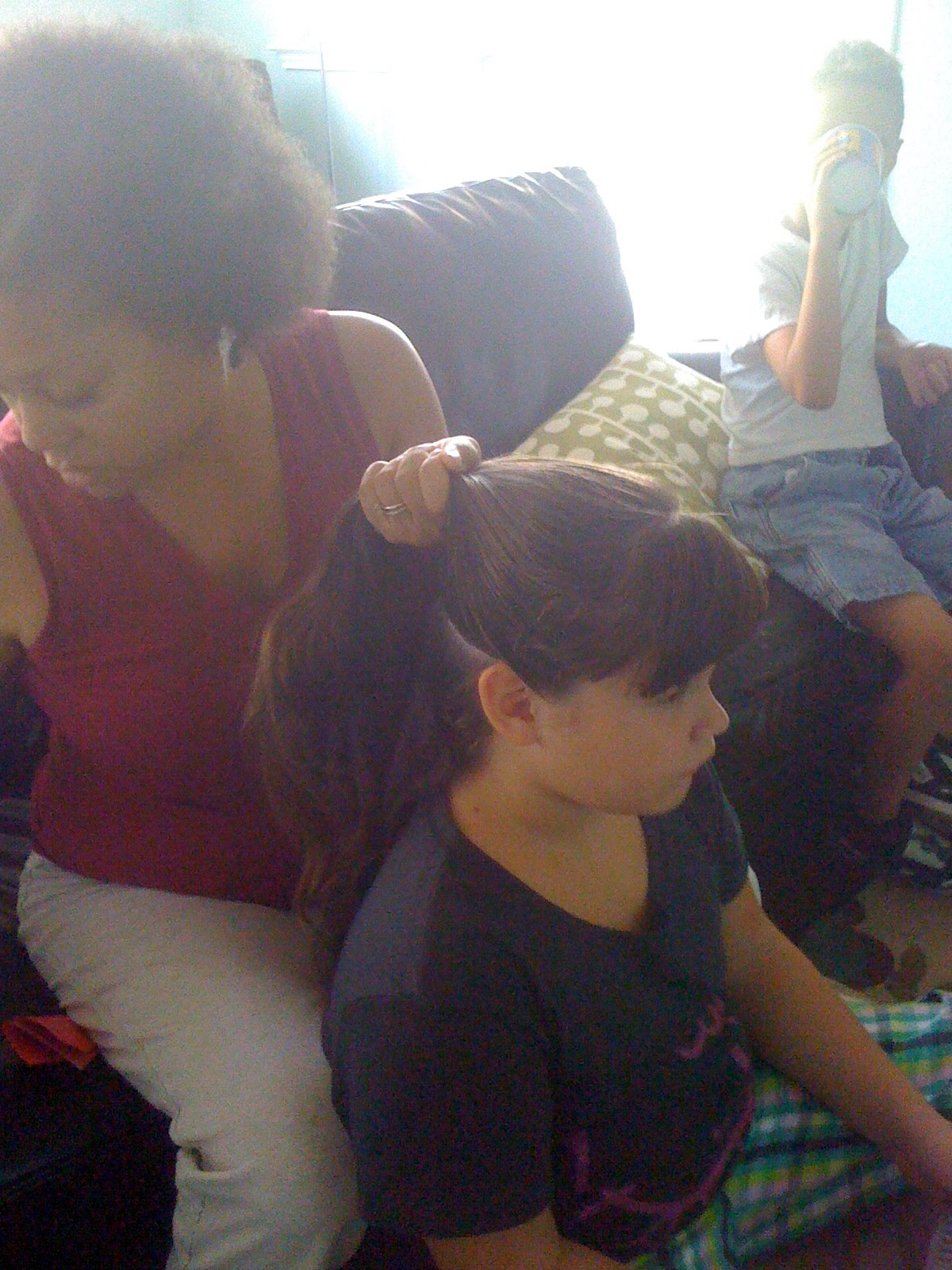
“Would you like me to try?” she asked. Sammy nodded, still pouting. Gently squeezing clumps of hair, Jeanette was careful to brush out the tangles at the ends of each handful, before taking on longer bits. Before too long, the brush was making its way easily down Sammy’s scalp in smooth, even strokes. Not only was Samara’s anxious expression gone, but it was replaced by a beatific, far-away smile. This cemented my wife’s bond with my friend’s daughter. Each night, Sammy demanded a special hug from Jeanette, and she gave it happily.

I realized, looking at my wife’s own expression as she worked on the little girl’s hair, that she too wore a contented smile. Poor Jeanette is surrounded constantly by male energy. Having this young girl in our home for a few days, needing her hair combed, was a treat for her. The realization made me think immediately of my own mother, who was also in charge of two boys. When I started dating my high school girlfriend, Maria, I would take her home on occasion, in the hopes that we could sneak past my mother and do some making out up in my room. Unfortunately for me, my mother and Maria hit it off and became fast friends, so that every time I brought her home, my mother would grab her away from me, and tell me to “go watch baseball with your brother,” or something to that effect. (Maria told me, years later, that these meetings were important in her development as a young woman. My mother became a kind of mentor figure to her, and I’m happy to know this, painful though it was for me at the time.)

It will be interesting to see whether Jeanette responds to my sons’ future girlfriends in this way. Like Maria, Samara Marrero is a special person, and that quality will have something to do with it, I’m sure. But it can’t be easy for a woman to be in the exclusive company of males. Getting a “girl fix” now and then must be extremely refreshing.

Rooting for Ray Lewis and All That It Means


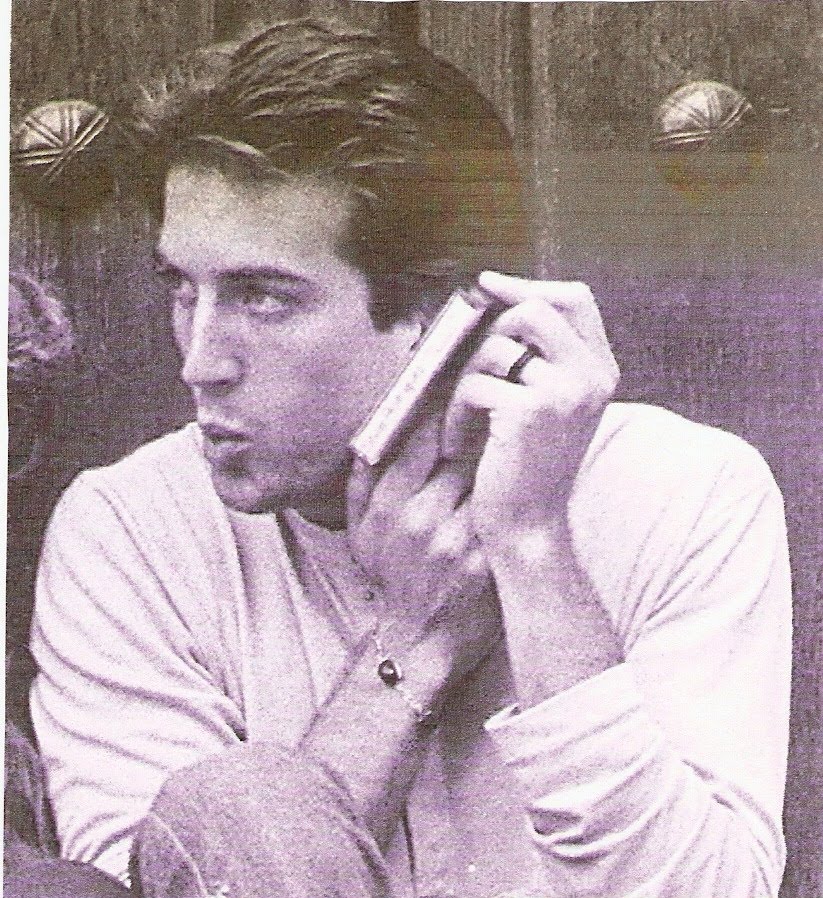
If you’re looking for an opinion piece trashing Ray Lewis, this isn’t it. Yes, I’ve chosen familiar courtroom jumpsuit shots of both Lewis and another football star I’ve been thinking about of late, but be patient: You may be disappointed if you’re ready to cheer, or vice versa.
Amid the Facebook chatter recently, one of my friends devoted her status update to her favorite remaining team in the NFL playoffs, stating, simply, “Ravens!!!!!” There were a vast variety responses, from both sides, but there was one in particular that started me thinking (and led me down the path back to 1994, and watching that crazy, slow-speed chase while the Knicks played in the NBA playoffs). The post read, “Let’s see if the murderer can get himself another Super Bowl ring,” or something to that effect.
I found myself remembering October 3, 1995, the day the long, drawn-out, sometimes dramatic (“If it doesn’t fit you must acquit,”) sometimes mundane (“Yes, I’m sure it was between 9 and 10 that I heard the dog barking, because I was watching ‘L.A. Law,’ which comes on at 9…”) murder trial of O.J. Simpson finally came to a close. A large chunk of our small high school on Chambers Street had gathered around the TV monitors we kept on rolling carts with VCRs in the back of our shabby computer room. I’ll never forget the response: Our predominantly white teaching staff let out a collective sound of disbelief, like a muddled “what,” almost in unison. The students, and our one African-American teacher, cheered. They looked elated.
I think my reaction fell somewhere in between. The preponderance of evidence appeared to suggest that O.J. was guilty of brutally murdering his wife and her friend. But the justice system mandates a jury can only find you guilty if the evidence proves your guilt “beyond a shadow of a doubt.” I reasoned that the defense had done their job by establishing doubt, and that the jury had done what the judge had instructed them to do. Yes, this was a tragedy, but like it or not, the man was not guilty.
I looked around the room and considered the emotions. For the white teachers, I wondered whether in Nicole Brown, they saw a sister, or a cousin, or a bit of themselves? And I imagined the relief and elation, as the rest of the viewers in the room, the black and Latino students and their one black teacher, thought, “Oh thank God. We are spared another of our men being subjected to the unending ‘perp walks’ that seem at times to be our collective pennance for some wrong we’re not aware of ever having committed.”
Of course, the details of Ray Lewis’s case are much less dramatic. There’s the Missing White Suit, and not much else. (Although some point to Lewis paying out a large settlement to one of the victim’s children as an admission of guilt somehow.) Again, he was found not guilty.
I root for him because he is so exciting to watch on the football field. However, like many other professional athletes these days, Ray Lewis’s Hero Status is in serious question.

A Boy And His Dog-Lust

I have a confession to make: My resolve to deny my son Jackson his request for a dog is beginning to flag. I was proud of myself when we got through Christmas without giving in to the incessant questioning: “Are y’all gonna get me a dog?” “Is Santa bringing me a dog?” “How come Brady has a dog?” “Did you have a dog when you were five?” “How come you had a dog, and I can’t have a dog.”

I say I’m proud because there were a number of you betting on the fact that Jeanette and I would cave in, and we didn’t. I guess you figured that the kid is so darned cute he’s bound to get to us eventually. My wife and I have stayed on the same script: “When a family decides to have a dog, everyone has to be ready, and we’re not all ready just yet.”

And he bought that for a while, but I think he feels my resolve starting to crumble. He tries to get me to participate in straw polls when I give him this answer now, responding with, “Well, Daddy, are you one of the people who is ready, or not ready.” Unconvincingly I explain that I’m one of the not-readys.

In addition to the strategy I mentioned above, (staying “on-message” with Jeanette) I have tried a couple of other tactics to respond to Jackson’s manipulation. He and I sat at the computer and wrote a little story together about a boy named Jackson and his dog named Blinky (or something like that). We even found a picture of Blinky from Google images. (He’s a chihuahua.) Jackson liked it so much, we printed it out and stuck it on his bedroom door. We’ve also visited a couple of dogs. We stopped in on our neighbors, an elderly couple, who let Jackson feed their chihuahua, Pepper.

I think it was this dog-visiting strategy that led to the wane in my resolve. Last weekend I took the boys up to Round Rock to visit my old high school buddy, Mignon Young, and to meet their new puppy, Tuffy. I took a few pictures with my Blackberry, not expecting much. The photo quality is okay, but no great shakes.

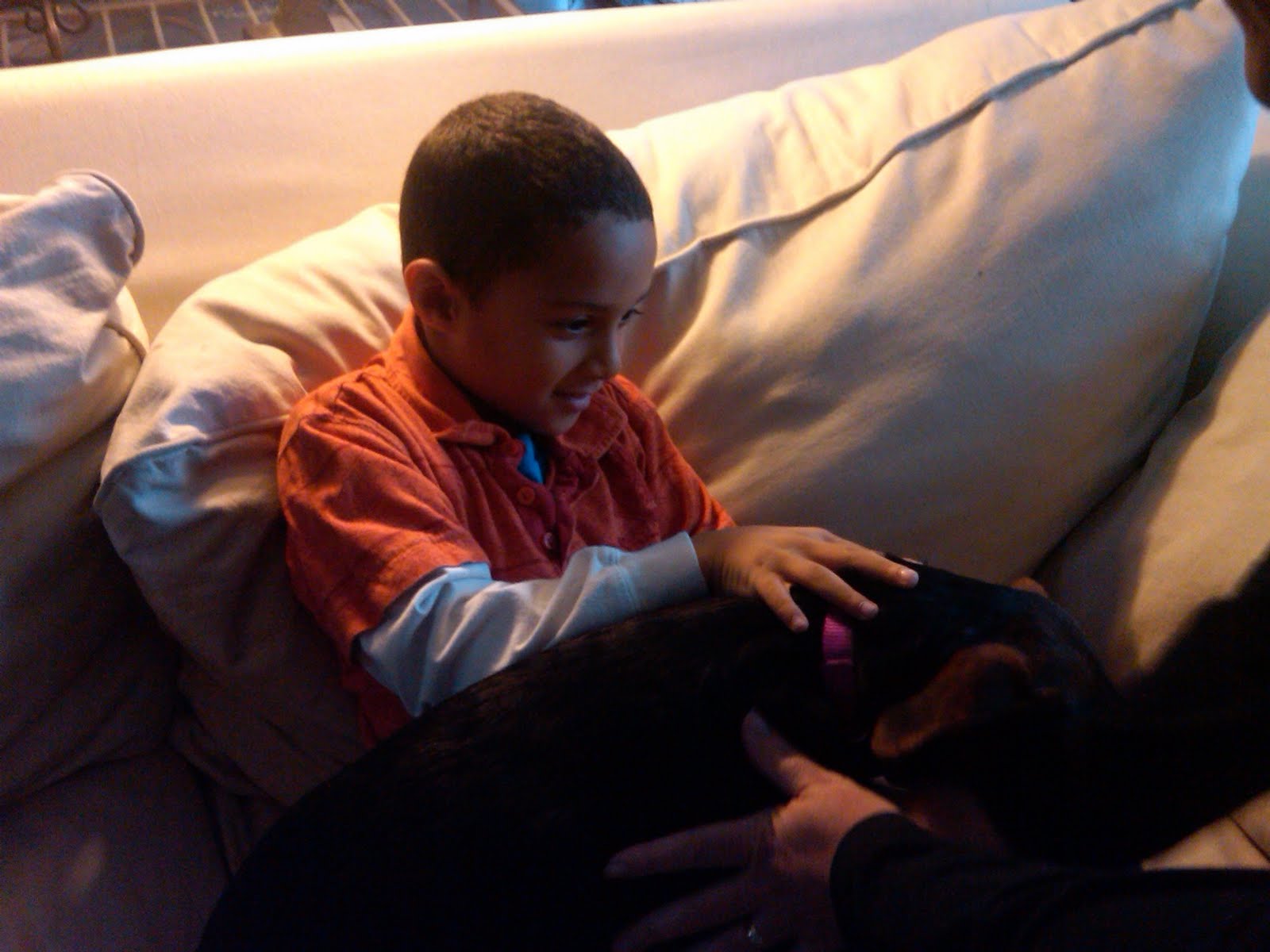
Unfortunately, God can sometimes be a cruel trickster, because as I was looking through those shots, I came across the one I’ve included above. The expression on my son’s face is so full of love and wonder and joy and DAMMIT! I can hear Jeanette already. “Stay the course, Dan. Stay the course.”

I know, I know, but come on. I mean, look at that face. I’m slipping. I don’t want to pick up dog poop.

But I’m slipping.

The Loneliness of the Staff Developer

It’s been a great conference. The walls are covered with inspired ideas and plans with which to carry them out. We have thought with the end in mind. We have stormed and normed and begun to form. My participants have shared their work with each other and talked about what they’ll do next. I thank them, and then ask if they have any final thoughts, questions or comments. They say no, and thank me back, perhaps with a smattering of polite applause thrown in there, and begin to mingle their way to the door.


Then comes that inevitable moment when you’re standing there, smiling, and you realize that your subjects are done with you. Done. Already they have started moving on with their lives. They begin making calls and texting. Slowly, you move away from them, back into your staff development space, and you look at the detritus of your profession — post-it notes, markers of every color and fruity scent, chart paper, laptops connected to LCD projectors, and jump drives you’re starting to get confused. Your “Thank You” or “Venture Forth” slide blinks brightly at you, and only you, like an insincere actor’s smile. Suddenly, in the silent, empty room, it seems sadly comical, so you turn it off and listen to the sound of the projector cooling down. You begin to critique yourself: Was I too directive? Did I encourage enough participation? Why don’t I know everyone’s name yet? It’s not that big of a group.
When I deliver staff development, I always try to remember what worked for me as a participant: Don’t talk at me the whole time. Ask me my opinion. I have things to say, and so do all these other interesting people in the room, who are struggling with all the same things as me. Ask their opinions. Get us talking to each other. My sense is that I’ve done this for the group these past two days.
Nowadays, when I go to conferences or trainings as a participant, I always make it a point to go up to the presenter at the end and thank them, during that weird time when we make that switch to our real lives and exit the bubble of “what-could-be,” because I know what an odd and lonely feeling they have at that moment.
I’m not saying it isn’t sometimes a relief to be done; it often is. Sometimes very much so. However, there’s this odd shift that occurs, when the stuff you’ve been discussing for the past however long goes from being the center of the group’s universe to being relegated to the stockpile of “things-outside-the-day-to-day” I don’t like being in that realm. It’s something like living in limbo for me.

Today, as everything winds to a close, and I gather up my materials, a young lady from a school near Houston makes it a point to poke her head in the door, before checking out of the hotel and heading home.

“Listen, Dan, I just wanted to make sure to find you to thank you for a great conference,” she smiles, waves and is gone.

“Thank you,” I say after her, and wonder if I’ve made a difference in the life of that young teacher and, consequently, in the lives of her students.

Of course, I have to believe I have. I let her thanks echo in my head as I shake off that strange loneliness and gather up my things, before finding my fellow staff developers and asking that age-old question that educators have been asking since the Dawn of Time: “Who’s buying?”

How My Mother Got Me to Stop Buying Dirty Magazines

My mother was creative. She was an artist who did things her own way and didn’t care much for the predictable. That’s why her response to finding a Penthouse magazine under my mattress was so darn funny. (Such a clever place to hide porn, I know. No one would ever think to look there, right? Especially not the woman who cleans the house.)

I should mention that getting one’s hands on pornography back in the mid-1970’s was not as easy as it is today. Now they send it to your home, and if you’re sneaky enough, you can actually look at it for free. In those days, you had to find a friend with an older brother who was willing to go into the store and buy it for you. Then the friend came into school with a plain, Manila clasp envelope. You handed him a five and hurried to your locker, where you stashed the mag. Your palms were sweating and your breath was short. There was a tickle somewhere south of the border, knowing that after school you would lock yourself in a bathroom and peruse a whole new group of nymphs.

So, I must have come up to my room one day, ready to do some serious nymph perusal, when I pulled this particular copy of Penthouse out from under the mattress. Saving the best for last, I started with the Forum letters, all of which start with the classic first line, “I’m just a regular guy from a small town, and I never thought anything like this would ever happen to me.” Well whatever outrageous event this man found himself in must have had the desired effect, because I was ready for the nymphs.

On this occasion, as I turned to the first featured “Pet,” I saw something so unexpected, so strange, and just generally unreal that I had to stop and shake my head. She had something black covering over her breasts and “naughty bits,” as they say in England. “Oh, no,” I said aloud. “Oh no, oh no, oh no.”

I repeated this mantra as I turned the pages and saw that my mother had duct taped every naughty bit she found. She wasn’t sexist, because in the “couples” spread, the guy had his junk taped over, too.

It had what I’m sure was the desired effect: I was mortified, embarrassed and I never bought porn again. (That’s probably not entirely true. But I certainly didn’t bring it in my mother’ s home if I did.) She never mentioned it, and neither did I when we saw each other that night.

Years later I reminded her of this event. She struggled to recall it, but laughed at the notion. I never questioned my brother or father. Duct tape? Come on; that was the artist. Marching to her own drummer.

I was going to say I’m going to use that tactic with my kids, if and when, but then I thought of something:

How do you put duct tape on a computer screen?

God, I’m in so much trouble…..

Our Children Are Watching Us: Modeling Partnership for Kids

The following is the transcript of a speech I began writing, in case I was called upon to open up our 2-day conference that starts tomorrow for the 48 schools we serve on the Investment Capital Fund (ICF) grant. Community Action Teams of 5 people from each school — principal, teacher, parent, business leader, and non-profit partner — will be coming together to brainstorm and work on their Action Plans. Thankfully, we found a wonderful keynote, Dr. Willie Kimmons, so I never finished the speech. I thought I’d go ahead and post this anyway, since I’m sure many of you share the sentiment:

One of the most exciting aspects of this work for me is the possibilities it presents us to MODEL COOPERATIVE LEARNING for our kids. When children see, or are aware of, a group that looks like yours – when a kid sees their parent, who is sitting next to their teacher, who is sitting next to their principal, who is sitting next to their pastor – all with that young man or woman’s personal success as their common goal, that image has power in their minds. And this empowers us, when we put that child into a group to work on a project, or a problem, or a science lab, and we tell them, “Use the minds you have around this table to really struggle with this. Bat it around. Turn it over. Take it apart and put it back together. AS A GROUP.” Not only will they hear in your voice the fact that you yourself are engaged in a similar process, but you, as the adult in this situation will have a newfound sympathy, as you realize that what this child is telling you is true: “Working in groups is HARD!”

It is sometimes hard, but it is also immensely satisfying. Nothing goes farther to bring about a desired change than good, trusting, courageous partnership. It’s true in all aspects of life – from the classroom to the athletic arena, to families and marriages. I’ve been lucky enough to have played all of the roles that each of you now find yourself playing – teacher, principal, parent, community-based representative, and I’ve seen the work pay great dividends in the lives of young people who now call themselves my “friends.” (on Facebook, at least.) They tell me story after story about how grateful they are for the help and caring I, along with my partners, provided for them at a time in their life that they now realize they may not have survived otherwise.

Among the most classic “conversation-enders” in public education is “It’s not about you, it’s ABOUT THE KIDS.” But I’m going to amend that: “It’s not about you, it’s about you AND THE KIDS.” Don’t forget that they’re the other partner in this work. What you do matters to them. They may not say it now, but they will. That’s why I’d ask you to continue to keep a particular child in mind as you do this work, and ask yourself how all this partnership might serve to change the life of that one person.

On behalf of the ICF team at TEA and Region XIII, we hope you enjoy your time here with us.

Thank you.

Pride (in the Name of . . . "Fuchs"??)

As you might imagine, mine was not the easiest name to grow up with. I attribute any sense of humor I may lay claim to today to having grown up American with a name one letter away from the most multi-purpose curse word in the English lexicon. Where would Martin Scorcese, David Mamet and Quentin Tarantino be without it?

Some people with my last name probably grow up fighting all the time; that was never my style. My parents didn’t encourage it. On the rare occasion that I would come home upset over some teasing I’d taken as a result of our shared last name, they would tell me to simply ignore it. And I did pretty well at that. But that didn’t always work, so it was necessary to become skilled at sarcasm. Usually people didn’t just come out and “call me” the F-word. For some reason, most would say, “Hey, did anyone ever tell you your last name looks like ‘Fucks’?”

Playing to the crowd that was always there (because why else would anyone ask such a question, unless it was to get a reaction from the group), I would do a puzzled double-take and look up, as if picturing the two words in my head, side by side, for the first time. Then, in a moment of inspired acting, I would see it! “No, why? What — wait a minute! You’re right! Whoa, that is weird! You know, I think you may be the VERY FIRST PERSON to ever point that out to me. Thank you! Thank you for making me aware of that!” By the time I was done with this snide little monologue, I had the crowd laughing with me and at my harasser, so that the aggressor slunk away, red-faced, looking for less nimble victims of their unoriginal bullying.

I don’t know whether it was because they got bored of such an unsatisfying mark, or because at a certain age “Dan Fucks” became a compliment rather than an insult, but eventually it stopped, and the next time I ever remember being concerned about it was when I started teaching in a public high school as a young man in my late twenties. I pictured the moment I wrote my name on the board for the first time and the snickering it would incite. Ironically, I ended up working in a school where the students called their teachers by their first names, and the students who wanted to take special ownership over me called me “Mr. Fuchs,” since “Dan” was what all those other kids called me. Never once during my 15-year teaching career was my name defaced or ridiculed.

At least not that I’m aware of…

This may be a good time to explain the name’s origins: The word Fuchs is German for “fox.” My father’s family owned a lumber company in Karlsruhe, Germany that was — like many businesses owned by Jews at the time — “nationalized” by the Nazi party. That’s why my branch of the Fuchs family made its way over here to America.

As an adult, I now understand that I carry not only the name, but the struggles of my ancestors with it. I have developed such pride in my name that I decided, at age 40, to have a running fox tattooed onto my left bicep. My two boys have yet to be introduced to “the ‘F’ word” (though I’ve let it slip in their presence once or twice), and I’m sure that moment will arrive when they come sulking home after some hurtful comment from a classmate. They may even spend some time resenting me for giving them such a pain-in-the-ass name. I’ll do my best to provide them with strategies to deal with the bullies and the jerks, and I’ll never let them forget those brave souls who wore the name so proudly before they had their turn to do so.

Bravery, and Humor, in the Face of "Disability"

When my mother was a child, on the tail end of the Great Depression, she came down with a bout of Scarlet Fever. It’s called Scarlet Fever because it presents as a bright red rash; it’s a form of Strep, a viral infection that, today, is easily treated with antibiotics. I had it as a boy and can barely remember the experience. Back in the day, however, it could cause all kinds of problems, including pneumonia and death. Anyone familiar with “Little House on the Prairie” remembers that Laura’s older sister, Mary, had her eyesight knocked out by Scarlet Fever.

In my mother’s case, Scarlet Fever took away a great deal of her ability to hear. She had numerous ear operations throughout her life, just to keep from losing her remaining hearing. Her hearing aid was a clunky contraption; I can recall turning it over in my hands before she woke up one morning, puzzling over it — a metal box containing batteries that she hooked to her brassiere, with a long wire that led to a headset she did her best to hide under her hair. A large, bulbous amplifier rested above her left ear.

All this aside, it’s funny; when I think of her, I never think of her as someone with a “disability,” per se. In retrospect, I can appreciate that she excelled in a number of areas in her life, (first in her family to graduate college, had a successful career as an commercial artist and art director, maintained a marriage and household and brought up two children) all the while having to compensate for an ability most people take for granted. When pressed, I do remember the way her lips would move along with my teacher’s on parent-teacher night; I now realize that she was, of course, reading lips. No one taught her the skill. This was something she learned out of necessity.

At times my mother used her deafness to her advantage. If she was trying to read a book, and my brother and I were chasing each other around the house, determined to kill one another, and screaming our vows to do so, all she needed to do was unclip her battery pack from her bra, flip a switch, and she would sit, smiling, in blissful peace, as my father was left to sort things out with us.

There were other times, too, where my mother’s hearing loss provided us with an incredible source of humor. One day, when I was about twelve and my younger brother Mike was about ten, we were shopping in our local department store, Masters in Elmsford, New York. My brother and I stopped and considered a sign that was prominently posted on the sales floor. “Danny, what does that word mean?” Mike asked. “I don’t know,” I answered.

The sign read “Shoplifters Will Be Prosecuted,” and we knew all the words but this last one. Being as she was smarter than most, and read lots and lots of books, we decided to ask our mother. “Mom,” Mike asked, “what does ‘prosecute’ mean?”

Suddenly my mother became flustered. Her face turned red and she pulled us both aside, as if trying to hide us from the other shoppers. “Oh, Michael,” she whispered, “a prostitute is someone who sells their body for money.”

Mike and I looked at each other for a moment. Then Mike said, “I know what a prostitute is! I want to know what prosecute means!”

Then she began to laugh. And laugh. She laughed so much that people looked at her. At us, because the two of us started to laugh. And the story became family lore, a story we told at countless Thanksgiving tables for years to come.

A few years later, Mike borrowed a water pipe from a friend. For some reason, he thought that a good place to hide it would be on the floor, behind the toilet bowl in the bathroom off of the bedroom he and I shared in our house in Purchase. I don’t know who he thought kept the bathroom clean, but she inevitably found the thing and confronted my brother with it. “Do you mind telling me what this is?” she asked, holding it out to him. Completely busted, my brother decided to come clean. “I’m sorry, Mom. It’s a bong.” “A BOMB?” she said, putting it down where she’d found it. “Are you crazy? What are you thinking bringing a bomb into this house!”

Without missing a beat, Mike explained that it wasn’t a very powerful bomb at all and that he would remove it from the house immediately.

Years later Mike and I told her that story, and we had a good laugh. Sadly, my mother passed away way too young, at age 57, when Mike and I were in our twenties. It’s only now that I can appreciate her bravery in the face of her deafness, and realize how much I miss her bravery. And, God knows, I miss her laughter, too.

Cava de San Miguel, 8: The Most Cojonudo Place I've Ever Lived

The closest I ever came (or have come as of now, I should say) to living in a commune was when I lived in the large 6th floor apartment at Cava de San Miguel, number 8. It came at the tail end of my time living in that city, from 1989 to 1990. Still in a haze after the death of my mother, I had decided to return to see the Madrid Experiment to its conclusion, whatever that might prove to be. I was not the same person who had left a few months earlier, to see my mother through the process of illness and death. The weight of my loss changed the way I walked, the way I talked — my very countenance was different.

One day our good friend, Amador Lopez, came running into the apartment of another friend who was kind enough to let me crash until I could find a place. (Susan and I had found a rather sterile furnished apartment in a stodgy part of town just before I’d gotten the call that my mother had cancer. The landlord took a hard line against our proposal to break the lease at first. He then looked me in the eyes, as if checking for signs that I had created this horrible lie. His face softened, and he wished us luck. I still wonder what he saw in my eyes.) Amador was out of breath, which was not unusual; he was someone with boundless energy, often forgoing elevators for flights of stairs. Finally, after some effort, he was able to tell us about “un piso cojonudo que se alquila” — an amazing flat for rent — in the ancient part of the city, just across from the Plaza Mayor, and, perhaps more importantly, half a block away from our favorite bar, La Escondida.

The three of us secured the apartment, and although it needed massive amounts of work, it was an incredible find. Five bedrooms, one bathroom, and a view of the clay-tiled rooftops of the zona antigua de Madrid. I don’t remember the price, but it was affordable. After snatching up the two back bedrooms that flanked the ornate “salon” for ourselves, we filled the rest of the flat with an international cast of characters — a classmate of Amador’s from the Universidad Autonoma named Mayte was our first, and most constant, roommate. Mayte was shy and studious but with a sly sense of humor. I liked her because she was sweet and patient with my sometimes shaky Spanish and because she laughed at all my jokes.

I think Kathy Hart, now married to Amador and mother of two gorgeous children, was a tenant there for a while, before moving in with Kata, one of a crew of Germans we befriended at the time, who were themselves often found at Cava de San Miguel. Kathy and I formed a strong bond around writing and reading, and through her I met Max Terry, who rented a room in the apartment, as well. Max was a writer, and I enjoyed staying up late and drinking with him, talking about books, sharing our writing, and smoking too many cigarettes. Susan’s good friend, Anna Cassina — a filmmaker from Milan, Italy — also lived with us for a time. What I remember most about Anna is her infectious laugh. It made you want to make her laugh, and Susan certainly did that. The two of them spent a lot of time laughing. A LOT. There was also a somewhat crazy redhead from Denmark who lived there named Roset. Roset wasn’t unpleasant, but she often seemed to be off in her own world. Kind of “ethereal” I guess you’d say.

My tenure at Cava de San Miguel was short, as I soon came to see my choice of returning to Madrid to have been in error. My family needed me, and the relationship with Susan came to a close. I stayed there until the summer of 1990, spent that summer traveling and making mischief on my own, before returning to life in the States that fall. The way memory works, I’m sure I’d be surprised to know exactly how brief my time in that apartment was. In my mind, it feels like I lived an entire lifetime there. Eventually we were all replaced, one by one, by other tenants, as we all went on to the rest of our lives, away from that incredible commune. In retrospect, I did some important healing in that flat, and got enough strength to go back to my country and begin my adult life there.
I’m happy to say that I am still in contact (thanks to the miracle of the “Interweb”) with most of the people mentioned above, and I even got to show my wife and two children the building last February (see photo, above). Who knows? Maybe there will be a Cava de San Miguel reunion some time in the future. I’d certainly do my best to make it.