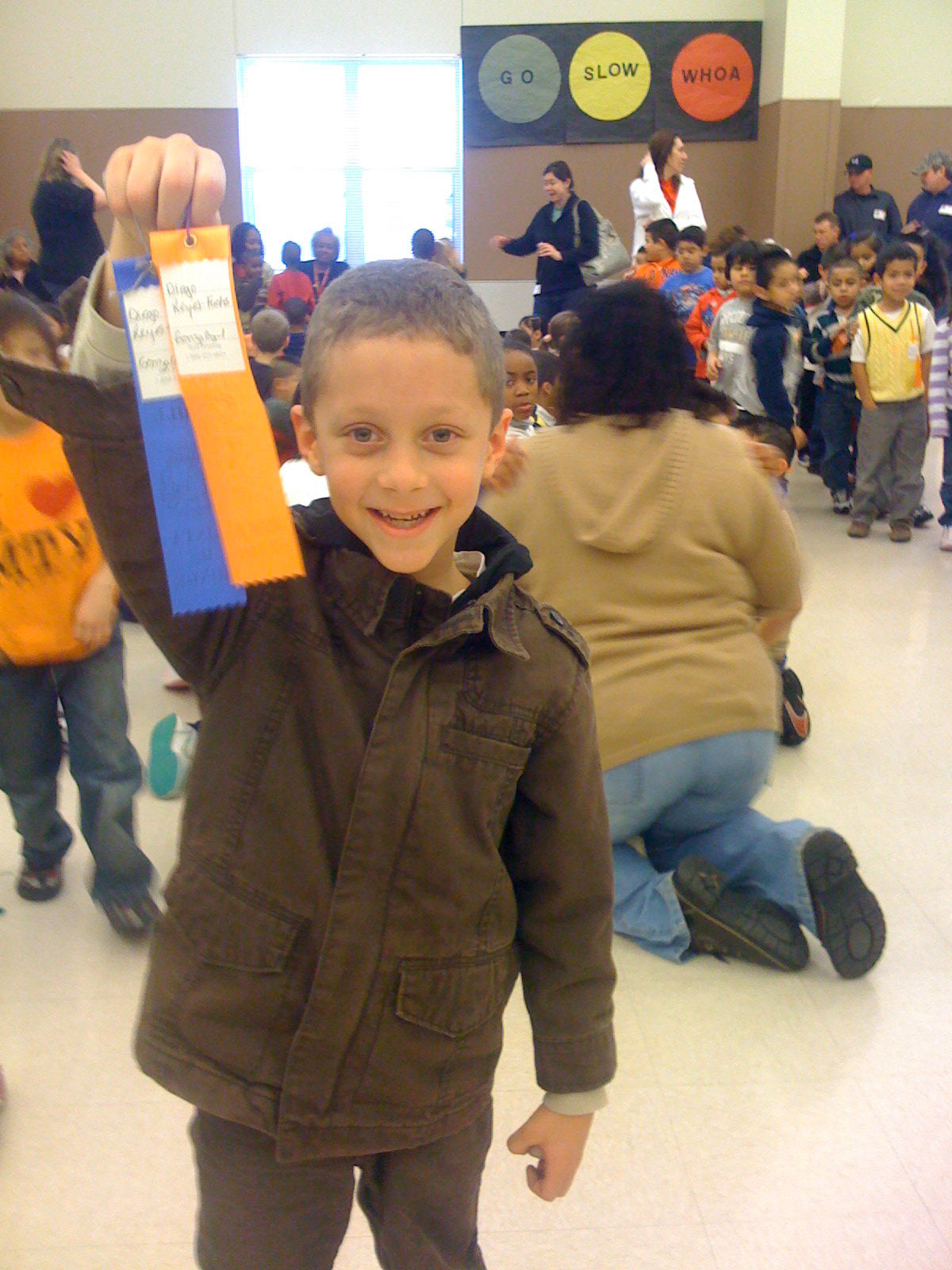
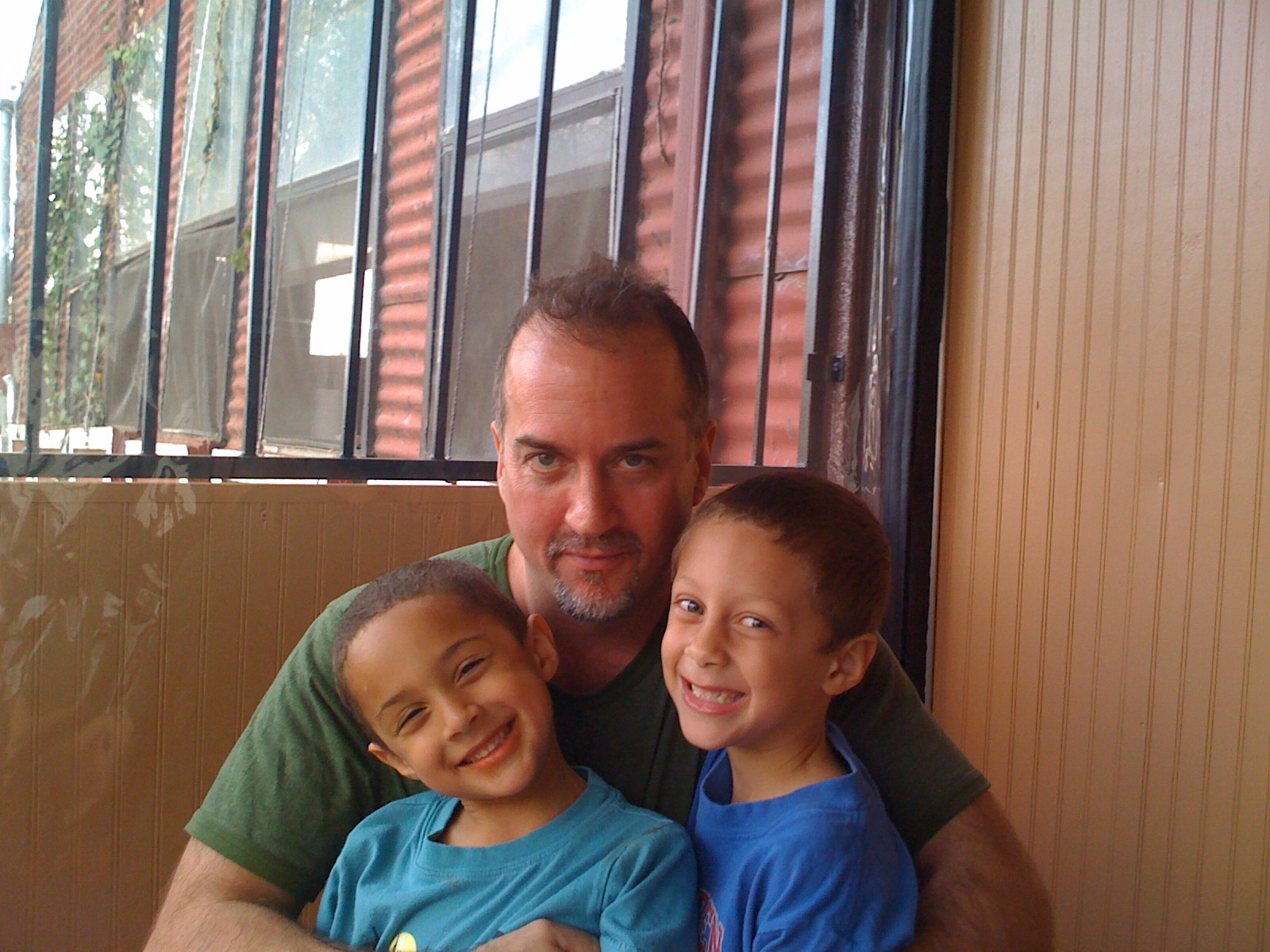
Two Sons, One Father, and a Parallel Dynamic

After a long day that included hiking and canoeing in Zilker Park yesterday, we packed into the car and ate at Hut’s on Sixth Street, where we filled up on heavy food — burgers, fries, shakes. By the time we got home, both boys were asleep in the back of the car. Jackson woke up first, and he and I were able to have some one-on-one time, throwing the football and riding bikes.

Diego eventually emerged groggily from his nap and came outside to find me and Jackson tossing the ball to each other. “Here you go,” I called, throwing a pass to Diego, who watched as the ball bounced in front of, and away from him, making zero attempt at a catch. He then yawned, rubbed his eye with his fist, and returned to the house.
I realized then that there is a parallel forming. I am spending time nurturing Jackson’s unusual athletic talent and love of sports, just as my dad did with my younger brother. Much was made of the time and attention my father paid to Mike — least of all by me. But my grandmother, my “Oma,” had many talks with her younger son about the issue, explaining to him that it was important to spend an equal amount of time with the two growing boys. I never felt abandoned by my father. On the contrary, I was as excited about my brother’s abilities as anyone, and I did what I could to nurture them, as well. I wanted to play my part.

For a while there my brother played the competitive tennis junior circuit, 12 and under. We would drive out to the Port Washington Tennis Center on Long Island, the place that spawned John McEnroe. Mike did well enough that he agreed to enroll in the Welby Van Horn Summer Tennis Academy in Connecticut. When he called home crying that he wanted to leave the camp, my father didn’t think twice about going to get him. Thus ended his run for professional tennis stardom at age 12.

I do think, looking back on it now, that my father made a good effort to get me out there on the tennis court with him, as well. I enjoyed playing then, and I still do. I just never showed the same natural aptitude for the sport that Mike did. I’ve long since realized that it’s not a question of my brother being a good athlete and me being a shitty one; it’s actually comforting to realize that Mike has freakishly sharp hand-eye coordination, so next to him my skills in various sports have always felt low. Once I went out to play with others, however, I realized I was better than I thought. Mike was simply playing on another level.

I’m starting to think that Jackson may possess this kind of ability, too. He throws the football with stunning accuracy, when he takes the time to concentrate on what he’s doing and where he’s throwing. And he’s got a strong arm for his age. I’ll need to remember to give Diego that important equal time my Oma spoke about. Even though he may not be feeling a need for it right now, I think it will be important for me to do things like play video games with him. As I said, I hold no resentment towards my father or Mike; that said, it would have been nice for my father to sit down with me while I was drawing or reading, or whatever I was doing that didn’t involve throwing a ball around. As much as I enjoyed throwing and catching and running and hitting, I also enjoyed other activities just as much or more.

What I’ll try and do differently is to meet Diego on his own terms. If he wants to join me and Jackson for a catch, that’s great. If not, then I’ll find the time to take an interest in whatever it is that he finds interesting and exciting. As parents, this is our ultimate job, isn’t it? To validate the passions that lie within the hearts of our children.
Bicycles and Me

I want to ride my bicycle;
I want to ride my bike.
I want to ride my bicycle;
I want to ride it where I like.
— Freddie Mercury
In the beginning, there was the red Schwinn. Or at least that’s how I remember it. There were, in fact, many bikes in our neighborhood. We had a bicycle culture when I was a boy in the 1970’s. I haven’t thought about it in years, but as I recall the accessories I bought for that bike — the baskets and rear view mirrors, the generator lights that ran on pedal power, and the horns — it makes me realize just how important my bikes were to me back then.
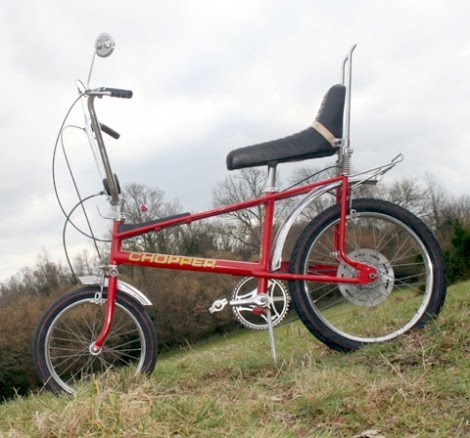
I suppose each bike was a kind of status symbol that said something about the kid who rode it. I don’t pretend to have a memory that could call up all the different brand names each kid had, but I do remember one distinctly — the Raleigh Chopper that Richie Mahoney owned. If I’m not mistaken it was a rust brown color and it was the coolest bike by far.

That is until Richie trashed it. That’s what we did with our bikes back then. We were heavily influenced by the ABC hit TV series Happy Days, and there was a very popular storyline about the Fonz falling for Pinky Tuscadero, leader of the Pink Ladies. She was just as tough as Fonzie, and the two of them rode motorcycles together. To me, they were nothing short of the perfect couple, so I was devastated when Pinky was injured during a demolition derby by the evil Malachi Brothers. My friends and I regularly re-enacted the derby on the cul-de-sac at the end of our street, much to the chagrin of our parents, I would imagine, who must have wondered how we managed to smash up our bikes so completely on such a regular basis.
I would also imagine that I was the Fonz and Lorraine Mahoney was Pinky, and that we were the king and the queen of the demolition derby. No matter how things turned out in the cul de sac, in my mind, we always won, and lived happily ever after.
(I was a bit of a Walter Mitty, even back then.)
Bikes became less a part of my life as I got older; although that changed when we moved to Grosse Pointe, Michigan when I was going into the tenth grade, in the summer of 1978. One of the first things I noticed about Grosse Pointe Park, the town where we lived, was how flat it was. My brother and I were given bikes as a means of transportation; he rode to the middle school each day, and I rode over to Grosse Pointe South High School. It was an easy, bucolic, painfully suburban ride.
The first time I ever got intoxicated was in Grosse Pointe, at Wendy Maniere’s house, about a block away from where I lived. At the end of the party, I rode my ten speed home, which was no easy feat. As I recall, there were no cars on the road, but I still managed to get tripped up at a stop sign and land on my ass.
I walked my bike the rest of the way home, collapsed into my bed and vomited shortly thereafter, in a manner so violent that I found myself promising the toilet bowl I would never drink again. (I lied.)
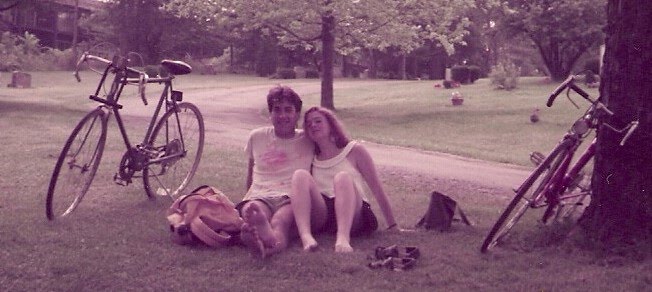
Bicycles didn’t really play a part in my life again until I went to college and met Susan Barney. We bought ten speeds together and would take them for rides over to Oakwood Cemetery, where we would sit against trees and read. This was one of those simple, quiet pleasures of those years that I’ll remember always.
When the two of us traveled one summer in Europe, we rented bikes in France, in Aix-en-Provence, I believe it was. The travel had wearied me, so that riding the French bicycle was difficult, and I ended up not only exhausted, but sick, as well. I remembered a cure for nausea I had found while traveling in California, when I got car-sick driving up Big Sur. I had my girlfriend’s older sister pull the rental car over, and I sat on the side of the road, ready to be sick. Then I noticed a familiar smell — eucalyptus. I was sitting right beside a bush of the stuff. As I sniffed in the aroma, I immediately felt better. There wasn’t any eucalyptus in France, so I sat under a tree and breathed in the smells of the grass and earth until I felt better. (Susan was good enough to take a picture, capturing me in this condition.)

Bicycles were absent from my life during my time living in Manhattan, as that was an era of mind-numbing blurriness, for the most part. It wasn’t until I re-emerged on the other side of the East River, in Brooklyn, that I decided to invest in another bike. I lived next to Prospect Park, a biking mecca, and I was wheeling into a new life, yet again.
Now, here in Manor, Texas, I ride my bike as often as I can. Don’t get me wrong, I’m not one of those guys you see going up hills on the side of the highway, wearing brightly colored spandex, and I didn’t need to take out a second mortgage to buy my bicycle. I like to ride a mile or two at a time, or just go for a spin with my kids every now and then. It’s not much, but there’s a feeling of freedom and renewal I get when I’m on my bike. And I’m not saying the red Schwinn will be my “Rosebud” or anything as heavy as that, but I do feel a connection to all those earlier, cycling selves each time I get on the bike and ride.

Hanno Fuchs, Psychological Warrior

As I attempt to do what I’m sure many sons do in the years following their fathers’ passing; that is, as I do my best to reconstruct the life of the man I loved and miss, one of the gaping holes I find myself looking into from time to time is my father’s service to the United States Army.

I’m not sure whether it was because my father preferred not to talk much about his time in Tokyo during the Korean War, or because I was too preoccupied with my early navel-gazing to ask him, but I don’t know much about it. I can remember him walking my brother and me through a photo album with some nice black and white Polaroids of a trip he took to Kyoto. (We got a kick out of the fact that on the spine of the book was printed, in ornate letters, ARBUM, proof, my father said, he’d bought it in Japan.) There were lots of shots of typical buildings in the Imperial Japanese style. Occasionally there would be a picture of Hanno in uniform, looking thin and bright-eyed. Young. Then we’d happen upon a picture of a group of friends, including a lovely young Japanese woman, with whom, I had the distinct impression, my father maintained a relationship of some kind.
What I did know as a boy was that my father did not see any combat. He was behind the scenes, writing anti-Communist propaganda. He described one radio drama he wrote, which was patterned after Elia Kazan’s 1952 film, Viva Zapata. That’s really all I knew.
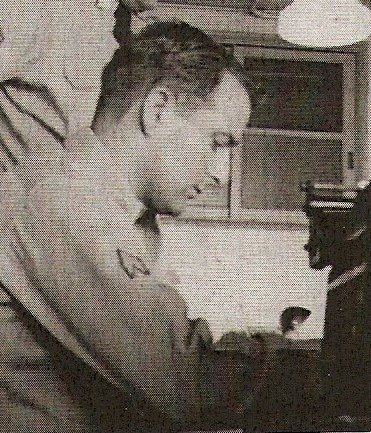
After my father’s death in 2000, his widow, Judy Karnes-Fuchs, was kind enough to provide me with a copy of a book called Psychological Warfare in Korea: Life and Times in the First Radio Broadcasting and Leaflet Group, 1951-1952. Thanks to this book (which is where I found this great photo of Sergeant Fuchs at age 23), I’ve been able to put together a few missing pieces.
Hanno Fuchs was recruited to be part of a group of “Psywarriors.” Like him, they were creative young men, just out of college. They had just started their careers in journalism, TV, public relations, and, in my father’s case, advertising. Just two years after graduating cum laude from Syracuse University with a BS in Journalism, and just ten years after setting foot on American soil for the first time when he and his family landed in Port Hoboken in New Jersey, my father found himself in Tokyo writing radio scripts to be broadcast all over North and South Korea.
Here’s what the author of the book, Thomas Klein, wrote about my father:
Hanno was a radio scriptwriter, with the rank of sergeant. We remember him as very focused, very quick to understand his assignments, very self-assured and very hard-working. When the rest of us drifted into our Empire House office each morning in Tokyo, Hanno would already be at his desk pounding away at his typewriter.
We also thought of Hanno as a very interesting person, a great guy for evening bull sessions; he seemed to know the ins and outs of every complex political and social issue. He was good fun as well and had many friends in the group.
I will be forever indebted to my stepmother for providing me with this treasure. My two sons already ask me questions about their grandfather, and I do my best to provide as full a picture as I can. Having this crucial piece in place — details of my father’s early adulthood — I can keep his memory more fully alive, not only in my own heart, but in the hearts of my children, as well.

Is the Term "Teacherless Classroom" an Oxymoron? (Yes, IF We Control the Debate.)

In the current issue of Fast Company magazine, there is an article called “Teacher-Replacing Tech: Friend or Foe?” by Gregory Ferenstein. The author explores the research of Sugata Mitra, whose ted.com video you may have seen, in which he leaves a computer kiosk in an impoverished town in India and observes how children use the computer to teach themselves. If you haven’t seen it, you should; it’s pretty fascinating, and he’s a gifted speaker. (Click here if you’re interested.)

There are certain teachers — some of them among my Facebook friends — who are having violent responses to the ideas put forth by Mitra and Ferenstein. Were I still in the classroom, I might have the same reaction. How dare some egghead anthropologist or business journalist posit their theories on what I do on a day-to-day basis? Before we get defensive, however, I think the teaching profession has to look at this new debate as an opportunity, and that we need to “get out in front of it,” as they say on Madison Avenue.

Basically what I’m saying is that those of us who still believe in public education as the democratic right of all Americans need to control this discussion. We need to embrace a line that Ferenstein glosses over very quickly in the article, when he says that “[new technologies] might mean a redefinition of ‘teacher’ as research assistant or intellectual coach, since subject-matter lecturers are no match for access to the entirety of human knowledge.”

To those of us who have been trying to do things in a less traditional way, these are not new ideas. A good teacher is a research assistant and intellectual coach to their students. In fact, if I ever run a school, and I find out my teachers are not doing that, there will be a problem, and a big one at that.

We run into trouble when we start making assumptions about what students want based on who we were as students. Yes, I had teachers who were good lecturers, sure. And yes, there are some kids today who still dig a really good lecture. Listen, I just referenced ted.com, which is a series of lectures, really, isn’t it?

“Yet the student-driven classrooms do have serious flaws,” Ferenstein concedes. “In the condition without any adult supervision, Mitra found that children only achieve half of what their peers in face-to-face instruction can.”

If the bottom-liners who are looking for ways to make profits from the failure of our public school system are allowed to control the discussion, then what Ferenstein alludes to above will, indeed, happen, and it will create a whole new industry, predicated on the remediation of the students who have been failed by robo-teachers.

We, as teachers, can take control of this narrative, but we won’t get there by being defensive or dismissive. Technology is here, whether we like it or not, and dismissing the possibility of being replaced will put us on the dole. Instead, we’ve got to take a good look at what we’re doing in the classroom. If you’re a “this is what I know” teacher, who feels the need to bestow your knowledge, versus a “this is what I learned” teacher, who wishes to coach your students to learn it too by asking good questions, then be afraid. It’s very subtle, but there is a difference.

And it may mean the difference between having jobs for teachers or not, some time in the not-too-distant future.

It's Official: I'm a Wimp

Newsflash, right? I know. I came to this realization this morning, after parking my car on the roof of the parking garage at the Education Service Center where I work, as I do every morning. This morning was different, because it was 21 degrees Fahrenheit, with a wind chill of about 8, according to Mark Murray, my morning weatherman on KGSR, “Radio Austin.” I think it was the way I hugged myself against the cold, holding the collar of my coat with one hand. I felt like Jessica Tandy, or someone.

Oh, how the mighty Northeasterner has fallen!

When I was a boy, my brother and I couldn’t wait until it snowed. We would beg our father to drive us over to Knollwood Country Club, where we would join our friends, Miki, Eddie, Richie and Guy for some good, old-fashioned reckless sledding. (The hill seems enormous in my memory, but of course when I visit it from time to time, I’m always shocked to see that it’s more of an incline than a hill.) It didn’t matter how cold, wet or icy it was; we were happy just to be outside in the air with each other. We threw snowballs, built ice forts — all the stuff you’d expect from strong children used to the rigors of a New York winter.

One day Miki, my brother Mike and I were making our way up Whitewood Road, crossing from the Forberts’ front yard to the Venuttis’ (a favorite crossing point over to our street, Hartford Lane), passing a miniature football to each other. I passed the ball to Mike, and it was a beautiful spiral. It would have been a perfect lead pass, dropping just into the outstretched hands of my receiver — would have been, had it not been for the sheet of ice that had formed on top of the snow. As he reached out for the ball, my brother’s feet came out from under him, and his head went straight back and struck the ice with a resounding “crack.” Because of the position of his arms out in front of him, reaching forward, he really had no opportunity to break the fall, so the back of his skull took the brunt of the force of the sudden drop.

When we asked him if he was all right, he replied that he was, which gave me and Miki permission to laugh about what had happened: “Oh man, you should have seen it! Your feet went straight up in the air!” My brother laughed, but then looked puzzled. “Wait, tell me again what happened.” When he said this the third time, he began to cry. Miki and I exchanged a look and immediately stepped up the pace to my house. The pediatrician confirmed that he had sustained a concussion, and my parents spent that night waking my brother up every hour.

The point of the story? We were undeterred by the incident. We were back out on the ice in no time. Rain, sleet, snow, concussions — none of it stopped us. We were not to be stopped.

Unlike some of my other friends — Miki in particular — I never took to skiing as I got older. I did do a lot of what I called “boot skiing,” going from class to class at Syracuse University, in Central New York. Due to where the town is situated in relation to the Finger Lakes, it gets a ton of snow. It gets so much snow that when a reporter braved the elements earlier this winter, when the region got a particularly brutal pummeling of snowfalls, one after the other, he couldn’t get a decent interview. Everyone he spoke to responded the same way: “This is Syracuse. It’s just winter in Syracuse.” The poor guy had no story. He and his producer had to pack up their shit and go home. (They actually ended up doing a pretty funny story about snow being a non-story, even nine feet in a week, or whatever it was.)

The worst cold I ever endured was the night I slept outside the Carrier Dome, waiting to buy tickets to see the Police on February 4, 1984. I was twenty years old and impervious to anything other than the awesome rocking power of “Every Little Thing She Does Is Magic” and “So Lonely.” We ended up with incredible seats, on the floor, with an unobstructed view of the stage, thanks to a large area just in front of us where we danced the entire time. Worth freezing my ass off in a cheap sleeping bag? Oh, hell yes.

I’m not saying I’ve come to the point where I’m ready for the early-bird special and white loafers in Boca. Not quite there yet. But I’ve become spoiled living in Central Texas, with its (normally) moderate winters. 21 degrees and rolling, controlled blackouts, in order to prevent the Travis County grid from collapsing are things I could do without. I dug my winter coat out of the mothballs, and I’d just assume bury it back again. So 70-degree weather, I’m ready when you are. This freeze business is something I’m just getting too old for, frankly.

Now where’s my toddy and slippers?

Memories of Life in the Roach Motel

My son Jackson’s nightly ritual is very specific. First, he has to grab my face in both hands and plant kisses on me, starting at the left ear, crossing to left cheek, lips, right cheek and ending at my right ear. Then I have to “fix his covers.” Finally, he asks me the same question every night: “Are you going to do dishes, Daddy?” He asks the question, despite knowing the answer, as do his mom and older brother.

“Yes, son,” I answer wearily, “I’m going to do the dishes.”

At first, I thought I was doing this simply to be a comfort to him. I used to perform a similar service for my younger brother who was extremely anxious for a time about being the last one awake in the house. “Can you make sure I’m asleep before you go to sleep?” he would ask me on the occasions that we bunked together as boys.

Last night, however, as I was doing the dishes, I had one of those memory flashes I often have during that meditative activity. This time I traveled back to the early 90’s, when I first lived in Manhattan. After sharing a few places — first with the Swedish actress Linda Udd, who was then a play writing student with me in William Packard’s class at HB Studio, then with my old college buddy, Sonia Murrow, and finally in a squat in the fashion district with my girlfriend and a friend of hers from her native Toronto. When the girlfriend and I decided to get married, we found a duplex apartment at 255 West 14th Street, near 8th Avenue in Chelsea. It sounds more glamorous than it was. The details that have stuck in my mind are how narrow the apartment was, how loud the weekend nights were, when the taxis would queue up in front of Nell’s, across the street and the coke-heads who closed the club would come shrieking out into the late night air, and, finally, the infestation of roaches from which we suffered in that blue-brick building.

A couple of side-notes — other unrelated memories — have to do with a couple who lived next door to us. I never had a conversation with either of them, but I sometimes heard them fighting through the walls. Both were middle-aged men, bearded, one tall the other not. Both weary-looking. One night I woke up when my cat sprang from a dead sleep, hissing and arching his back in that cat way that means danger. Downstairs, I could see a figure outside my window trying to jimmy his way into my apartment. My wife was not home at the time; she was, as usual, out. The breath left my body, and I made my way down the stairs, trying to yell, but not being able to, as often happens to me in my nightmares. I grabbed something hard and banged it on the window sill, as the man I now realized was the shorter fatter one from next door began tearing the screen from the window. “What the fuck are you doing?” I managed to get out. “Oh, sorry,” he slurred. “This isn’t my apartment.” He backed away on the fire escape toward the correct window. “If I’d had a gun, I would have fucking shot you,” I said, as he began clawing at his own screen. All I could do was shake my head and assay the damage to my window. “Okay. Sorry,” he muttered again before disappearing back into the apartment next door.

The other memory is of walking to the elevator on my way out one day and hearing what sounded like a roll of thunder coming from the stairwell. Before I realized what was happening, a phalanx of six or seven uniformed cops were upon me, yelling in that loud, theatrical way you hear on TV. I braced myself for their nightsticks, but they turned me around and had me assume the position, and one of them patted me down with surprising gentleness.

“Which apartment are you coming from, sir?” he asked me. I momentarily forgot my apartment number, before answering.

“Thank you, sir,” another said — their sergeant, I think — before they knocked on the door of my bearded next door neighbors.

But back to the roaches. You’ve got to have a lot of money (a LOT) in order to avoid roaches in New York City. I always had them, no matter where I lived. You can spray them and bomb them, but they always come back. We had the added misfortune of being above a supermarket, which didn’t help matters. Add to that the fact that my new wife was caught up in an existence consisting of late nights and all that accompanies that lifestyle, and there I was, a new teacher in my late twenties, trying to keep up with her, and you’ve got a perfect combination if what you’re trying to create is a giant, over-priced Roach Motel.

Eventually, she and I took a look at the landscape of our lives and realized that the seven years that divided our ages was a world of difference at 21 and 28. She was doing what I was doing at 21, exploring, taking risks, at some degree of peril. I, on the other hand, was getting up early, heading to work, and doing my best to try and make a difference in the lives of young people. Trying to keep up with her became a joke, and I remember the day we decided to end things, she told me she would have her father arrange for a truck to come and pick up her share of the furniture we’d gotten as wedding presents a year and a half earlier. She would stay with her friend in the squat until she would fly home to Toronto.

My first official act after the furniture was carted away was to do the dishes. I kept the now empty apartment as clean as I could for the cat and me, until we were able to find a new place in the Prospect Heights section of Brooklyn. I’d like to say I’ve never left a dish overnight in a sink since that experience, and maybe it would make for a better narrative, but that’s not the case. Like everyone, I leave the occasional dish. When I do, however, I get a queasy feeling in the pit of my stomach, as I recall those sad, eventually liberating days living in the Roach Motel on West 14th Street.

Central Market, Then and Now

You should have seen us, the first time Mignon Young and Alice Reedholm brought us to Central Market for lunch. I had no idea where the hell we were; it felt like we were in a supermarket. Why in the hell were my friends from high school taking me and my wife to a supermarket?? For a moment I thought it might be some sort of practical joke. Then I heard Mignon’s younger son, Jackson, excitedly ask permission to go to the playground. Before she could answer, he was gone.

Now we were REALLY confused. So wait, we’re at a supermarket. In the middle of a city. And there’s a playground? What gives? Jeanette and I exchange a look and I consider asking Mignon if she’s not a bit worried about letting Jackson run off like that, while we go to order our food at the supermarket. As New Yorkers, we are suspicious, but then we go out back to get the full effect of the picnic area. There are shade trees everywhere, and barefoot children running and cris-crossing, so that you have to dodge them on your way to your table. In the distance there is a small pond with geese and ducks floating around, and a giant live oak tree with children adorning it like Christmas tree ornaments.

The food was delicious, much to my surprise. And sure enough, Jackson found his way to our table, ate some pizza and zoomed off again to climb something somewhere. When we got back to our hotel, Jeanette and I discussed how freaked out we both were. Though it turned out to be a pleasant dining experience, we both found it completely foreign and well, weird, to borrow a phrase.

Today, nearly three years later, Central Market on North Lamar has become a haunt of ours. My friend Seth Levin has a blog ingeniously called “Dadventures in Beantown” in which he features all the cool things he does with his two sons in the Boston area. I would consider submitting this blog as a guest piece — a “Dadventure in the ATX” — or something, because we spend many a Saturday or Sunday there, Jeanette doing the shopping for the week, while I sit by the playground reading, emailing and drinking Shiner Bocks, and the boys do what boys do best — run in merry circles, playing tag with total strangers and defying gravity on playground equipment.

It is now so familiar that I’m convinced my car could find its way there on its own if it had to. (I won’t try it, so don’t worry.) We are no longer concerned for even a second about letting the boys go and be on their own as we sit and guard our food from the grackles who swoop in at the first opportunity when you turn your head. There’s live music on a regular basis, because this is Austin, after all. And there’s even a really cool cooking school where Jeanette and I have taken a couple of classes, as have the boys.

If you come and visit us here in Austin, we may very well take you to Central Market, and although you may at first wonder why the hell we’re taking you there, give it a chance. You’ll understand, and you’ll enjoy.

"My" Band

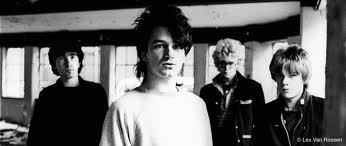
Say what you will about them, and there are those among you who will say some pretty nasty things, U2 is my band. It’s not that I own every single they’ve ever produced, or that I have a collection of rare U2 EP’s — I don’t. I’ve only been to see them once (which I’ll get to later). I know people, like my former colleague at New Visions for Public Schools, Gwen Baker, who have seen them many, many times and could lay more convincing claim to them than I can.

That said, they are mine.
I can just hear the wincing now, particularly from my music biz friends like Jem Aswad and Ken Weinstein. From an “Industry” standpoint, I’m sure they’re quite correct in pointing out that U2’s time has come and gone, that they should gracefully step aside and make room for the Young Turks coming up behind them, and that they run the danger of becoming an aging parody of themselves.
Doesn’t matter. They rock.
I’ve also heard many people trash Bono. They brand him pretentious and overrated as a vocalist. They suggest that his never-ending altruism in the third world is nothing more than self-aggrandizement at worst, Catholic guilt at best.
Could be, could be. Don’t care. He’s got soul.
Maybe it’s just a personal thing. They came into my life just as it was opening up. I may have heard “I Will Follow” on the radio, along with the rest of the world, in 1980, but the first time I remember listening intently to the “Boy” album was with Roger Bodine as freshmen at Syracuse University. Both he and Jem were responsible for opening up my musical appreciation from the classic rock and top-40 I’d heard during high school. Both (especially Jem) had extensive record collections; thanks to his job at Desert Shore Records Jem’s was constantly expanding, taking over his dorm room. That album sounded like nothing I’d ever heard before. It touched me. It’s on my iPod now, and when those songs come up, thirty years later, they still reach deep.

I got to see them live at Cayuga Community College in Auburn, New York on April 27, 1983. I had seen a few concerts by then, but not many. None of them came close to this one. To say that my friends and I got “caught up” in that performance would be an understatement. They took me somewhere else that night; the whole gym, which wasn’t much bigger than my high school gymnasium, seemed to lift up from its foundations at one point. I was only twenty years old, so I don’t think I realized exactly what was going on at the time. Looking back now, I don’t have much more to offer by way of an explanation. All I can say is that I was moved by their music. I was transported.
It was shortly after this show that U2 exploded into superstardom with their performance during Live Aid at Wembley Stadium. A few years after that “Joshua Tree” came out, and I still list it as one of my Perfect Albums, a “Desert-Island Disc,” I guess you could say, right up there with “Songs in the Key of Life,” “What’s Going On,” “Pet Sounds,” and “American Idiot.” Because he has a memory like a steel trap, I’m sure he could tell the story better, but I recall sitting in a bar with Jem near his apartment on First Avenue and First Street in Manhattan and hearing the record for the first time. As I remember it, they played it all the way through, and the few of us at the bar stopped our conversations to listen and were generally astounded by what we’d heard.
U2 is now more or less considered a “classic rock” band. Unlike the Stones, the Beatles, or the Who, they don’t belong to my parents’ generation, or even my older brother’s. I came of age in the 1980’s and they were my soundtrack. As a result, I’ll always think of U2 as “my” band, and will stubbornly keep cynicism out of the conversation. And I will always, always, look forward to what they will come out with next.

So Much More Than Just "Things and Stuff"

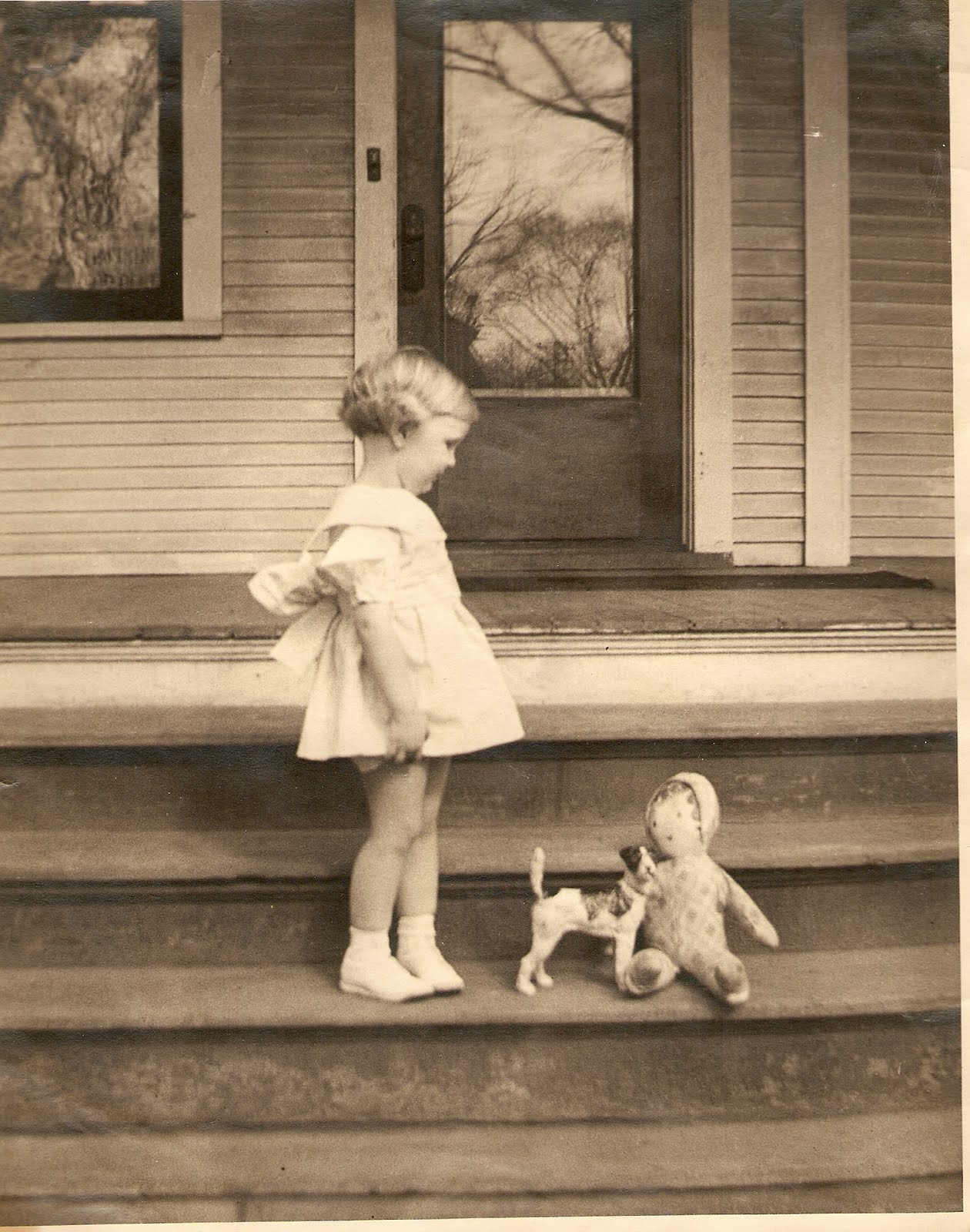
The pages of my mother’s scrapbook are yellowed and crumbling fast. The photos, like this one taken in Des Moines, Iowa at 3 years old, are black and white, and they too are beginning to fade. My hope is to preserve this book, innocently titled “Things and Stuff,” by scanning its pages and saving it digitally. I’m not sure how well this will work, but it’s certainly worth a try. I’ve talked about doing what Jeanette suggests — having it restored and/or preserved by an expert in this sort of thing — but I’ve never actually gotten around to it, and I’m not so sure that I ever will. Scanning just seems more likely to me.

The title is ironic, in that the things found inside this scrapbook are so much more than mere stuff, and I don’t just mean this from my entirely biased point of view as my mother’s son. Rather, I believe, the more I study its contents, that this book is an important historical document. My mother was born in 1930, just at the start of the Great Depression. Her father worked extremely hard in the maintenance department on the Rock Island Railroad throughout those lean years, just to keep from going under, the way he’d seen so many of contemporaries do. It makes me wonder how much it cost him to dress his young child in this dress and baby shoes, what kinds of discussions he and my grandmother had to have about whether or not to buy her the doll in this picture, and if they ever considered selling the cast iron Jack Russell terrier doorstop, which I still have today.

As the pages progress, you find newspaper clippings declaring the end of World War II, when my mother was fifteen years old. (“Peace! Remember how it came on the night of August 14, 1945? No matter where it caught you — on Times Square, Market Square or Main Street — the big news made a noise like the birth of a bright new world.”) Suddenly, the world had changed completely. A new era of prosperity came about, just as my mother was graduating from high school, in 1947. She had no way of knowing, of course, that exactly ten years later, that school, Little Rock Central High, would become the first integrated public high school in the south.

The book has many of the other usual items you’d find in this sort of compilation. In fact, my mother checked off the “rough outline” provided in the book’s introduction:

  • your pet dance programs
  • goony telegrams
  • menus from your favorite haunts
  • place cards from fun parties
  • dreamy birthday cards
  • snapshots of friends and fiends
  • gift and corsage cards
  • items from the school paper
  • funny valentines
  • a page of autographs from the gang
  • invitations

In addition to these items, there are some other interesting things, as well. There are pencil drawings my mother did of her teachers, parents and friends. There is evidence of various honors, including mention of “first place in the statewide short story contest of the Little Rock chapter of the National Society of Arts and Letters,” “The Distinction of Being the Most Gorgeous Girl, awarded to Carol Runyan on the night of the Delta Phi Omega spring dinner dance, June 23rd in the year of our Lord, 1949,” and her signed membership card to the National Junior Honor Society of Secondary Schools. There is a letter from a German pen pal and former soldier named Klaus, dated June 28th, 1948, in which he states, “I was wounded [in Holland] and came to a hospital for three weeks. Then I came to the Air Force headquarters in Berlin. I often saw there Herman Goering, Hitler and Goebbels.” Enclosed with his letter is a studio portrait, date stamped April 1943, in which he looks like a boy, leaning forward, perhaps a little bit scared of what his future may hold. Like a movie star, he has signed it “As ever, Klaus.” She has several letters from a sailor in the British Navy named Arthur, with whom she also corresponded.

I’m both thrilled and sad to learn new things about Carol as I flip through the decaying pages — that she was a member of a Masonic girls’ group called the Rainbow Girls, that she lived in Trenton, Missouri, Rock Island, Illinois, Des Moines, Iowa, and Molline, Illinois, all before the age of four. I say sad, only because I’d love nothing more than to be able to ask her about all these little gems I’ve uncovered here.

I believe what I’d like to do is this: I would like to contact someone in Little Rock, some sort of Historical Society archivist, and see what the interest would be in restoring and/or preserving the items in my mother’s scrapbook. They might be able to help me find someone in my mother’s family or group of friends who is still alive. And if that were the case, maybe I could have some of these questions answered after all…

My Home Town's Brush With Greatness

As I’ve mentioned in a previous post, Manor, where I now live, is a small town. There is a block of four store fronts, with a corrugated tin awning over the sidewalk, and an old-fashioned water tower, pictured at right.

Downtown Manor has always evoked a strong feeling in me; I’m not sure why. Recently, however, I’ve come to learn that they filmed “What’s Eating Gilbert Grape” (directed by Lasse Hallstrom, 1993) here, and suddenly that feeling makes a lot more sense.

I watched the movie the summer after its release, on DVD, or probably VHS, at a rented house in Big Indian, New York, in 1994. It was a summer of healing, as I was coming off of a divorce, as were a couple of my friends at the time. I spent most of my healing time drinking and doing other things to “self-medicate,” as they say. Generally, it was a lot of fun. A good distraction — “just what the doctor ordered.”

I fell in love with the film, because it has all the aspects of films I tend to enjoy: quirky characters, a strong sense of place, and no guns or loud explosions. The director’s previous film, “My Life as a Dog,” is one of my favorites, so when I heard it was the same director, I was excited to see “Gilbert Grape”. Leonardo DiCaprio, who was basically an unknown at the time, was unbelievable in the role of Arnie. Johnny Depp was, as usual, strong in the title role. Good supporting performances by Juliette Lewis, John C. Reilly, Mary Steenburgen, and Crispin Glover. And Darlene Cates, the 500+-pound non-actress they recruited to play Gilbert and Arnie’s mother managed to steal the movie from all these name actors.

As the film came to its climax, and Arnie faced a harsh realization (I won’t say more, in case you haven’t seen it; and by the way, you really should), I lost it. I didn’t just cry. I didn’t just bawl. I didn’t just weep. My emotions exploded out of me, and I was lucky to have my good friend, Susan Dreyer (who has always said she wants to write a piece about that Big Indian summer called “Bridesmaid to a Divorce”) there to pat me on the back and remind me that everything was going to be all right in due time.

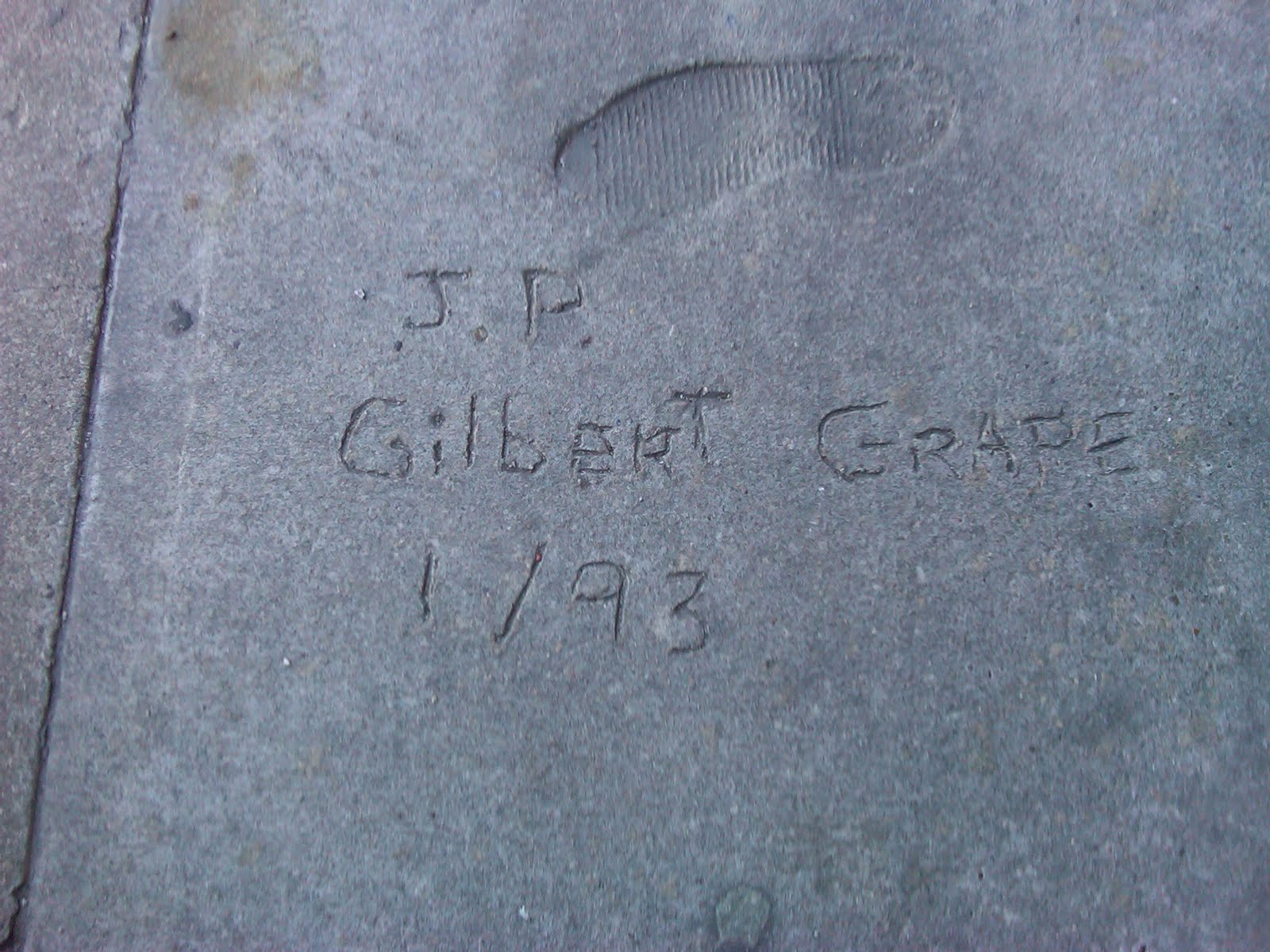
Since learning that the movie was filmed here where I live, I have been giddy. I smile as I pass the iconic silver-painted water tower (pictured, above) that Arnie climbed up. I have plans to go look for the Grapes’ house (it’s out on Route 973, by the new football stadium), and, yes, I took a picture of the sidewalk in front of Manor Grocery, where Johnny Depp scrawled his initials and the date of the production, 1/93.

If I seem a bit star-struck, it’s really not about that. Instead, I think it’s just this odd convergence of an emotional moment in my past, and where I am living right now. Who knew, back when I watched this film in the summer of 1994, that I would eventually live in the small town that played such a large part in the lives of those characters? It’s just so random. And yet somehow, deep in my core, it makes absolutely perfect sense, too.