Damn Yankees

I’ll probably never really know just how much my father loved the Brooklyn Dodgers. He talked about listening to the games on the radio as a boy in Larchmont, and I think he may have even ventured into Brooklyn and caught a few games. I did come close to understanding his devotion to that team fully, I think, during a visit to Little Rock, Arkansas of all places. We were there visiting my mother’s parents, and my father came into our hotel room after having been out at the pool. His face was barely recognizable. He looked like a kid.

“I don’t believe it. Ducky Medwick is here! At our hotel!”

My brother, mother and I all looked at each other. We had no idea what he was talking about.

“He played for the Dodgers. When they were in Brooklyn. He was one of my favorite players. I just met him. I just shook Ducky Medwick’s hand.”

I think we may have met Joe Medwick, former Brooklyn Dodger at that point. He may have flashed a big, fancy World Series ring. It’s one of those things that either happened, or I “filled it in” to make for a better story. To this day, I’m not sure what he was doing in Little Rock in the middle of summer. It wasn’t the kind of heat you wanted to be in if you could avoid it.

Like many, my father was disappointed by the Dodger’s departure from New York. He explained that back then there was a class thing going on; the pinstripes of the Yankees represented the pin-striped suits of Big Business, whereas the Dodgers were the team of the people. It’s well documented that they used to take the streetcars and buses down Eastern Parkway, where they lived among their fans, in order to get to the park.

The Yankees were the enemy. They were the rich cousin who always made the Dodgers look bad in their many battles for the world championship. (Except for that one, lone victory in 1955, the one bright spot for Dodger fans in that storied rivalry.)

This rivalry created a generation of Yankee-haters. It seethed from my father’s pores. He barely allowed us to watch the Yankees. In our home, it was Channel 9 and the Mets only. We didn’t dare switch to the Yankees on Channel 11. I’m not sure what he would have done. My father was a gentle man, but there was something about his demeanor that told us this might change if we ever flicked that dial two clicks clockwise. So we never did.

He was a National League loyalist who always rooted against the American League during the World Series. Those two back-to-back losses in 77 and 78 had my father feeling the despair of his youth; you could see it on his face. The 1981 win over the Yankees brought back a bit of that 1955 adulation for him.

I say all this to preface my brief love affair with — dare I say it — the Yankees. The 1996 team was hard not to love, even for someone brought up as a hardcore Yankee-hater. They were homegrown young players like Jeter, Bernie Williams, Jorge Posada and Mariano Rivera, and they were a lot of fun to watch, because they seemed to be having more fun than everyone else out there. I also had a great time going to games that year with James Savoca, a long-time Yankee fan. When I showed up at my dad’s place in Irvington for dinner one night, he saw the Yankee cap on my head and said, “What is that?” as if I were wearing a satanic head dress or something.

Flash forward to my Dominican father-in-law, Daniel Reyes, another Yankee lover. He was convinced, when I married his daughter, that I was a Yankee fan like him. I started dating his daughter right around the time I had my brief love affair with his team, so I can see why. Of course, now he’s figured out the truth. He enjoys rubbing my nose in Yankee victories, but in his polite, smiling way.

And it’s true, since the acquisition of numerous big-ticket superstars who will remain nameless, I’ve kind of gone back to being a Yankee hater again. I get a deep joy from seeing them lose — something that must go back genetically to my father’s painful experience as a Brooklyn Dodger fan. Sorry, suegro. It’s just the way I was raised.

Movie Memories: R-Rated Flicks of My Youth

This morning, as I enjoyed my day off from work, I surfed the cable channels until I happened upon a movie I hadn’t seen since it came out in theatres in 1973. It was the first R-rated movie my parents ever took us to, Day of the Jackal. I got caught up in the story, thanks mostly to some good acting by Edward Fox, who plays the title role. The story pulled me in, and I remembered almost nothing, except for a couple of details, like how he tightened a rope around his arm, a tree and the high-powered rifle, so he could get a steady shot, (see photo, above) and how once he had adjusted his sights, he placed one of the bullets he intended to use on President de Gaulle, and the melon he was practicing on at two hundred yards blew to smithereens when he hit it, dead on.

What I do remember is that my parents’ attempt to introduce us to adult cinema at ages 10 and 8 respectively was considered a grand failure and something of a joke. It’s mostly sex that got the movie its rating; there’s hardly any real violence in it at all, other than the implied violence of what may or may not happen in the climax of the film. And the way that Mike and I responded to the sex scenes was with abject boredom. As the story goes, when Fox is just about to bed down yet another woman he is using as cover, 8 year old Mike says, at the top of his voice, “Oh no. Not again.” Apparently it brought down the house.

The problem may have been in the timing. I’m not sure if it was a busy night in the baby sitting pool, or what. But when I think about it a bit, I realize that I may have given my father a reason to think I could sit through two hours of suspense and intrigue and very little action, other than the sex. I had started staying up later on Saturday nights in order to watch Mission: Impossible with my dad. I enjoyed pretending to understand the plot-lines, until I saw the joy it gave my father to explain them to me.

I didn’t care much what was going on in the story; I just liked the time with my dad. It was horror movies with my mom and spy movies with my dad.

But I wasn’t ready for all the intrigue and, well, “naked ladies,” as I referred to them then, The Day of the Jackal had to offer.
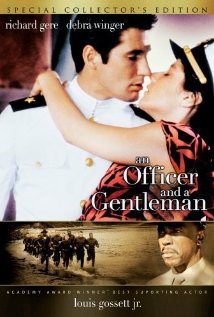
My other embarrassing R-rated movie story is the time my mother and I decided to go see An Officer and a Gentleman together. The sex scenes in that movie are extremely graphic and realistic. (Who can forget Debra Winger’s famous line, “Pass me a towel, will ya?”)

I sank as far down in my seat as I could and waited for the end credits to roll. Of course, it’s a great film, but not one a 20 year old dude wants to see with his mom. Oh, God! I shudder thinking back on it all these years later.

Now when I see Day of the Jackal or An Officer and a Gentleman on HBO or wherever, all I want is just one more chance to sit down with either or both of my parents and get their responses once more, the comments I can no longer recall. Like everything else, these movies make me miss my parents. But they also provoke a smile and a sense of gratitude that they’ve brought the departed back into focus, if only for a moment.

Frequent Flier and Still Freaked Out

Okay, so I’m not exactly at the George Clooney level, but I have racked up a bunch of miles since going to work for Region XIII as a grant manager a little over a year ago. No one is going to put my name on the side of a plane, unless I decide to spray paint it myself, and that just sounds very risky. I think they’ve got a few laws against that sort of thing.

On average, I make two round-trip flights a month, and when I say I’m still freaked out, I mean that on a couple of different levels. For one thing, I am just freaked out to be “that guy.” When you spend the bulk of your career as a classroom teacher, you’re pretty anchored to one place. The only flying you tend to do is during vacations, with the exception of the occasional education conference here and there. I’m sure some of you who work in the private sector will laugh at my claim that two round trips a month makes me a frequent flier.

Still, it’s not something that my career prepared me for, and the “glamour” of it, such as it was, faded a long time ago. I’m the guy whose kids have to tell their friends, “Oh, my daddy’s on a business trip.” I’m the guy whose wife has to fend for herself with those same children twice a month, every month. Never thought I’d be that guy. It freaks me out.

The other thing that freaks me out is flying itself. I wouldn’t go so far as to say I’m afraid of flying exactly; that would be absurd. It does, however, often make me physically uncomfortable, and I’ve taken to downing Dramamine more often than not. In addition, I never studied physics, so I just don’t get it. The whole flight thing baffles me. I mean clearly, the thing weighs tons and tons. It’s in the air and it’s fucking flying. That just makes no kind of sense. This moment comes at least once on every single flight. I look out the window of the airplane, and I think, “How is this possible?” Now, I’m sure someone out there reading this could send me an explanation, with words like “lift” and “thrust” and “resistance” and all of that, but I’m still like a monkey with a TV set at some point during all my air journeys.

There will likely come a time before too long when I am more grounded (no pun intended, really), either in my present job, after the grants I’m on run out in a year or so, or in some other, more “place-based” position. The monthly travel will become a thing of the past, a fading memory, something I smile about as it flashes into my mind while I do the dishes. So I suppose I should simply try to enjoy it, right? Rack up the miles and the free flights and drink coupons. I’ll do that, but it will always be with both the odd sensation of feeling like I’m living someone else’s life and the incredulity of the monkey, scratching at the banana on the TV screen as I wonder just how the hell the whole thing works in the first place.

Coming to Terms With Race Down Here in the South

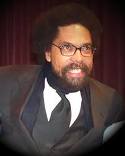
A few years back, in the late 1990’s I accompanied friends to Town Hall in Manhattan to see Cornel West and Henry Louis Gates, Jr. have a conversation about race. I had read (and taught) Race Matters which I thought was profound and original. I wasn’t familiar with Dr. Gates, except for maybe a couple of op-ed pieces in the New York Times.

I was immediately impressed by Dr. West’s delivery; he has become something of a celebrity now, as one of Bill Maher’s favorite panelists on his HBO show, Real Time with Bill Maher. He speaks with a cadence that makes you think of jazz music, often riffing, but always returning back to his point, the way a jazz musician keeps the melody as a through-line through every tune.

Cornel West had recently started working with Dr. Gates at Harvard University, where the two joined forces as a kind of Dream Team of African-American Studies professors. Their traveling interview show was the modern-day equivalent of a barnstorming tour, and I was captivated.

It wasn’t just the way in which Dr. West spoke that made me feel that way. He said a number of things, as did others that evening, that challenged my thinking and made me grow as a citizen of the world. As an example, at one point Cornel West looked out into the audience and asked us to raise our hands if we were racists. He did it in his kind, warm fashion, but it was still jarring, and no one quite knew what to do, especially because his own hand was up in the air as he asked the question, suggesting that he considered himself a racist.
He explained that in his mind it is impossible to come up in a racist society like ours and not be a racist.
“But you see,” he said, his finger in the air, his eyes widening, and that gap-toothed smile peeking out from an overgrown beard, “I am, however, a recovering racist. Can I see the other recovering racists in the house?” Of course we all put up our hands. After this kind of back and forth went on for a bit, Dr. Gates opened the discussion for questions. A young African-American man got on the mic and said, “I’d like to hear what the two of you think about Charles Barkley and the fact that he’s supporting Republicans on the campaign trail. These are the same Republicans who prevent Dr. King’s birthday from being recognized as a holiday in Arizona. As a man of color, I’m offended by this.”
At that point, another of those exciting, surprising and unforgettable moments came up, when filmmaker Melvin Van Peebles stood up (he was only a couple of rows in front of us) and said, “I’d like to address that young brother who just asked the Barkley question. You see, that’s racist. By saying that Charles Barkley has to be any kind of way, due to his blackness, you’re being racist. Any man should have the right to be and say whatever he wants, whether it fits into what you think he should be or not.”
There was a deep silence then, the kind that comes when someone has said something that has made a whole room full of people think. That evening, and the ideas that came forth from it, changed me, made me better, and gave me valuable ammunition as a teacher.
I’m thinking about it now, because last night, sitting and eating a nice meal at a place called the Inlet Crab House in Murrell’s Inlet, I looked up and saw a sticker on the wall that said, “I Don’t CARE If That’s What They Did Up North” with a picture of the Confederate flag on it. It was small enough to be “subtle,” but I was still startled by it and it served to remind me where I was and to realize, sadly, that I would probably not be comfortable bringing my wife and kids to this place. Of course, no one gave me a second look. I looked just like them. I could have voiced my distaste and I could have left. Instead, I stayed and finished my meal, and the key lime pie was the best I’ve ever had anywhere.
I’m not saying any of this makes me, or South Carolina “evil.” It doesn’t. I’m just grateful that my eyes are open to these things, and that I can be self-reflective and constantly strive to fight against those tendencies that this society ingrains into all of us, almost from birth.

The Importance of Stories in Education

“Keep Telling the Story” — Hanno Fuchs

There’s an interesting confluence happening in my life right now, with this notion of “storytelling” smack in the middle of it. Obviously, this blog shows a renewed interest on my part in telling stories, as do my daily “morning pages.” The blog often concerns itself with stories that want to fill in the blanks — the missing or fading pieces of my family’s past. And my morning pages are usually an exercise in capturing any worthwhile stories from the day before, among anything else that crosses my mind.

The idea of “confluence” comes in because I’m seeing and hearing the word “story” more and more in the professional circles in which I work. As a kind of backlash to the “data-driven” push of the last ten years or so in public education, more and more people are calling on that other kind of data — the anecdotal or qualitative variety.
It came up first in the book Influencer that is central to the work I’m currently doing. The book posits that stories, when told well, allow those whom you are trying to influence to take a leap of faith. Good stories let you imagine a different reality and thus make you more likely to take steps toward change.
I can buy that. It certainly seems to be true of the kind of professional development I have always responded to as a learner. I like it when people teach me through stories. It feels personal. Intimate.
It feels real.

The most fortuitous of all these coincidences is the fact that tomorrow morning I will be sharing the stories my six subjects tell in my video That Safe Space. It will be an easy connection for the people who come and who have been attending this conference for the last few days. I’m hoping that those who come will enjoy the film; I’m confident that they will. My only concern is that because it’s the final slot before the farewell lunch, many participants will have already left for their flights home.

But that will be their loss. At this point, my attitude is “Let go, let God.” It will be what it will be. Those who stay and choose to make their way into my presentation will hear some touching, important stories. My hope is that they will be inspired by the stories that they hear, and that they’ll be inspired to go back home and create, and gather their own stories.

In my father’s words, I’m hoping they will keep telling the story. It’s in this way that we will change education for the better.

I Wonder: Is My Double Still My Double?

I wonder how many people have ever met their double. This came up because I saw a woman here at the conference I’m attending who looked so much like my friend and former colleague Ivette Callendar that I had to text Ivette, who assured me that she staying warm in her apartment in New York, nowhere near South Carolina. Then, this morning, when I saw the woman again, I introduced myself and told her she had a double and showed her Ivette’s Facebook profile picture. “Oh, yeah, yeah. I can see it,” she said politely. And that was it. She didn’t want to have anything more to do with the crazy man handing her a Blackberry first thing in the morning.

Before it happened to me, it happened to a friend of mine. We were hanging out with a group at a bar in Madrid, and suddenly this weird kind of rolling commotion made its way across the room to us. It was odd, because even though Spaniards are generally quite open and friendly, madrilenos have that sort of cosmopolitan cool that tends to keep little groups of friends from mixing in bars like the one we were in, an old-fashioned neighborhood tapas place. But this murmur rolled its way over to us, and the people had all parted, so that my friend Jose could see this other guy who looked just like Jose across the bar. Both men laughed and shook hands, and exchanged a few words, and that was the end of it.

Up until the summer of 1988, I’d never had a double before. When Valley Girl came out, a lot of my high school friends made a big deal about Nicholas Cage and I having a resemblance to each other, which I guess I could see. The lidded eyes, dark brows, spiky (at the time) hair. I could see it. And there was a guy I waited tables with up in Syracuse who answered to the same general description, I’d say. (Enough so that our tables were always getting us confused, and we finally gave up correcting them and ended up sharing a bunch of tables and their tips.)

I did finally meet my double during that summer of 1988, while traveling in Greece. I was on a small power boat, an island hopper, with Susan and her dad, along with nine or ten other passengers. Suddenly, reminiscent of what had happened in the tapas bar with Jose, a murmur began building. This one was odder, though, since I don’t speak any Greek. People shifted their places, leaning back, carefully, so as not to capsize, until another young man of about my age and I were looking at each other from either end of the boat, he at the stern, me at the bow. The people were laughing and patting both of us on the back, and I think Ken may have said something like, “Hey, would you look at that guy? He kinda looks like you.”

I think my double and I were more embarrassed than anything else, now that all eyes were on us. I didn’t quite know what I was expected to do. Was I supposed to wobble my way to the other end of the boat and shake his hand? Hug him? Instead, we just waved at each other weakly, until the people settled back down for the rest of the trip.

Of course, I no longer look anything like the slender, feather-haired young man that we both were that day on the Aegean Sea twenty-three years ago. I’m a heavier, balder, grayer version of that guy. I wonder if my double is still my double, or if he’s still slender, with a full head of hair. And I wonder if he’s sitting somewhere in Greece, wondering the same thing about me….

Returning to the Atlantic

Writing about the ocean, I’ve learned, is kind of like writing about love. It’s easy to fall into the realm of cliche and melancholic overstatement. But for those of you who’ve been reading these posts, you know I don’t mind veering into that lane every now and then, so if I do here, I know you’ll forgive me.

I arrived yesterday afternoon here in Myrtle Beach, South Carolina for the 23rd Annual At-Risk Youth Forum, where I’ve been lucky enough to be accepted as a presenter. As I drove closer to the resort hotel where the conference is being held, an awestruck sensation came over me. Resorts have this other-worldly feel, as if they don’t quite exist on the same plane as the rest of life, and they don’t. The luxury is laid out before you — the heated pool, the athletic facility, the towels.

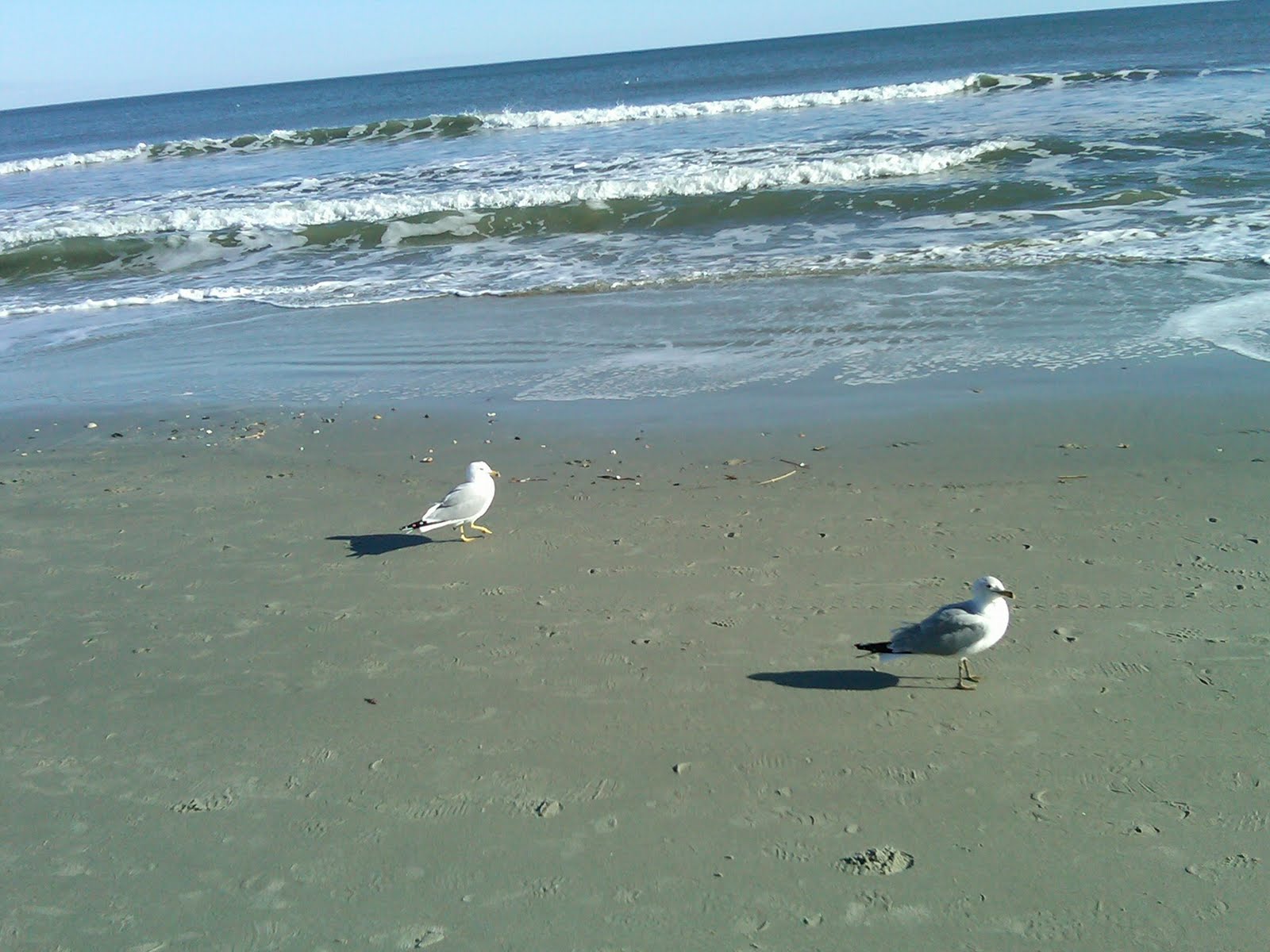
And the beach. That wide Atlantic beach. There’s just nothing like it. Perfect sand and scallop shells, and the waves rolling thunderously in, one after another. They still manage to fascinate people, just as they’ve done, constantly, incessantly, for thousands and thousands of years. In a way, the tide is the one perpetual motion machine that I can think of.

I like to think of myself as born of the Atlantic. My parents met at a party on Fire Island, New York. They were both working at Young & Rubicam, an advertising agency in Manhattan. He was a copywriter, she was in the art department. They spent all night talking, and fell in love. And not too many years later, they were packing me and my little brother into the back of our station wagon and driving us out for vacations on Long Island. Once we stayed not far from the spot where they fell in love, but the place was too spartan for Mike and me. There was a grocery store, but you had to walk what felt like miles to us and they didn’t the kind of crap we enjoyed eating back then. To say that we complained about it would be an understatement. We scratched a message in the sand: “SEND FOOD.”

That was the vacation during which my father was called in for some meeting and Y&R sent a sea plane for him. It landed in the bay in front of the house we were renting, and my father pulled up his pants legs and waded over to the plane. We watched the plane take off, and our dog sat on the beach in front of our house, peering up into the sky for a good twenty minutes, cocking his head, first to one side, then the other.

I’ve had other memorable moments on the Atlantic, like a bonfire in Montauk, and my summer on Cape Cod. Fun with friends in Martha’s Vineyard, and an unbelievable Fourth of July party in East Hampton. The Jersey Shore with Jeanette, our last vacation on our own before the birth of our first son, Diego, and Friday night fireworks at Coney Island with the family.

I hadn’t realized how much of an impact the Atlantic Ocean has had on my life, or how much I’d missed it in the nearly three years since leaving New York. Now, as I write with the sound of the waves just outside my hotel window, I say to myself that it’s been too long, and that I’ll need to come back, sooner rather than later.

Amtrak Days

Earlier today, at the outset of what has been a very, very long day, I found myself jammed in between the window and a man about my size in the back of a U.S. Airways Express jet, if you can use that word for what we were in. It occurred to me that there was another time in my life when I traveled alone, nearly as often as I do now. My parents periodically put me on the Amtrak train in Croton Harmon, for the five-hour trip up to Syracuse, during my years as an undergraduate there, from 1981 to 1986. Confined as I was in that little seat, I yearned for the space and the freedom of the Amtrak trains.

My activities then were so different than they are now. I don’t think I ever had a laptop; I graduated in 1986 and didn’t get my first laptop until five years later. There was no Kindle and no cell phone. I may have had a Sony Walkman somewhere in there.

Mostly, though, I read, wrote, chatted, if I was feeling confident, or played solitaire. One of my favorite things to do was go to the bar car and write in my journal. I absolutely loved the scenery on that trip; it’s mentioned in Raymond Carver’s masterpiece, Cathedral, when the narrator feels stupid after asking the blind man if he sat on the left side of the train on his way up from New York, because that’s the side with the great views of the Hudson. You get the Hudson, you get the Catskill Mountains, the Adirondack Mountains and the Finger Lakes on the trip. It goes all the way up to Montreal, though I never took it that far.

I used to sit in the club car, as it was also called, and scribble thoughts in my journal — probably mostly about the melodrama that was passing for my love life at the time — or about how I wished I was writing more than I was. Sometimes I’d have a beer or more. You could still smoke on the train back then, which I did. And I really enjoyed the taste of those nasty microwave croissant sandwiches and the cheesy, buttery smell of them comes back as a sense memory when I think of it. The scalding burn on the outside edge and that middle bite of still-frozen ice. I loved it!

I was pretty shy back then, so I don’t remember many interactions. I do remember being approached by an older man who walked with the help of a cane. I don’t recall much about him, except that he had angular features and spoke with a slur that suggested he’d been drinking.

“Introspection or creation?” he asked.

“Excuse me?” I answered, intimidated.

“Are you writing by looking within or without?”

“Without, I guess. I’m writing a story.”

He went on to talk about Flannery O’Connor, recommending her work to me. I wrote it down, and still have the journal somewhere. I think it’s in my sister’s basement in Brooklyn, gathering mold.

The other conversation I remember was with a woman who sat next to me up to Schenectady, where she lived. She was a model in New York, and I enjoyed chatting with her. We hit it off, buying each other beers. I remember thinking she had the most perfect face — her skin was very dark, what I supposed the word “onyx” to mean, her cheekbones were strong, and her nose was thin. Her eyes were almond-shaped. I was sorry to see her go, and when I asked for her number, she smiled and said, “Bye, Dan. Good luck to you.”
Nowadays, on flights like the ones I take all the time, people are on their cell phones before takeoff and after landing, and on their Kindles, iPods and laptops in the time in between. There are very few of the kinds of interactions like the two I’ve described from my youth. It makes me ask my question yet again — is all this technology bringing us closer together, or it pulling us farther apart?

Dance Party USA

Last night, just as we were finishing dinner, Diego started a sentence the way he starts countless others: “Daddy/Mommy, can we…” I cringed, in preparation. Be strong, Dan. In the words of Nancy Reagan, “Just Say No.” Whatever it is, it won’t be something they should do. They drive bargains; that’s what these people do. They start high, with things like “Can we go to Disneyland? Tomorrow?” I go low. “No, you can’t. Ever. And you can’t go anywhere else either. Ever.” Then we try to meet somewhere in the middle.

This time, however, I’m relieved, when he asks, “Can we put on some music and dance?”

“Yes! Of course we can, my son! Of course!” Jeanette was thrilled, and immediately began her stretches, in preparation. (I’m teasing. Homegirl was doing handstands as they danced. Literally. Hot yoga is definitely paying off.) Anyway, I’m a little under the weather with asthma and allergies right now (no, seriously, I am), so I had to play deejay. Thinking fast, I put “Michael Jackson Radio” on the Pandora, and the party STARTED.

No, I didn’t videotape it this time, sadly, though I did think about it. What happens when you do that sometimes, though, is that it can kill the spontaneity of it. And man, watching my two boys and their mom going like tops around the living room floor with “Beat It” and “When Doves Cry” and “Remember the Time” playing . . . I tell you, it doesn’t get any better than that.

Jackson’s moves were more rhythmic, and MUCH more, um, how do I put this… adult … than Diego’s. For example, at one point, he was kind of like “freakin” Jeanette from behind (I don’t know where he learned it, I swear), and as I raised an eyebrow, he grinned and saluted me. The kid saluted me. I shit you not. We’re in SO MUCH trouble. Diego was more ethereal; his dance style was more of a “flow,” with some robot thrown in there. I think he’s learning different steps in P.E. class right now.

As I think I’ve said before somewhere in these pages, there will come a time, a few years from now, when these two young people will not be this into us. Dancing with their parents will be way down there on their list of things they consider fun. In fact, I don’t think it will be on their list at all. So for now, Jeanette and I live for these moments.

Oh, okay, you want to see them dancing? Here you go: In case you missed it, here they are, dancing to “The Lion Sleeps Tonight.”

Running Fox: I Believe in Omens

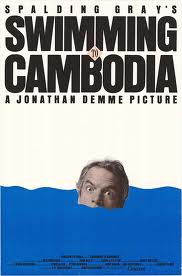
One of my favorite pieces of filmmaking/literature/performance is Jonathan Demme’s “Swimming to Cambodia.” Spalding Gray is beyond neurotic, giving voice to a number of my own manias throughout the tour-de-force monologue.

In that performance, there’s a segment in which Spalding talks about what he calls “Magical Thinking.” It’s his obsessive compulsive need to perform certain rituals, including not being able to leave his home until he hears a positive word on the radio.

It’s hilarious to me because it’s so recognizable. Like Gray, I believe in “magical thinking.” I take things as omens all the time, and this morning I had a doozy.

Driving south on Gregg Manor Road towards 290, after dropping off my kids at Manor Elementary School, I saw, about five cars ahead of me, a fox make a run for it across both lanes of heavy school-time traffic, from east to west across Gregg Manor. He was so fast (I say “he” not knowing the gender, obviously) that I don’t think the cars he managed to bisect even realized he’d gone across.

But I saw him, clear as day – a Running Fox – right there in front of me. Of course by the time I reached the point where he’d made his crossing, he was nowhere to be seen, snuggled safely amid the tall pasture grass that borders the Shadowglen golf course.

Significance: My name: Fuchs, German for fox. My tattoo on my left bicep, a running fox. And my film company, whose name is tagged on the documentary I’m about to present at a national conference in South Carolina? You guessed it: Running Fox Productions.

I felt as if God sent that fox in my path as if to say, “Don’t sweat it, Dan. The people who come see your film are going to love it. It’s good work. Be proud of it.”

The thing about me and my belief in omens, is that I tend to believe the ones I perceive to be “positive” ones. If it had been a black cat darting across Manor Road I would have pshawed it, having a private giggle for those poor suckers who believe in that sort of thing.

But if it’s going to help me have a better experience at the At Risk Youth Forum next week, then I say thank you, to God, and to that little gray fox, for giving me the courage to go forth and excel.