Staying Home Sick Will Never Be The Same

I became aware of soap operas as a boy, when I would stay home sick from school. Back then, our options on television were slim in general, but during the day? Forget it. The channels we had available to us in the New York Metropolitan area were 2, 4, 5, 7, 9, 11 and 13. Occasionally a few VHF channels came through, but they were snowy and/or in Spanish.

Channels 5, 9, and 11 were the local channels, and 13 was PBS. 2, 4 and 7 was where most of the good, or at least decent stuff aired. 2 was WCBS, 4 was WNBC and 7 was WABC, and they still are, as far as I know. Those three channels were the ones that carried the nationally syndicated soaps. My mother was not a huge soap opera fan, but I loved TV as a rule, and the unspoken understanding was that being sick somehow gave me the right to watch television all day long.

I vaguely remember stopping on Days of our Lives and watching for a while, being somewhat interested in peeking in on the lives of adults, with sex and violence, and all the other good stuff they tried to hide from me when I was a kid. Then, I would infallibly get bored and switch either to a game show or, perish the thought, I’d turn off the television and actually read a book.

The soaps made a comeback during high school, when it became a favorite pastime of my little group of friends to get together at someone’s house – usually someone who lived closest to our school, because of the time factor involved – and watch the tail end of All My Children (“All My Kids,” as Maria and her sisters liked to call it) before getting into General Hospital.

At first, we watched it as a goof, while sneaking shots of Southern Comfort and plotting our weekend mischief. But a curious thing happened. “GH,” as we called it, started getting . . . good. But I mean really good. There was Hutch “the baby-faced hitman” (Maria’s again) who all the ladies adored and who was plotting to kill Luke. And there was, of course, that most passionate of daytime relationships, Luke and Laura. Although Luke looked vaguely like Frank Purdue with a blond wig made of pubic hair on his head, and Laura looked like every overly made-up bimbette you saw at the Galleria mall on the weekends, the chemistry and Forbidden Love thing were just too much to resist.

Now it appears that the long-running English-language soap operas are going the way of the dinosaurs. I guess with the advent, and expansion, of cable television, coupled with the virtual extinction of that elusive mythical creature the “Stay-At-Home Mom,” they just couldn’t compete. When my boys are home sick from school, the absolute LAST thing they would want to watch would be one of the classic soaps. They prefer the Food Network. (Thanks, honey, for that.)

As it happens, I am home sick from work today, and no, I have no interest in All My Kids or GH. I’ve got hours of DVR’d HBO programming to look at. The world most certainly has changed, but I have no doubt those soaps will take their proper place in television’s Pantheon.

Oh wait, I know. I’ll watch some “Novelas.” Ay, si!

FINALLY!

You may have an opportunity to be published today. Whether you are writing the next “War and Peace” or a simple letter to the editor, people are interested in what you have to say. You may spend too much time double-checking your thoughts and over-editing yourself, though.

When I saw my daily horoscope on Facebook this morning, I paused. I recalled those days long ago, when I used to make copies of my short stories, following the guidelines I learned about in books I bought for that purpose. I would send them out to various magazines, with the obligatory SASE inside, fully expecting to have it boomerang back to me in a month or so.

Now, I am published each and every day. And so is my friend, Kami, a brilliant writer. Not to mention Steve Lazar, a champion of young learners in the Bronx, and my former students, Jack Kyser and Shipnia Bytyqi. I can read Gayle Saks or Susan Dreyer-Leon, if I want to. And I look forward to anything new by Max Terry.

So yes, maybe there is a big, fat elitist difference between “writing” and “blogging,” but you know what: I like being a blogger, and I like reading bloggers.

There. I said it.

And I didn’t over-edit, either.


Mulling It Over in My Mind

Well my Easter turned out to be a good one, spent with friends who have similar culinary tastes to mine. They made Cuban sandwiches and pitchers of mojitos. If you’ve never had one, you’re crazy and must start drinking them immediately. Same for eating Cuban sandwiches.

Oh sure, you might be on one of those “health kicks,” and that’s fine, but it really would be a shame to go through life not having experienced either of these things. I thank my friends for their generosity, and for making a holiday that is inherently difficult for me so much better.

Drinking the cocktail reminded me of my days in Madrid, when we used to frequent a bar that specialized in another mulled drink, the caipirinha from Brazil. It’s sugar-based, like the mojito, but because it pairs the sugar with limes, instead of with mint, it’s bitterer than its Cuban cousin.

Both drinks give me a most pleasant buzz. Everything blurs at the edges, like a Vaseline-treated lens from a 1970’s soap opera. Sounds that grated on your nerves blend into the background, and you hear waves hitting beaches, even when you’re landlocked.

I can’t remember the name of the club where we used to drink the caipirinhas. I’m not even sure where it is anymore, as the memory has faded with the years. I’ll need to check with my buddies from that era, and see what they come back with.

What I do remember is settling into comfortable chairs and downing the drinks in rapid succession, amid much laughter and commotion. The music was good, too, I seem to recall.

Of course, that was a more carefree time, with fewer responsibilities than I have now. Today was a good reminder, though, that having responsibilities does not preclude having fun and enjoying the joys of food and drink.

I’m very blessed, in many ways, not the least of which is to be able to take part in days like today. I’m thankful for what I have, and must always remember that we share ourselves with the Earth, and the others on it, for a relatively brief period of time. It’s for this reason that we must make sure to LIVE.

It's National Karaoke Week!

Karaoke entered my life sometime in the mid 1990’s when my friend Susan Dreyer-Leon, (then just Dreyer) invited me along with some of her high school friends to some joint in the Korea-town neighborhood of Manhattan, in the West 30’s, just below Herald Square.

Like most people, I was unnerved at the thought of doing Karaoke. There’s an image one has of having to do a performance. I’m not sure where this image comes from. Maybe it’s in a movie? At any rate, I was relieved when I realized that it was just the four or five of us, with a couple of six packs of Budweiser (the group was from St. Louis, so I guess we were honoring their background). We were in a dark room with two sofas and a large-screen television, a couple of couches, two microphones and several binders filled with more songs than I could ever think to hear in sixteen lifetimes.

It was after that night that I became a Karaoke freak. Once our school moved to within a stone’s throw of Korea-town, we were “in there like swimwear,” as the saying once went. Many a staff party ended up at the Muse Karaoke bar (which, I’m saddened to learn, has closed down) on West 26th Street, just a few blocks down from the school.

Not only was Karaoke a terrific way for our staff to blow off steam, obviously, but we also bonded, and learned about each other’s musical tastes and crooning skills, or lack thereof.

Since that time, I have successfully recruited several people into the Karaoke world, including my wife, who has, in turn, recruited her sister and several cousins. For my birthday a few years ago, Jeanette bought me a Karaoke set up that hooks right into the television, and although it doesn’t show the cheesy videos you get in some of the KTV joints, it does have some hilarious still photos that are wonderfully incongruous with the songs playing along with them.

My children have become Karaoke fans, as well, and I’ll never forget the Christmas party at our apartment in Brooklyn, when Diego’s version of Twinkle, Twinkle Little Star got the high score of all performers.

Karaoke is not only good fun. It’s a reminder of the importance of song in our lives. Even out-of-key, horribly rendered song. If it brings family and friends together, how bad can it be?

So enjoy National Karaoke Week, everyone!

Of An Easter, Heartbroken

It was eleven years ago, to be exact,

Easter Sunday, 2000.

We gathered at the synagogue

near my father’s home in Westchester County

to say our final good-byes to a beloved man.

It was a beautiful spring day as I recall, and I was

grateful to be surrounded by

so many friends who had come to pay their respects.

It spoke to who he was in life, that he should be

so honored in death.

I won’t take this time to write much more

than a quick recollection of that day, so that if you ever

see me on an Easter Sunday, and I look far away, as if I’m

having trouble being in the moment, you might be able to

forgive me and understand why.

Just as I could not be my usual “master of ceremonies” self

on that day, I am having trouble finding the correct turn of

phrase to describe what I felt. It was visceral, a howling pain that made me

understand what “keeners” are and why their role is necessary in Irish funerals. Sometimes words are not what’s needed. Sometimes, as Allen Ginsburg

may have been suggesting, what we need is to howl.

Good night, Dad. I miss you. Your loss was a huge one for me,

and there’s still a chip on my heart where it broke the day you

told me of the doctor’s diagnosis. I’m heartbroken that we’ve

not been able to share so many momentous occurrences in my

life – my marriage, the birth of my two sons. I’m heartbroken you’re

only an idea to them, not a living, breathing, loving grandfather. You

would have been a great one to them, just as you were to

Levi, Jules, Nina and William. Good night.

I love you, Dad.

Manipu-boy!

I think if Jackson were a super-hero, that would be his name: Manipu-boy! Able to play with the emotions of humanoids twice his height and five times his weight!

If you think about it, that’s what these small people have to do. They have no real power as children — neither physical (because they’re little) or political (because they’re young, can’t vote, and have no access to capital and/or the means of production). So what do they fall back on?

Manipulation.

Here’s the perfect example: Remember my post about Jackson’s “dog lust,” and what a strong play he made for a dog? Well, I’m proud to say we’ve stuck to our guns on that one. Jackson cannot physically threaten us to get a dog, and he can’t go get his own money and buy one, so here’s what he said to us once, not long after he came to the realization that Christmas had come and gone and no one had given him a puppy:

“I don’t want to lie. I’ve been telling people at school I have three dogs…”

If Jeanette and I hadn’t been laughing so much, and so hard, we might have entered into a negotiation with him then and there. But we didn’t. We laughed.

But think about it: What a smart, syllogistic bit of manipulative logic on his part. He knows his parents have told him that lying is wrong. If he’s lying about having dogs, wouldn’t the noble thing for his parents to do be to actually give him dogs, so that he would then be telling the truth, as we all know he should be?

Brilliant, I tell you. Brilliant. Almost enough to make us want to get him a dog.

Almost.

What's Your Uniform?

I remember getting into arguments with my soon-to-be-ex-girlfriend at the time about the importance of what people choose to wear. I’m not speaking figuratively, existentially, or anything like that. I’m talking about clothes.

“You’re conventional,” she used to tell me. “You dress conventionally.”

As a self-professed radical in my twenties, this was like the worst possible thing anyone could have accused me of.

“What do you mean by that?” I asked.

“Conventional,” she said. “You know, petite bourgeois.”

This was always a conversation-ender, mainly because she had studied Marx in her political science classes, and I was an English major, more interested in Russian authors than in the politics she was studying.

Don’t get me wrong: I was committed to the causes I demonstrated about, but on a basic “humanist” level that didn’t live up to her level of dogmatic commitment. The clothing was the outward manifestation of this basic difference for her.

Looking back now, I realize she was absolutely right; I was more conventional that she was. And my “aw, shucks” attitude about just wearing whatever I was wearing for no particular reason was incorrect. The fact is we all wear uniforms. I’m wearing one right now – dress slacks, black loafers, button down shirt with no tie, and a blazer. I’m dressed in my school-reformer uniform. It gives the vague impression of school teacher/college professor, with a dash of liberalism thrown in by omitting the necktie.

I look at the people sitting around the coffee shop where I’m writing this, and they’re all in uniforms, too. There’s the aging hippie with his long, white “Freak Brothers” beard and black bandana, folded meticulously to hold back his long grey hair. There’s the TCU student with his “Horned Frogs” t-shirt, tapping on his laptop just as I am. There are the “baristas,” in their company-required white shirts, khakis and green aprons.

My uniform changes on the weekends, when I get out the shorts, the sneakers, the t-shirt and become Fun Daddy. Different moments in life require different uniforms.

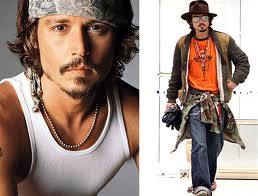
I’ll tell you a secret about myself. There’s one guy whose uniform I totally envy, and if I could pull it off, I’d totally have the same one. I think without the hair, however, it would just look silly. But one thing I’ll say for J.D.’s look: It sure ain’t conventional…


Let's Go Mets: 1986 Revisited

In the summer of 1986, after (finally) graduating from college, I made my way to the Boston area, drawn by the promise of a rent-free existence at my girlfriend’s father’s house. I didn’t live there long; in fact, we pulled up stakes and moved to Europe about a year and a half later.

It wasn’t that I particularly disliked Boston; in fact, I kind of fell in love with the place. But the plan had always been to make enough money to leave, and we stuck with the plan.

One of the details of my time in Boston that shines beautifully in my memory is the presence of baseball. Like most American boys, I grew up watching baseball, and my team was the New York Mets. They were a team that was born the year before I was. They were a remaking of the Giants, who had moved their franchise west to California, just as my father’s Dodgers had done less than ten years earlier. Like the Dodgers and the Giants before them, the Mets lived in the shadow of their crosstown rivals, the monolithic Yankees.

I have vague memories of the Mets’ championship season of 1969, when I was almost six years old. Four years later, in 1973, they got to the World Series again, this time losing to the Moustache Crew from Oakland. My recollections from that year are more vivid – Tom Seaver, a song my music teacher had us sing in chorus about the Mets, and a brawl during the playoffs between Pete Rose and Bud Harrelson that nearly caused my mother, recovering from an appendectomy to bust her stitches yelling at the TV screen in her room at Saint Agnes Hospital.

Most of my childhood, however, was spent rooting for a New York Mets squad that was pretty horrible. They had stars like Dave Kingman, Joel Youngblood, Willie Montanez, and John Stearns. These were all players I enjoyed watching, don’t get me wrong. But they didn’t string wins together very well, and heartbreak was an everyday thing.

Flash forward, back to my time in Boston. I spent that summer of 1986 going to a few games at Fenway Park, an absolutely magical place to watch live baseball. Compared to what I was used to in New York, with Shea and Yankee Stadiums, Fenway was tiny, and there really isn’t a bad seat in the house.

It became evident that the possibility my Mets might meet the Sox in the Series was very real. The playoffs were great on both sides, with incredible battles between Boston and the Angels, the Mets and the Houston Astros. I had ongoing trash talking bouts with one of my bosses, Jeff Rubin, at the Harvard Negotiation Project, an avid Sox fan. I was a ballsy kid; I even had the audacity to get on the office PA system and announce, “Attention Boston Red Sox fans: This is God speaking. The Mets will win the series. That is all.” I’m lucky they had enough of a sense of humor about that one not to fire me.

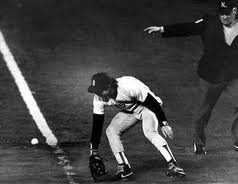
And then there was that famous moment – notorious in Red Sox Nation – when the Mets, one-out away from losing the series – began an unlikely comeback that culminated in a ground ball, hit fairly hard, but by no means a screamer, finding its way under Bill Buckner’s glove and into baseball history.

I was sitting in my girlfriend’s father’s living room at the time, and you could hear people screaming “NO!” outside. Then there was silence. I opened up the door and screamed out an equally powerful “YES!” that was met by the silence of an entire broken-hearted city.

I didn’t have the heart to lord the win over my office mates, who were pretty demolished. One of them, a transplant from out of state like myself, came up to me the morning before Game Seven, when the Mets decidedly won, and said, very seriously, “Hey, did you hear about Bill Buckner?”

“No, what?” I asked, concerned.

“He threw himself in front of a bus.”

“Oh my God, no,” I said.

“It’s okay, though,” she added. “It went right through his legs.”

More Than a Mascot and Two Colors: Making the "We" Mean Something in Public Schools

I started my day in an inner-city middle school that is in danger of receiving its third consecutive Academically Unacceptable rating. The principal, new this year, and the fifth in the last three, has been out on leave for reasons that appear to be a mystery to her Associate Principal. Neither of them was on board when I began working with the school on their Redesign grant a year ago.

The Associate Principal looks put upon when she sees me, asking, “Did we have a meeting today?” I apologize for not having sent her an email reminder, and this disarms her. She shakes off her annoyance and asks me to follow her into a conference room where we sit alone.

She is a very professional, very “put together” person. I can tell she has a strong inner-self that is keeping her going in this job, especially when she begins to elaborate, explaining that despite the fact that the district has appointed a substitute administrator in the principal’s absence, she has been pretty much running the show herself for the last couple of months.

The more comfortable she gets with me, the more truth comes out. She describes a number of her faculty members as “a cancer” that needs to be removed before it can spread any further. Relating a conversation she had with the district leadership, she tells me that when asked how many of the 65 teachers she would keep for her ideal school, she says maybe twelve. Maybe.

We discuss ways we can re-direct the work being done via the grant so that it more directly addresses some of her wishes, i.e. that the faculty feels some ownership over their stake in the school, so that there is more of a sense of shared vision and purpose in the building. I tell her about some of the work being done on other campuses, which seems to interest her, but mostly I can tell she’s just being polite with me.

Finally, and inevitably, about 45 minutes into our conversation, she gets the call on the radio that she is needed in the main office. As I walk her over there, I look at the faces of the children in the hallway, and they look lost. They look abandoned. They have that 50-yard stare you hear about people with Post Traumatic Stress having. I want to throw open the doors and free them; though I’m not sure where they’d go. The surrounding neighborhood drips with the same malaise as the school building, punctuated by “Payday Loan” storefronts and heavily fortified drive-through liquor distributors.

There’s an attempt at positivity on the walls near the office, with a poster proclaiming “Our Future’s So Bright, We Have to Wear Sunglasses!” But the faces of the children make it feel perfunctory.

The ultimate irony is the saying that hangs above the principal’s door. Made of wood, it looks like a child’s shop class project, and says, cheerily, “No Discouraging Words.”

So those of you who know me professionally are probably asking yourself, “What’s with Fuchs? Why is he trashing public schools?” Well here’s the thing about real life, as opposed to how it’s written up by Davis Guggenheim or Michelle Rhee. News flash: There are depressing, ineffective public schools like the one described here, and then there are the schools that I refer to as my “palette cleansers” – schools without which I might have to find another line of work.

I ended my day at one of these schools today. To be fair, we’re not talking “apples and apples” here. My afternoon meeting was at a 5-A suburban high school. But I’m tired of people using demographics as an excuse. “Well of course, Dan. But OUR kids can’t do that…”

To me, it’s about the “we.” The palette-cleansers have one thing in common: They are devoted to creating a sense of meaning behind the name of their school, besides just a mascot and two colors. In the school where I ended my day today, there is a strong team, quietly led by a stalwart principal who stays out of their way, while fully endorsing their work, because he knows it makes his school a great place for students and their families.

I get accused at times of over-simplifying things, and I’ll admit that if the “we” is all you have, you don’t have enough. You still need great, enthusiastic, exciting teachers who care about their students. And you need to be willing to push kids out of their comfort zone.

But if you DON’T have the “we,” you’re really hamstrung. And contrary to what the Guggenheims of the world might tell you, there are public schools out there that we can point to as models of what it means to have a strong sense of shared vision. It’s time for us to start looking at what they’re doing right, so we can preserve the basic human right that is public education.

Deafness Never Stopped Her Singin' Heart


My mother, the late Carol Fuchs, was a remarkable person, and I have any number of reasons to miss her. One of the less likely ones is her singing voice.

It wasn’t good, exactly, her voice. In fact, it was pretty horrible. Scarlett Fever had knocked out most of her hearing, and her adult life was punctuated by a series of ear operations and hearing aid innovations. Her deafness wasn’t evident in her speaking voice, but anyone who does any work with the deaf would have been able to tell she was a lip-reader, moving her lips subtly along with the person she was trying to understand. And her singing voice went beyond just tone deaf.

I don’t know if it was due to her being half Irish on her mother, Hazel Ferrell’s side, or maybe it was a generational thing, but my mother definitely had a song in her heart. I remember two of her favorites were “Katie” and “Candy.”

“Katie” was a song delivered in a stutter:

K-k-k-katie,

You’re the most remarkable girl that I adore.

When the m-m-moon shines,

Over the c-c-cowshed,

I’ll be waiting at the k-k-k-kitchen door.

“Candy” was probably her favorite tune, and she sang it so off-key you had to smile:

Candy, I call my sugar Candy,

And I’m so sweet on Candy,

Cause Candy’s sweet on me.

Thinking back on it now, I’m proud of my mother for never giving up on singing. She knew it didn’t sound the way it was supposed to, but it didn’t matter. It was a way for her to express herself, and Lord knows she was never shy about that.

The fact that it made my brother and me blush was probably an added bonus for her.