When I Grow Up

So I’ve finally figured it out: I know what I want to be when I grow up. I want to be a working novelist who teaches English at a university. I want an office with my photos on the wall and my books on the shelves. I want to meet with students one-on-one and discuss their work with them, recommending books and stories as I go.

I want to teach a creative writing workshop where we carefully critique each student’s story or novel excerpt, collaboratively getting to the best way to express exactly what they’re trying to say, in a way only they can say it.

I want a semester on-semester off schedule, so that I can write full time when I’m not teaching. I want my novels to be translated into many languages, so that people all around the world, from a wide variety of cultures, can agree about my unique insights into the human psyche.

In short, when I grow up, I want to be a writer. When I think about it, this is all I’ve ever wanted to be.

My Fascination with the Count

No, not Dracula, or the guy from Sesame Street – my fascination is, and has been – off and on – for about the past 30 years or so, with Count Leo Tolstoy. I was introduced to his work my freshman year at Syracuse, in a World Literature class taught by Tobias Wolff. Toby’s enthusiasm for Tolstoy was overt and infectious. Like all good teachers, he made me want to understand what it was that got him so worked up about this writer.

I don’t remember which was first, but I know we read two of Tolstoy’s works in that class – the novellas, The Death of Ivan Ilych and Master and Man. Both were concerned with the theme of death, in very different ways. My inclination is to re-tell both stories, but I’d need to read them again, in order to do the Count any justice.

Suffice it to say, something in his work, and in the little I’ve been able to learn about the man himself, spoke to me on a profound level. His writing connected me with characters from another century, on the other side of the world. They couldn’t have been more different from me, and yet, we were somehow the same. In their relationships with each other, they were exploring the same things I was trying to puzzle through, like how we do or don’t connect, and what it means to love, and be loved.

As a student of arts and sciences, I was able to hone in on empathy and compassion, and the meaning of being a member of the human race. I got steeped in this at Syracuse, not only in my literature classes, but in my side study of theatre, as well. My stepmother, the late Judy Karnes-Fuchs, was fond of saying the world was split up into poets and politicians, and that my father and I were both poets. I think she said this because she thought of herself as one of the politicians, though I think she was more of a poet than she realized.

At any rate, my mother, the late Carol Runyan Fuchs, too, was a poet (quite literally), and I followed in the footsteps of my parents. My liberalism mirrors theirs pretty closely, in that it is unapologetic and based squarely in a sort of democratic, secular humanism. Put in its simplest terms, I return to the imperfect haiku I wrote as a boy of seven: “A dog is made of/love. And so are/you. And so is a bird.”

Tolstoy’s stories are all about love. I finally took on one of his great novels, Anna Karenina, the summer after coming out of the longest relationship of my life up to that point – about eight years. I did some traveling with some friends to Portugal, the U.K. and Rome. I had the book along and devoured it. The novel changed me as I read it; walking with the characters through their lives, I felt as if I was living with them. When I closed the book, I couldn’t talk for a while. I just had to sit quiet for a time.

I’m sorry to say I can’t explain my reaction any better than this. There’s something that happens when you read something that takes you out of your own reality. My mother compared it to listening to a piece of classical music. Toby Wolff described the first time he’d read Raymond Carver’s short story Cathedral as a feeling of levitating above the couch where he’d just finished reading it. I don’t know if I’d go that far, but reading Anna Karenina did give me a sense of connectedness to the family of man, to the human race, that must be close to what people refer to as “spiritual.”

Someday, after my novels have been translated into many languages, read and loved by the multitudes, I’ll take my trip to Yasnaya Polyana, just outside Moscow, and I’ll walk the trails of the Count’s youth, ending at his gravesite. I’ll place a pebble on the tombstone and thank him, before returning home, to my own Clear Meadow, where I hope to find my wife, two boys and their beautiful families waiting for me with open arms and happy hearts.

It Has to Come from Me


I’ve mentioned, in a previous post, that I’ve fallen into the habit of “checking in” on Facebook, particularly in the morning, when I’m on my daily bike ride. I’ve taken some heat (“good-natured ribbing,” really) from friends about it, and have lately thought better of the daily check-in. When I stepped back and thought about it, I had to admit that it did seem a rather silly, borderline boastful thing to do.

By way of explanation, then, let me try to unpack the dynamic, to those of you poor souls who have read the words “Dan Fuchs checked in at ShadowGlenn Trail Morning Bike Ride,” over and over again for the past six months or so.

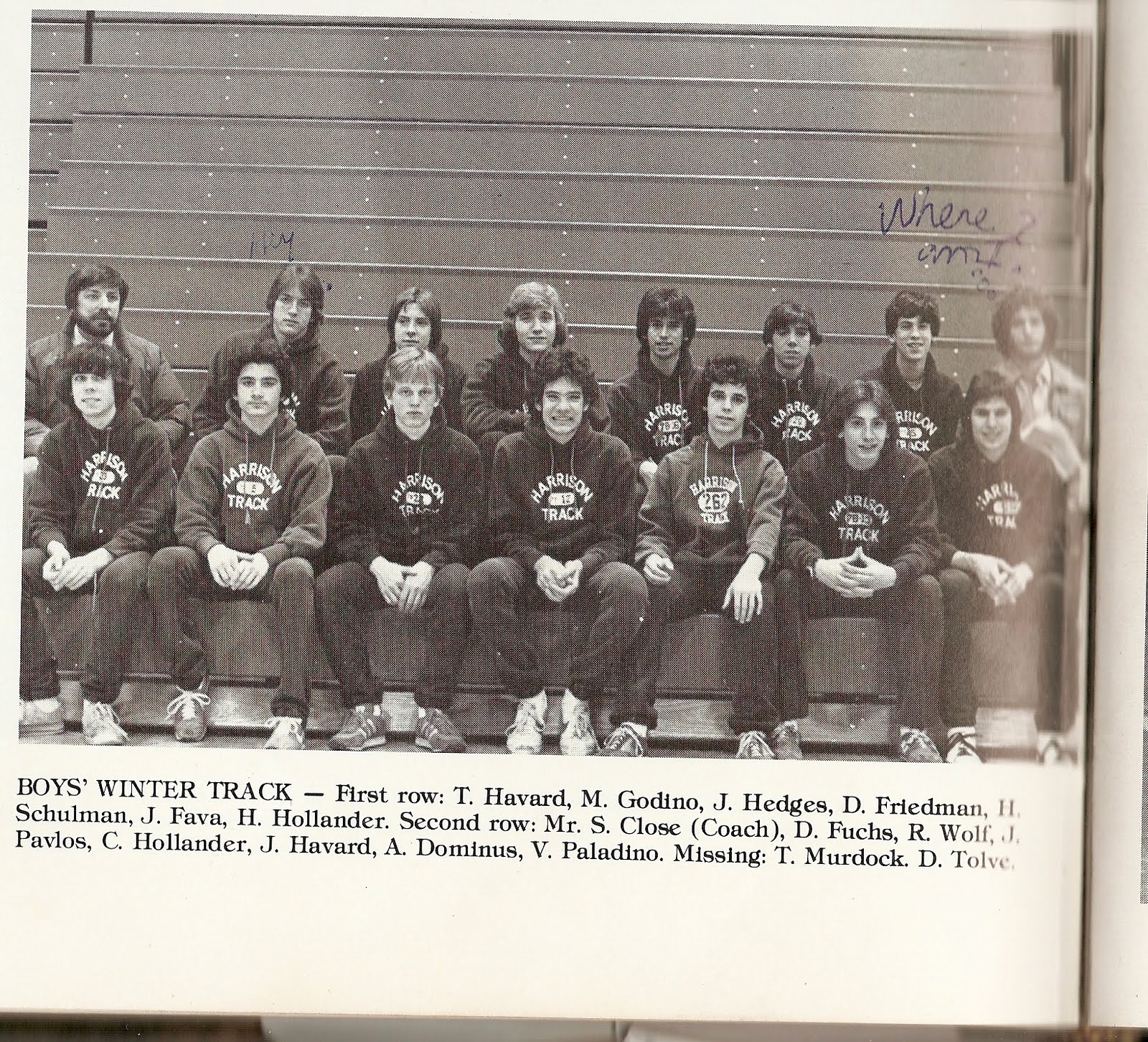
To be perfectly honest, I have never been a very self-disciplined individual. I’ve had trouble over the years holding to diets, exercise regimens, oaths, and the like. My tendency has always been to seek the path of least resistance and least discomfort. As a boy, I was on the track team in high school. I enjoyed the camaraderie of it, and it was cool having a letter jacket. I didn’t mind having a few extra photos of myself in the yearbook, like the one above. But I wasn’t too big on the competitive part of it, and I certainly didn’t enjoy practice. The only reason I did it was because I knew I had to; and I never pushed myself too hard while working out.

As an adult, I didn’t start going to the gym until I was in my forties. I did start to find enjoyment in working out then; I found that it made me feel better in general to maintain some level of physical activity. My first gym was Eastern Athletic Club, which I liked because it was three blocks down the road from my apartment on Eastern Parkway in Brooklyn. I worked with a trainer there (again, needing that outsider’s voice to get me started) and really learned how to work out for the first time. I later switched to New York Sports Club, with my then-girlfriend, now-wife, and then to YMCA.

I’ve written about Lifetime Fitness, where we are now members, and that’s a great place, as well, mostly as a place to go with the family. This morning cycling (and don’t get me wrong – there’s no danger of my entering a triathlon any time soon) is special because it was my idea. No one told me to do it. It wasn’t on doctor’s orders, or at the suggestion of my wife or brother or anyone else. There is a certain pride in self-motivation, I think. There’s a relationship between self-discipline and self-esteem, and what I’m starting to understand (for myself, anyway) is that things like diet and exercise are only sustainable under these conditions.

And that relationship doesn’t stop at fitness for me. You may have also noticed, for example, that I tweet my new blog entries, so that all my Twitter followers and Facebook friends are alerted to the fact that I’ve written something new. Like the check-in’s, I sometimes worry that these tweets and status updates are immodest in some way. However, the bottom line is that I’m proud of my fitness and my writing. It’s not that I want to make anyone feel bad for not exercising or not writing or working on their art, whatever it may be. On the contrary, my hope is that it may get them out there, to give it another try and to keep on trying, until it’s no longer coming from me, or anyone else besides the inner-motivation that comes with doing what you know, in your own heart, is good for you.

Time to Download More Songs

Jeanette and I are currently looking closely at our budget, thoughtfully tightening our belts. Times are tough after all.

But I think there is such a thing as budgeting for peace of mind, and as I wrote down the first several songs I heard this morning, during my coffee-drinking/journal-writing/iPod Nano-listening time, I came to the conclusion that I have GOT to buy new music.

1) The Cover of the Rolling Stone (Dr. Hook and the Medicine Show)

2) La Cura (Frankie Ruiz)

3) Wildfire (Michael Murphy)

4) 867-5309/Jenny (Tommy Tutone)

5) 17 (Kings of Leon)

6) Two Tickets to Paradise (Eddie Money)

7) Hold the Line (Toto)

8) Where is Maria? (Greg Brown)

They’re not bad songs; in fact some are very good. It’s just a weird mix, and I’m clearly stuck in the 70’s.

So here’s my question: They say that “These Kids Today” never pay for music. They somehow download their music for free. Can any of you kids out there teach ME how to do that??

(It would certainly help my budget….)

More Time Travel Thanks to HBO

Every time I think I can’t love HBO more, they bring out something new. Their original programming has been spinning its web around me for years, arguably starting with the comedy stand-up specials they’ve been airing since the 1970’s, people like George Carlin, Bill Cosby, Eddie Murphy and Ellen DeGeneres.

The first original series that just floored me was Six Feet Under, as I think I’ve noted here before. I caught the pilot, called my then girlfriend, now wife, into the room and said, “Honey, you’ve got to see this.” I never missed an episode after that. We became devoted followers of The Sopranos around that time, as well. And yes, I’ll cop to it: I watched Sex and the City, too.

Most recently, they’ve hooked me with True Blood, Game of Thrones and Treme. There are several more I’m not mentioning. I don’t seek out Bryant Gumbel’s Real Sports news magazine but tend to stumble across it, and I never change the channel when I do.

HBO’s documentaries are also outstanding; I don’t know where they find all the incredible talent they showcase. There was one about the elementary school in Chechnya where hostages were held, and eventually killed, and you felt like you’d survived something after watching it.

Occasionally HBO Sports makes its own documentaries, all of them narrated by Liev Schreiber, and all of them excellent. There was one about the Curse of the Bambino, and the whole psychology of the Yankees/Red Sox rivalry.

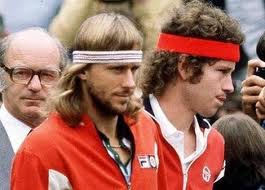
Just the other evening I happened to be flipping through the guide and saw that “McEnroe-Borg: Fire and Ice” was coming on. I sat up in my couch, immediately flashing back to my childhood, and the excitement of the few matches between the two that I was able to witness live on television.

Even at that young age, I knew I was witnessing something special. The two men looked, and “felt,” so different from one another. I found myself rooting for the Swede for some reason. I preferred his reserve to Mac’s wild outbursts and petulant scowl. Borg just seemed so classy. And, as the documentary points out, he was like a rock star, constantly being hounded for autographs by screaming girls.

If I ever wanted to be a tennis player, it was definitely Borg. Lately, I’ve come to like the mellower McEnroe, and I actually think he’s one of the best sports “color men” I’ve ever seen. No one knows the sport better or can speak with more authority about being in the heat of competition. He freely gives his opinion about players and their games, but he’s never ugly about it. In a word, Mac has grown.

Not only was it lovely to see these two men reminisce together about their amazing, if brief, rivalry years ago, but the footage put me right back there in White Plains, at 18 Hartford Lane, in the brown paneled play room, watching Wimbledon live, early on a Saturday or Sunday, rooting for a cool breeze from Scandinavia by the name of Bjorn Borg, my dad sitting comfortably on the couch, with me on one side and my brother on the other, much as I now watch Federer and Nadal with my boys.

I miss those days, but the present is a comfort to me, and the future beckons, in all its excitement and mystery.

Our Dance Parties Pay Off: Our Boys Can Boogie

I arrived at Manor Elementary School a little before 6 pm on a recent week night, in order to pick up my kids from their after-school program. The school year was winding down, and there was a sense — not only during the after-school, but the regular school day, as well — that the normally high energy level was winnowing. I remember the feeling as a teacher myself: It’s a little like running in a long-distance race and being able to see the finish line. It’s so close, but your legs are cramping, and you’re having trouble catching your breath.

Limping toward the finish line, I used to call it.

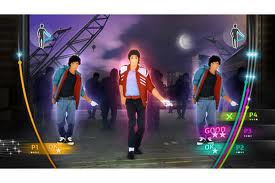
So the teachers who run the LEAP (after-school) program had dropped their usual regimentation and brought in a sure-fire crowd pleaser, the “Michael Jackson: The Experience” Wii game. And there, along with two pretty little girls, were my two boys, waving their remotes as a computer-generated (I guess) Michael Jackson went through the choreography of “Black or White.”

They both gave me a quick nod of acknowledgement, before going back to the business of trying to rack up enough correct dance moves to WIN THE GAME. This was certainly Diego’s motivation. I’m sure Jackson was just enjoying dancing with the two girls.

As I watched their flushed faces, I thought about two things: It’s amazing how M.J. lives on after death, and this is going to make their first 8th-grade dance so much less awkward for them than mine was for me.

The Baldie's BACK


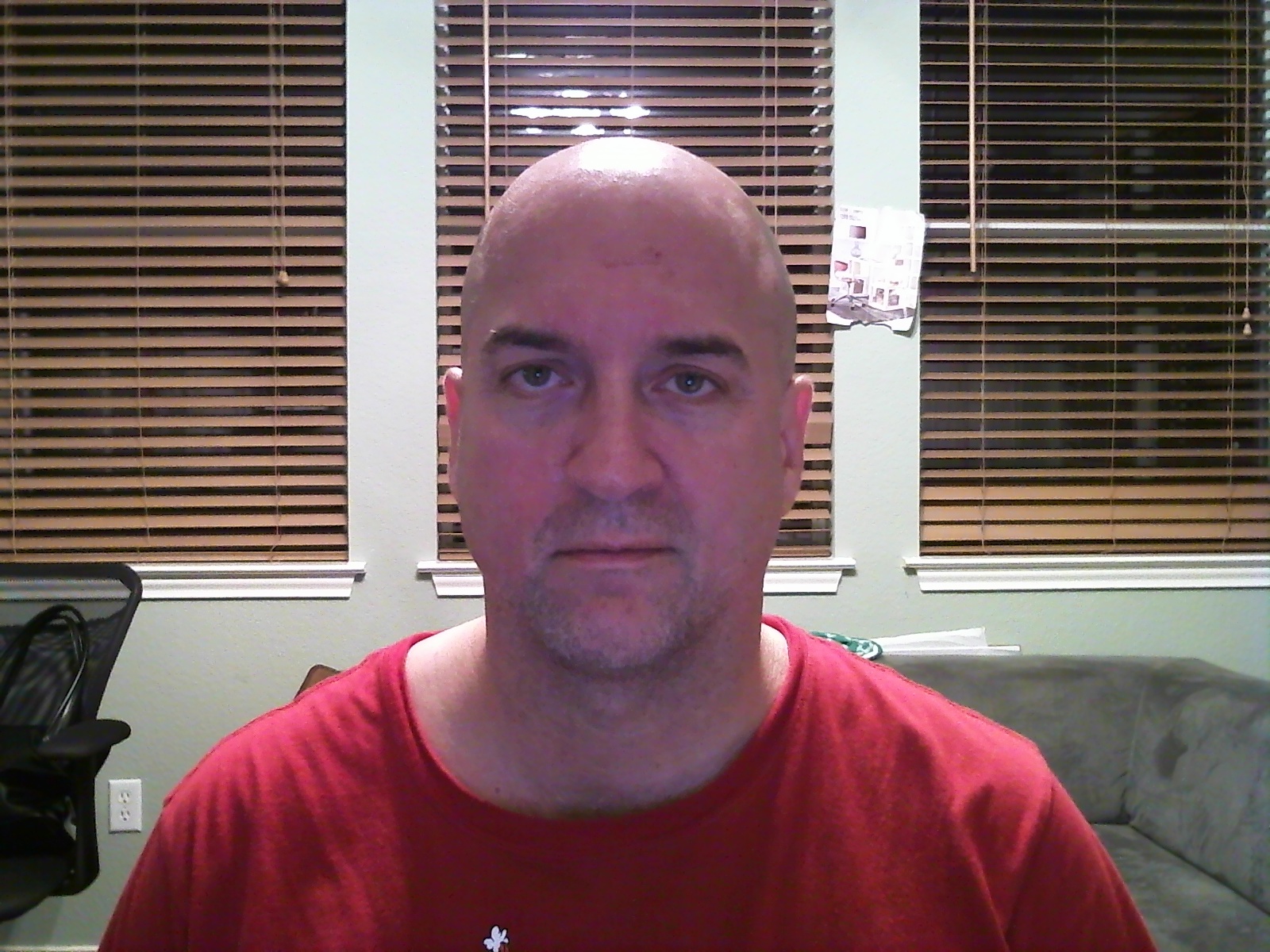
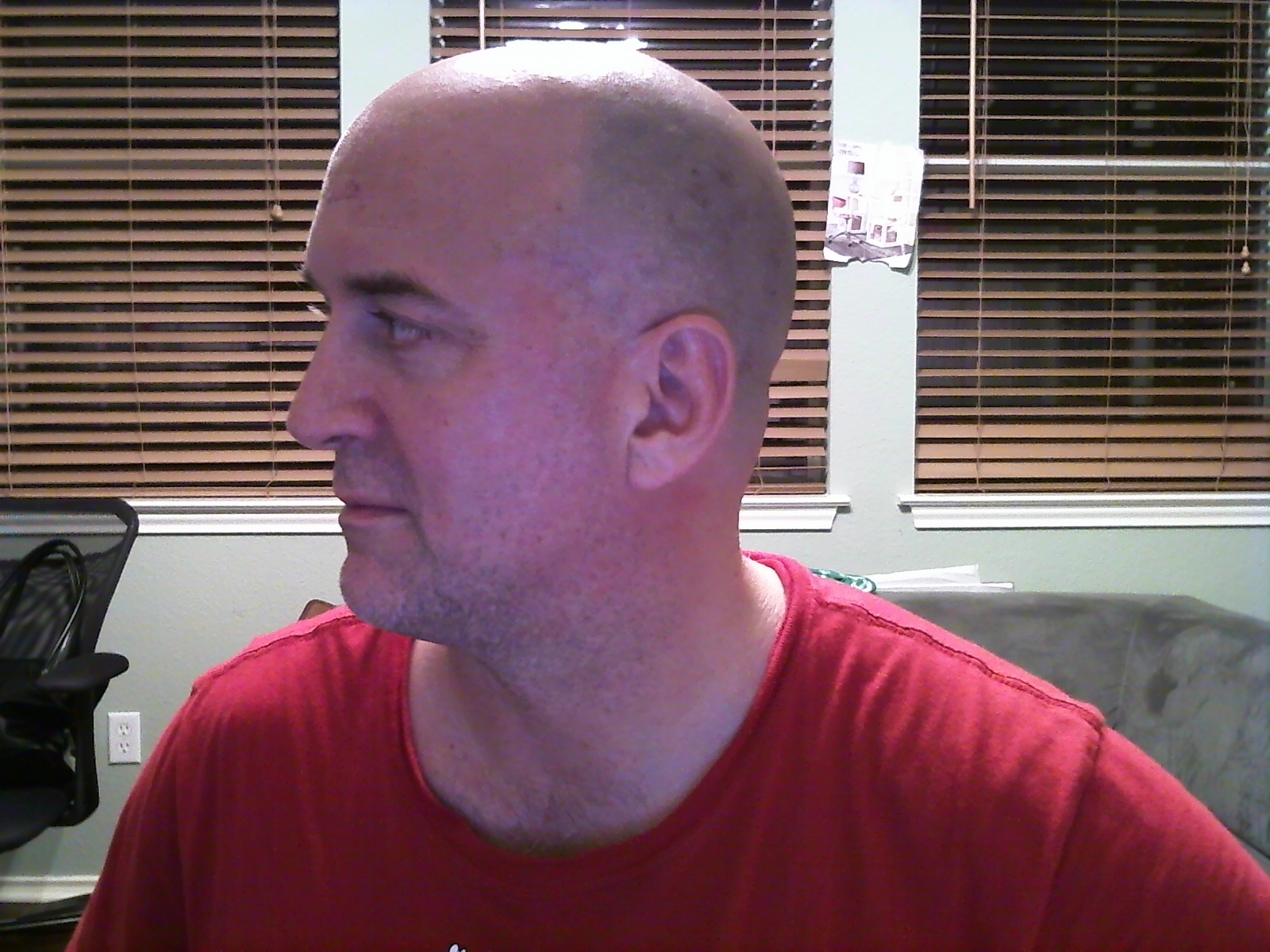
Last night I got out the clippers and, as I’ve done on a weekly basis for several months now, I buzzed my hair down to “zero,” which refers to the metal teeth of the clippers, without any attachment (they go from 1 to five, if I’m not mistaken).

But I didn’t stop there; I picked up the shaving soap, got the water hot and lathered up my scalp as best I could. Then I put a fresh blade on my razor and shaved off any remaining hair, as if I were preparing myself for brain surgery.

Last Tuesday, upon my return from New York, one of my first acts of personal care was to shave off my beard and “soul patch” under my lower lip. Now I’ve shaved my head, so that the only hair readily visible to my admiring public is my eyebrows and eyelashes.

Interestingly, there are no gray hairs left on my head or face. I’m thinking maybe that was what this shearing was all about. My official story is that this is my “summer cut,” and the truth is my head is a lot cooler now. (And it’s good to have a cool head.) Truth be told, I miss the hair I had as a younger man. I’m saddened by the realization that I can’t grow it anymore. So, I’ll keep it bald instead. The last time I had a baldie was right around the time Jackson was born, back in 2005 or so. I enjoyed it, but the maintenance got on my nerves. Shaving my face every couple of days is enough of a pain; the whole head was a tedium that got to me in the end. But I’ll try it again, at least for the summer, and see how it goes.

As a consolation, I think of a mind game that Susan Dreyer Leon taught me, and that I used to play with my students when they had the hiccups. “Close your eyes and think of three bald-headed men,” I’d say. (Personally, I always imagine Patrick Stewart, Michael Jordan and Kojak.) The idea is that while your mind is distracted, trying to pull up the images of three bald men, your breathing relaxes, and no more hiccups. Try it next time. It works . . . sometimes.

Anyway, I’m happy to know that I can now be part of the cure for hiccups.

Infestation!

If you’re someone whose skin crawls easily, you may want to look for another blog post to read. (Try Kami’s, or Taylor Mali’s or this one, that’s got lots of great paintings of buildings in New York City).

Those of you familiar with this blog, or with the story itself, will know that when I was living in New York, cockroaches were a staple. (I don’t mean of my diet; I tried my best to stay away from eating them, but who knows? They’re sneaky.)

What I mean is that they were a part of my everyday reality, just as they were for my eight million brethren there. You did your best to kill the pests, but sometimes you just had to learn to peacefully coexist. If you haven’t had much experience with cockroaches, you should at least be aware that they’re often appreciated for their toughness and resilience.

Sure, if you are quick enough to put your foot down on top of one or more of them, or if you wield a mean rolled-up newspaper, the roaches in question will be dead. But they learn from the death of their compatriots, and they find ways to avoid repeating their missteps. They develop immunity to sprays, and even eventually appear to “learn” not to check into hotels from which they cannot check out. The cliche is that they will be here on the planet AFTER the nuclear war has been lost and every human is dead, and honestly, I wouldn’t put it past the little buggers.

I haven’t seen one roach since moving to Texas. I’ve seen lots of beetles that look like they could be distant cousins, but no roaches. And I have seen water bugs. None of those super-fast, super creepy little buggers that scatter when the lights go on.

What we do have plenty of here, however, is ants. There are two kinds I deal with at home – there is the outdoor kind that make the big hills as they burrow, and they’re known as Fire Ants. Their bite hurts like the dickens. Then there are the indoor ones; I’m not certain, but I think they’re called Ghost Ants. They are tiny and numerous and walk in neat, militaristic single-file lines all over the house.

This morning – look away crawly-skinned – I pulled a packet of Pop Tarts out of the box. Before I returned the box to the pantry, I happened to look inside it, and thought I saw some movement on the bottom. (Yes, you know where this story is going, don’t you? So clever you are.) The bottom of the box was literally crawling. I poured water into it and flushed the ants down the drain in the kitchen sink. (Just a few minutes earlier I had noticed one crawling amongst my arm hairs while I was working out in my garage.)

It occurred to me, though a silly thought, for sure, that I should check each individual Pop Tart before putting them in my toaster, and wouldn’t you know it? There they were, crawling around on the glazed surface of my (now their) Pop Tart. Apparently, even though it looks like space-age Kevlar, the bags are actually only made of flimsy material, and each individual ant had made, and crawled through, tiny perforations in the foil.

Glad I caught it, before putting them in the toaster.

Sorry, however, not to have done it yesterday.

I could, I suppose, respond with dry heaves. Instead, I’ve decided to think of it like this: Ah, well: Some extra protein… and at no EXTRA CHARGE!

Texas Rocks

Last Thanksgiving, my family and I packed into the car and drove out to Fredericksburg, a quaint little town in the Hill Country, less than a hundred miles from Austin. We had decided it would be fun to spend the holiday there, eating at a restaurant and exploring. I had never been there before; none of us had. I’d only heard good things about it, as had Jeanette, so we figured, why not?

The boys were game for an adventure. They can count the times they’ve slept in beds other than their own on one hand, so the prospect of staying in a La Quinta overnight was an amazing one to them. I’ve had the “pleasure” . . . MANY times.

We all had a great time while there, eating traditional Thanksgiving dinner at one of the old restaurants on East Main Street, exploring the Navy Museum and even leaving the kids to do some holiday decorating at a crafts shop, so that Jeanette and I could run around on our own for a while, tasting wines and “living large,” as they say.

I’m not sure if it was a commentary on the trip or not, and I didn’t take the opportunity to ask him about it at the time, but our older son Diego doodled on the hotel stationery the words “Texas Rocks” over a rather abstract picture.

I saved the doodle and keep it pinned to my wall in my office at Region XIII. I like to think it is an expression of my son’s happiness, and it could be. It could also be a picture of some rocks from Texas, (duh), with that abstract picture being a drawing of some . . . yep . . . Texas rocks.

I may have tried to ask him to interpret the doodle since then, but he doesn’t even remember doing it. I’m wondering, looking at it now, if the artwork is an abstract attempt at the state of Texas, almost like a Joan Miro collage.

Of course, my son’s opinion of the state in which he has lived for three years now is important to me. He’s getting to the age where moves start to hurt a little bit more, so I ‘d like to believe he does like it here, and that that it does actually “rock” in his mind.

There are certainly many aspects of Texas that rock. The lack of cold weather is a plus (though last winter was a bit of an anomaly). Austin is a cool city with lots of great stuff for kids and adults to do, both together and separately, and it’s one of the few cities not in economic collapse, so that’s a plus.

The point is this: You want your children to be happy. Diego is not a person who normally wears his chipperness on his sleeve, let’s just say. You really have to earn his smiles. So I could, I suppose, try asking him about the doodle next time he comes to my office.

Or I could shrug my shoulders and move on with life, taking things day by day, and being thankful for the many blessings in my life. Rather than yearning for any time or place else, I think I’m going to make the effort to live in the moment and be thankful for it.

So yes, Diego, I agree: Texas Rocks.

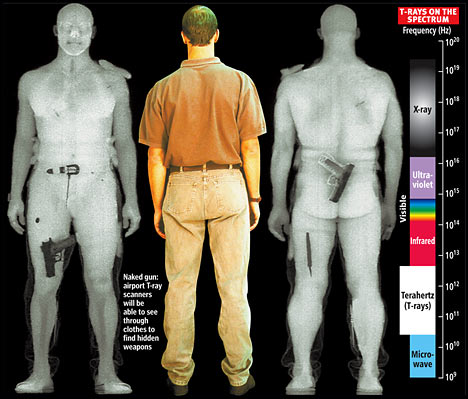
The Invisible Man Supports the TSA. . . . .

Yesterday morning at about 5:30 or so, I made my way through the TSA security post at JFK’s Terminal 7. At first, it felt like every other security line I’ve been in over the last couple of years, in Austin, Dallas, Lubbock, Tyler, Houston, Costa Rica, Spain, or wherever.

But then I saw it – the infamous Full-Body Scanner machine. I say “infamous” because there has been some controversy surrounding the use of this new technology, which, in a nutshell, creates a “nude” image of you as you stand in front of it, in order to check for concealed objects. Opponents argue that the “scanners are being used to perform routine, virtual strip searches without probable cause which…are illegal, unreasonable searches that violate basic human rights.”

In other words, they’re worried the TSA isn’t checking to see IF you’re packing, they’re back there, snickering and giggling, about WHAT you’re packing.

Personally, I believe it a class issue. I think the chiefly white, relatively well-to-do business travelers are embarrassed by the thought of being (ahem) “scrutinized” by mostly minority, working-class TSA workers

I think the image that most of us have of the average TEA agent is “Jackie” popularized, with some degree of hilarity, a few years back by Maya Rudolph on Saturday Night Live. She had long, Flatbush Avenue/Fordham Road fingernails, doorknocker earrings, a ridiculous weave, and a talent for making a passenger’s life miserable, if she felt like it. In a word, she had “attitude.”

I have not found this caricature very accurate in my travels. Generally, the agents I have dealt with – hundreds of them, most likely – have been highly professional, respectful and very good at their jobs. I never feel inconvenienced by them. If you do, think about how much more inconvenient a hijacking would be. Or a bomb.

It is for this simple reason I always say “thank you” after going through security. I appreciate being safe, and every role these people are filling to be sure that I am.