Remembering Hanno Fuchs (Dec. 23, 1928 – April 18, 2000)

As I back my way cautiously down the fold-out ladder from
the attic, my son Jackson stands below, imploring me to let him up so that he
can “help me.” Instead of getting into
the first argument of the day, I employ my acting training, convincing him that
what I’ve got in my hands is too difficult for me to handle. Without his help. He reaches up, and I hand the album down to
him.

“What’s this, Daddy?” my six-year-old asks, and I take the
opportunity to walk him through the photos with which I’ve populated this
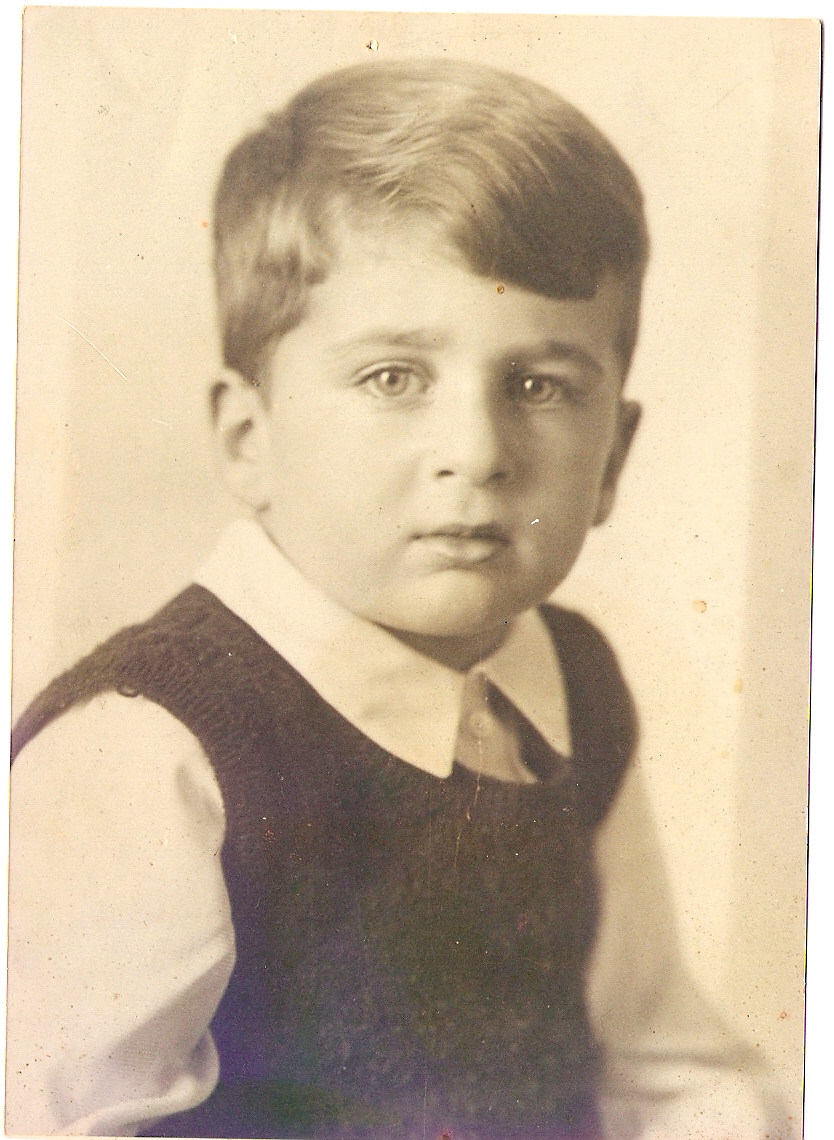
book. The first one is of my father as a
boy (pictured here) – probably not too much younger than Jackson is now. There are shots of him in the army, others
with me and my brothers and sister, one with our friends the Kasais on
vacation, and still more traveling in Europe.

“Today’s my father’s birthday,” I tell my son. He gets a puzzled look on his face, as he
tries to comprehend how someone could both be dead and have a birthday, as well.

But then he asks me a pretty sophisticated question (and
with the best grammar I’ve ever heard him use): “How old would your dad have been if he were alive?”

After making a big deal about his sentence structure, and
use of the subjunctive conditional, I tell him his grandfather would have
turned 83 today, which, to him, sounds, of course like the age of Methuselah or
Rip Van Winkle. We leaf through the
pages together, and Jackson is more tickled at seeing my various “looks” – long
hair, pony tail, full beards, goatees and such.

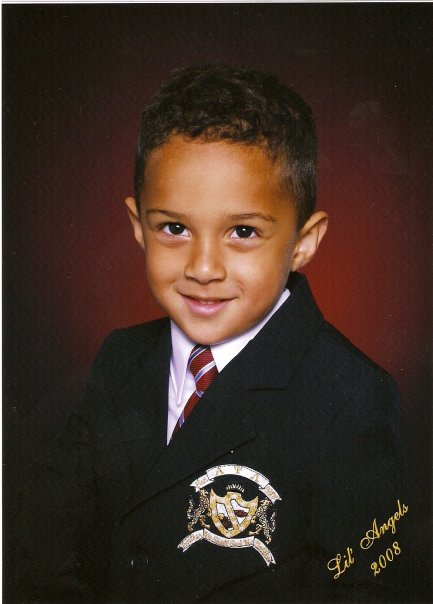
Finally, I place the childhood portrait of my dad next to
Jackson’s and ask him, “Do you think you and grandfather look alike?” He grins his sparkling Hannoesque grin, nods and says, “He’s looking one way, and I’m
looking the other.”

I have no real way of knowing what place my father holds, or
will hold, in the hearts of my two sons. This is the nature of loss; it is highly subjective. The departed lives on, so to speak, differently
in each of his survivors. For me, I see
my father’s face in the mirror more and more with each swiftly passing
year. For my wife, some of the photos
bring her back to a time and place where she can recall Hanno’s kind, paternal
embrace.

For my father’s siblings – an older brother and two younger
sisters – he’s someone else altogether. I’d imagine if he and his brother were anything like me and mine, there was
a period of rivalry and intense competition, followed by a peaceful and satisfying
acceptance of one another as friends. His sisters have both shared with me a deep admiration, described by
them as a form of hero worship that changed little over the course of their
time with him.

I don’t presume to know much more than this. My siblings and I have discussed his impact
on our lives from time to time. For my
own part, I can say that he validated me and my responses to the world around
me at every opportunity. He wasn’t
perfect; I know that now. But my father
was the person I need him to be – kind, understanding and forgiving.

As I’ve stated before, I believe the greatest gift my
parents gave me was the capacity to love. Yes, there are other things that are important in life, but none more
than this.

Happy 83rd, Dad. I miss you.
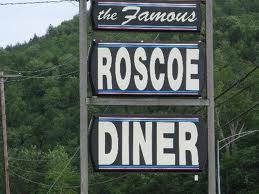
Stopping by Roscoe


I posted yesterday’s blog, and it caused quite a nostalgic
stir on FBDC, with some twenty comments, and they’re still coming in. It’s gratifying when I touch on something – a
common memory that gets people talking as they themselves remember.


As I mentioned, I left a few things out – details not fit
for Internet posting and all the eyes that might fall on the sordid details of
a respected school administrator’s misspent youth. There was another, very specific item I omitted
– not because of fear of self-incrimination but because I didn’t know quite
where to fit it into the piece. The
Roscoe Diner was on my mind the entire time I was composing my post, but in the
end I’d left this detail out as well. Frankly, in the format I’ve been working with, I couldn’t figure out
where the eatery should enter into the narrative. As my college roommate, Greg King mentioned,
Roscoe, New York was the unofficial midpoint between home and school.


Perhaps I should have put it right in the middle.


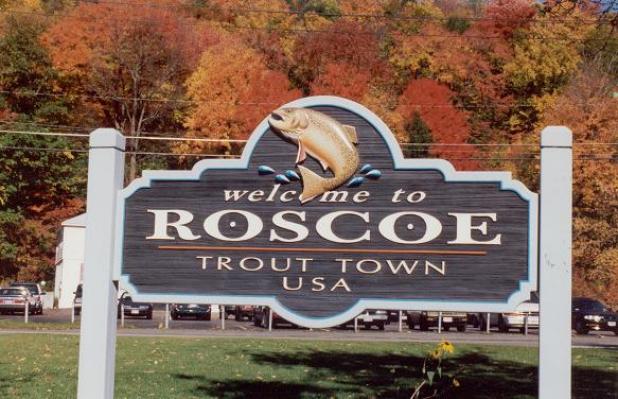
When I think of Roscoe and the diner, the first image that
comes to mind is of a sign depicting a thick, meaty trout breeching almost
joyfully, someone’s skillfully tied fly imbedded in its cheek. “Welcome to Roscoe. Trout Town, USA.”


I suppose I could Google it, but back then you wouldn’t
have, and I remember being skeptical about that sign. Did they determine the moniker of Trout Town
based on poundage? Did the town keep records of all the lunkers that had been
pulled in within its limits over the years?


Or maybe Roscoe had simple decided one day they would
proclaim themselves the capital, based solely on how happy the fish on their
welcome sign seemed to be about being hooked.


Other images, in addition to that welcome sign, include a
wide parking lot, which was always packed with cars sporting license plates
from all over, from Montreal down to Florida. Because of the time of year my friends and I normally traveled home from
school and back, the diner was often full of men in loud plaid vests and coats –
hunters taking advantage of the abundant deer population in the area. Deer carcasses could be seen strung onto the
hood of many a vehicle in that large parking lot. Some were big bucks with elaborate antlers,
reaching up to slate-gray winter skies, while others were more delicate looking
does who seemed more peaceful in their repose. I can recall seeing one carcass that must
have been recently dressed, as I could swear I saw steam rising from the body
cavity there in the parking lot.


These were glimpses into another life, one I read about in
the books I loved at the time – by Hemingway, Sherwood Anderson, Jack London, and
others. The images I took in at the
Roscoe Diner made their way into my own work, as well. In one of my short stories a boy is cornered
in a diner men’s room by a drunk man who is showing him a school photo of his
dead son, who the man says would have been about the same age as my
protagonist.


The story had its strengths, most notably in the description
of the place, but was ultimately highly derivative of Raymond Carver’s work,
probably to an embarrassing degree. But
I did get praise for its emotional honesty. And its setting. And I have the
Roscoe Diner to thank for that – a place as iconic and as real as any other I’ve
been to.


I don’t remember much about the food, except that it was
plentiful. And for a 19 year old young
man on a long winter drive home, sometimes in automobiles with no heat and
questionable safety standards, the portions were perfect. My friends and I devoured the large helpings,
fueling up for the couple of hundred miles to go before we slept.


Dedicated to Greg
King, the best roommate of them all.


Perilous Crossings: Memories of Driving in Winter


It was this time of year back when I was young, some 30 years ago to be exact, that I would make the long winter journeys between Syracuse University where I studied and Westchester, New York, where I lived. I made some of those excursions by train, which I’ve discussed in an earlier post.
There were occasions too, however, when I made the trip between Purchase and Syracuse, New York driving. My mom and/or dad would drive me up, or I’d go with a friend or two. These trips were generally “uneventful,” as they say, in that no one was ever injured, killed or arrested in connection with any of them. Believe me when I say, with no hint of irony or hyperbole that any of these three eventualities could easily have come to pass during my five years of being a student up in the frozen tundra. It’s not something I say proudly, or even lightly; in fact I’m humbled and more than a little ashamed when I think back to my recklessness behind the wheel during my early driving days.
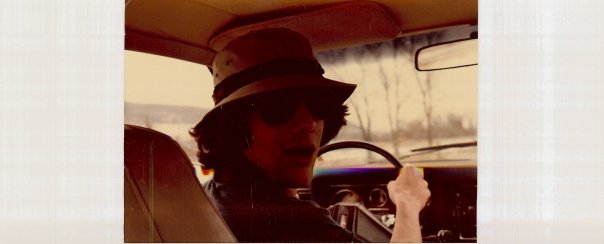
My friend Mignon Young (Hambrick back then) and I like to recall the time she, Pete Landau (pictured above in a photo by Mignon) and I drove home together in her aging Renault Fuego (as Mignon recently said, “I later determined that fuego was Italian for ‘biggest piece of shit on the road.’”). The car had no heat, and this was a five-hour trip in the snowy dead of winter. We
entertained ourselves in the freezing car by playing games like “Botticelli” and “the Movie Game.” The latter was of our own invention; one player names a movie title, the next has to name their own, starting with the final letter of the previous player’s movie title. It was a ridiculous, inane game, but one that made the minutes and hours pass more quickly somehow. Of course, the fact that we were young and had a joyous friendship helped too.
On that same stretch of road – Route 17 – I recall being stopped by troopers one year. There had
been a lot of snow and ice, so they were ushering cars over a particularly icy bridge one at a time. I was behind the wheel; my mother was in the passenger seat and my brother Mike was in back. The trooper looked at each of us and then, like the guy who straps you in to the roller coaster, he said, “Okay, man, just take it slow and keep those wheels straight and you should be fine.”
I nodded and, gripping the wheel, my forearms stiff as planks, tapped my toe lightly on the accelerator, then the brake, both of which felt suddenly unfamiliar, as if I were borrowing a friend’s car for the first time, instead of driving my mother’s LeBaron – the very automobile on which I’d learned to drive.
I’m not sure what happened next; I do recall the hundred yards or so of that bridge seeming much, much longer, and the moment when I silenced the unsolicited driving advice I was getting from my passengers, not by yelling but by evenly asking if either of them wanted to take over for
me. With the quiet I needed, I got us over that bridge and to our destination.
There are other stories I could tell on myself that involve that route, but I think I’ll wait until I’ve got less to lose. I like my job and my “place in my community” too much. Who knows? It might make for a good deathbed confession someday…….

The Exceptional Sleep Patterns of an Exceptional Family

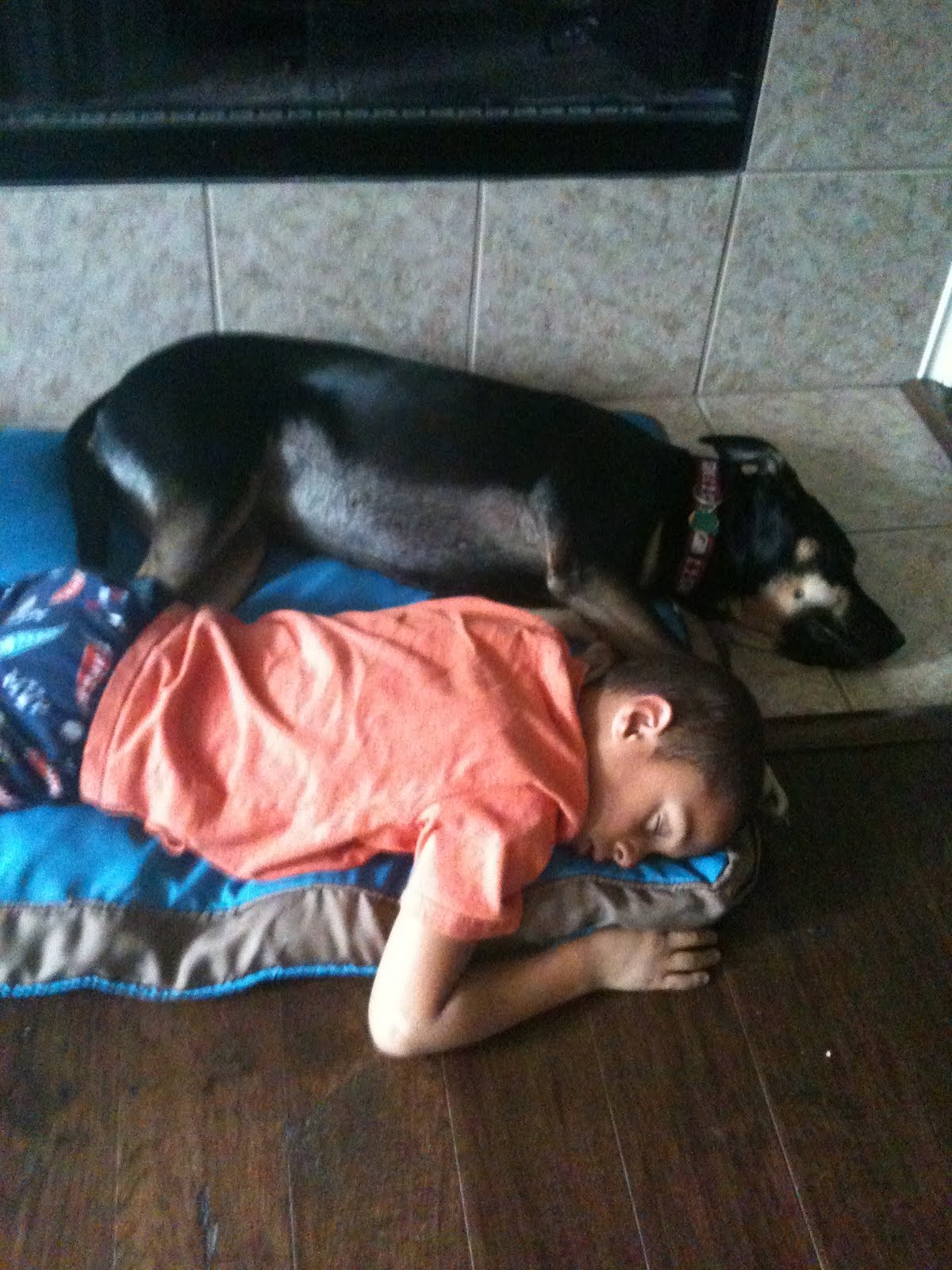
It’s before sunrise, and I’m the only one awake in our
house. The thermostat has just kicked in above my head, somewhere in the
attic. There’s a humming, the collisions
of once still molecules, as the water in my coffee pot begins to sputter and
boil in the kitchen.

I have that distinctly American (or is it distinctly male? Or distinctly American male?) satisfaction that comes with the knowledge that
your family is indoors, warm and safe, despite the chilly darkness just outside
the door. Everyone is present and
accounted for, even though it did get a bit confusing there for a while last
night. It would have been amusing to
watch time lapse photography of our movements. Jeanette was the only one who stayed in one
place.

We all started out – the four of us – snuggled up in the
king size master bed, watching the finale of the Next Iron Chef America. Diego was the first to give in to sleep, as
usual. I transported him over to his bed
without any problem. Jeanette fell out
shortly after learning that Geoffrey Zakarian would join the ICA Pantheon. “Should have been Faulkner,” she muttered. As I said, she stayed right where she was.

I then offered to lie down in our guest bed with Jackson
until he fell asleep. (He’d drifted off
for a power nap on the couch while his mother was preparing dinner and was now
energized as a result.) He liked that
idea, so I lay there with him for a time, both of us tossing and turning,
scratching and farting, until finally I informed him I would need to do the
dishes and that he could either stay where he was with the door open, or sleep
in his room, along with his brother, but with the door shut.

After briefly weighing the options, Jackson chose the guest
bed, knowing he could listen to me in the kitchen, which soothes him for some
odd reason. I did my bid in the kitchen,
watching the conclusion of the Ravens-Chargers game in the process.

When I was done, I went back to the guest room and checked
on Jackson who had succumbed, proving there is a God and that He is merciful.

I then went back to the sala
and lounged on my easy chair, where I watched a bit of Conan’s “Best-of”
special before dozing off.

I made my way into my own bed and went to sleep. At some point in what I can only refer to as “the
middle” of the night, I was aware of being crowded, and I could hear the not
unfamiliar sound of an extra set of miniature lungs breathing in my air.

Jackson.

Rather than move him, I chose to move myself. Back to the guest bed. Which was, of course, occupied by our dog
Ally, who will take any door left open by a sleepwalking child as her
opportunity. I shooed her away and sat
directly on Diego, who was also in the bed.
I then carried him to his bed (for the second time, mind you) before coming back and collapsing on the
guest bed one final time.

The Reason We Had Two

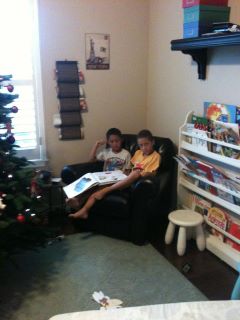
Yesterday morning I caught Diego and Jackson in a lovely, unguarded moment. They were seated together in my comfortable leather chair in the family room, with Diego’s “Snakes and Reptiles” book open over their laps.

“Look at this one, Jackson!” Diego said again and again, to which his younger brother replied, “Whoa!” or “Oooh!” or “Wow!”

It was a rare glimpse, and I did what I could to preserve the moment, snapping a few pictures on my phone, but not so conspicuously as to cause them to scatter like Brooklyn roaches. When they leafed upon a picture of a creature that looked particularly creepy, scary or interesting, Diego read aloud to Jackson, who sat there more transfixed and still than he ever is with me when I’m reading to him each night before sleep.

I cast no judgment or aspersion on anyone who has chosen to have only one child. Believe me. There are moments — regularly — when I envy them. Like my brother and me, and my father and uncle before us, Diego and Jackson fight almost constantly. Mutual combat is their preferred mode of expressing their love for one another.

It’s in these rare, peaceful moments, however, that I’m reminded of why we chose to have two. I can count on one hand the number of “lifelong” friends I have. My brother Mike is always first on that short list. It’s a comfort to know, as someone who won’t be around all that much longer (I’m speaking relatively, of course. No veiled “threat” intended.) that Jackson and Diego will have each other’s backs, so to speak.

They may not always see eye to eye on every issue; in fact, they may grow up to be two very different and divergent people. I have a feeling, though, that their friendship is being forged in the fire that is their childhood, and that the iron being cast will be strong indeed.

Oh and by the way: in case you’re wondering, Diego and Jackson have no new “friends” on the way. Nor will they. Ever. As a great man once said, I may be dumb, but I ain’t stupid.

Oy Christmas Tree

It was the Sunday after Thanksgiving, and there was a seasonal chill in the central Texas air. Conditions were perfect: it was time to purchase the annual tree.

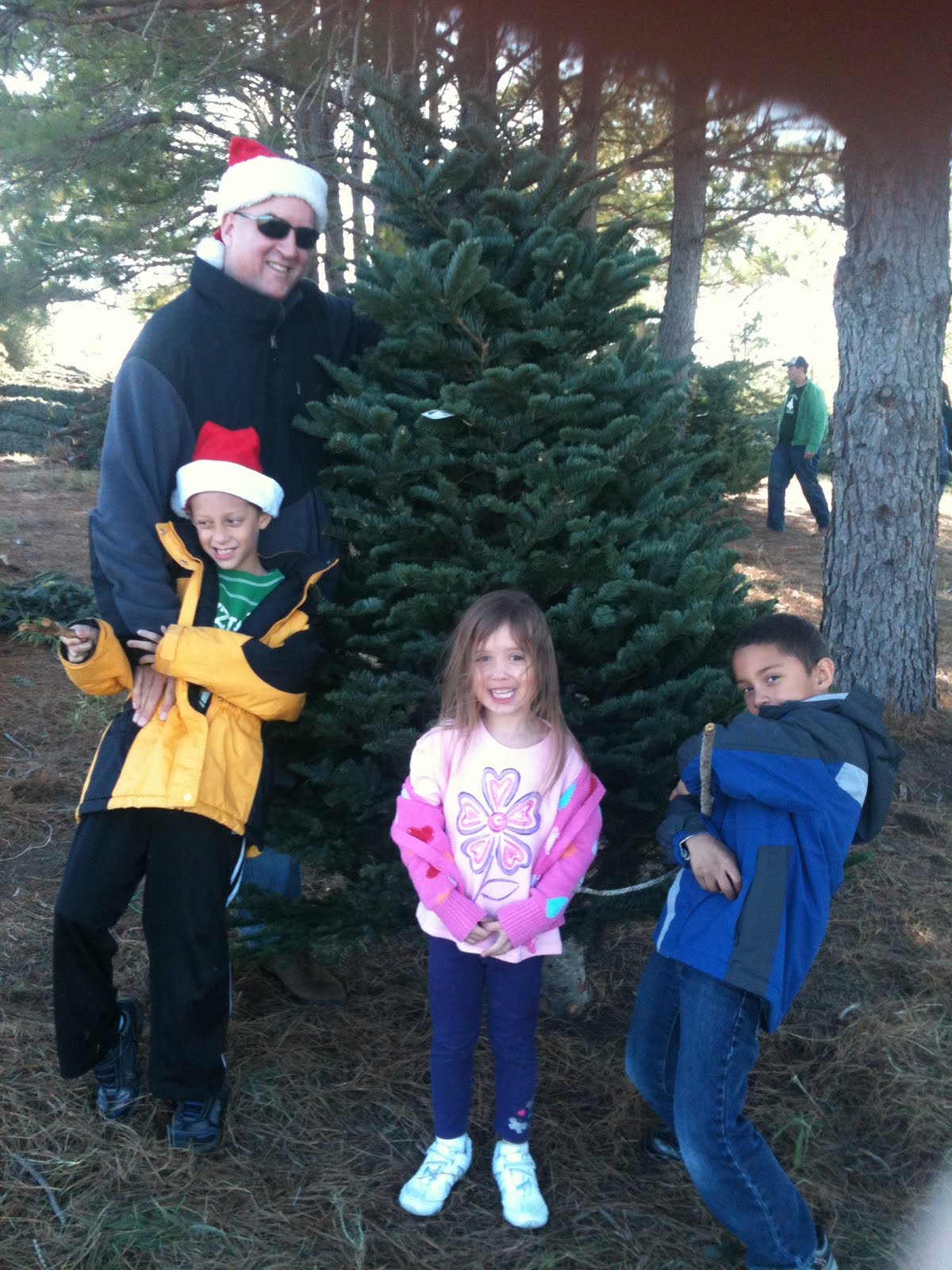
I packed the boys into the car, along with our friend Melissa, her son Statton, and Statton’s sister Hayden. The six of us made our way over to Evergreen Farms in Elgin, just a few miles east of us. (We had decided to divide and conquer, with J. going to Costco’s to do the week’s shopping. Plus, the four of us have been on top of each other for the past week. A break was needed by all.)

The farm was great fun, complete with a hay ride out to where you pick your tree, activities like face painting and marshmallow roasting for the other kids and a general sense of good, old-fashioned “Holiday Cheer.” ®™

After inexpertly tying the tree to the roof with twine and bungee cords, and after thanking God for keeping it fastened up there for the time it took to get it home, the children were eager to begin trimming the tree.

We got the Christmas music on the radio and set about decorating the tree. The kids are getting better at it every year, and I’ve learned to let go of the control and let them have it a bit. As a result, the finished product is perhaps a tad rough, but it’s an obvious collaboration, which is most important in my mind.

Of course the holidays (and particularly this one) are always evocative of the past, and how could this nostalgic navel gazer not watch his two sons squabble over ornament placement, without once more traveling back in time? It’s the late 1960’s and early 1970’s – when my father, an avid amateur gardener, had an idea. Instead of buying a cut Christmas tree, or one of the garish artificial varieties they sold at the five and dime, Hanno would purchase a small pine tree, complete with root ball, every year. At the conclusion of the holidays, he would dig a hole in the cold, hard soil and plant the sapling in his yard.

(As a side note: I know what the Jews who are reading this must be thinking: “Wait, wasn’t Hanno a refugee from Nazi Germany? What’s with all the goyische stuff about Christmas and trees?”

Well, Gayle, the way it was explained to me was this: There is a combination of factors at play here. On the one hand, the upper middle class Jews in Germany were often liberal agnostics who enjoyed the strong secular holiday of gift giving that was Weinachten.

The other, perhaps more understandable explanation or motive was that he married a Depression-baby Schikse from Little Rock, Arkansas who, although poor, came from a long tradition of Christmases past.

Either way, the result was some lovely holidays, which my brother and I loved and will never forget. In the photos, the trees sometimes look tiny – not touching the ceiling like the Noble fir we bought yesterday – but if you drive past the old house on Hartford Lane today, take note of the towering pines, some forty years later, part of my father’s legacy of the productive time he spent on this Earth.

A Thanksgiving Memory

Lately, my children have a fascination with all things British — I think it’s a result of watching “Flushed Away” over and over, or maybe meeting my friend Janet Gordon from London not too long ago. (“Daddy,” Diego whispered, as Janet charmed him and his brother in my living room last month, “she really speaks British.“)

One of my favorite Thanksgiving memories is from 1987, when my girlfriend and I were living with our college friend, Tim Knight, and a band of BUNAC (British University North America Club) American expats for about a month in a flat in the Kilburn section of London, where we were studying to become certified English teachers. We were a pretty clueless crew, incapable of simple tasks like cleaning the shower curtain, which was an impressive science experiment of mold-cultivation. We were a fun bunch, though, and we knew how to laugh it up on the regular.

London was gorgeous in that month or so I was living there — adorned with Christmas lights, which looked especially lovely in that historic city. On Thursday, November 27, the holiday season was in full swing, and outside our little group of expatriate misfits, the day was just another winter Thursday.

We, however, were aware that it was the last Thursday of the month, and we felt compelled to make something of the day. Between the 10 to 12 of us, we managed to throw a turkey in the oven and have it come out pretty well. There may have been some imbibing going on that day, as well, so we didn’t stand on ceremony, as far as the table setting was concerned. In fact, I don’t remember any plates at all.

We were a dozen young, unkempt and carefree Americans living in an Irish neighborhood in London, drunkenly devouring turkey with the trimmings. It was a unique moment, a moment verging on perfection, a moment steeped in the joyful ether of youth.

It’s a moment I won’t forget.

Having Something Left

It wasn’t until I pulled my car out of the parking lot that I finally exhaled. That was the kind of day it was at Cedar Ridge High School.

After a good early-morning meeting with my old boss, who now serves as our external coach, I found myself in Z.J.’s annual Admission, Review, and Dismissal (ARD) meeting. Z is a complicated young man with a host of issues, and he’s also the first student to latch onto me the way students sometimes do. The meeting was going well, until Z and Dad got into a disturbing verbal confrontation that included Z’s father claiming Z’s grandparents feared him. I don’t doubt that this is true, as Z can be unpredictably explosive, but those words — “They’re afraid of you, Z” — were like five daggers; I could almost hear them piercing the boy’s heart. As often happens with Z, he began crying, and the meeting was adjourned, to be continued at a later date.

The day snowballed from there. Two Downs Syndrome students got into a physical fight in the Life Skills classroom, a girl was stumbling drunk, I busted a kid for smoking in the bathroom, and a colleague was physically threatened by a student.

In addition, I had to fit in two classroom walkthroughs, participate in a learning walk with our coaches and discipline several other students.

I suppose the good news is that the world kept turning and all of us survived — albeit wearily — to see another day.

The most important test I passed came after all of this was over, after the aforementioned exhalation. When I picked up the children, Jackson was beside himself, inconsolable that we’d moved him into the ACE after-school program, without informing him he’d be leaving LEAP. I inhaled again, and the breath stuck in my chest. There was a clearly defined moment when time stopped, I stepped out of my body, and made a decision. It was when I walked around to Jackson’s side of the car to help him into his seat.

The burning anger, the wish to lash out made its way toward the surface, and before reaching for the door handle and yanking it open, as (I’m sorry to say) I’ve done before, I imagined the day’s troubles rolling off me like raindrops off a newly painted automobile.

(Breathe out.)

“Jackson?” I said in a calm, measured tone that made him stop and look into my eyes. “Would you feel better about ACE if we went to look for some vampire teeth?” (He’s been asking for them since Halloween.)

“Yes,” he said, smiling through watery eyes. “And Daddy?”

“Yes, Jackson?”

“I’ll give ACE a chance.”

The three of us went on to have a pleasant, fun evening together, which helped remind me that there’s much more to my life than ZJ’s tears or kids getting tickets for smoking in bathrooms, or sitting with a crying boy who can’t understand why he’d been hit in the temple by a bully. That simple choice to let out that deep breath and give my son the love he needs fortified me, built me back up and made it possible to come into work this morning with a smile on my face.

(And ending my evening last night with a shot of Cuervo and a cold Lone Star chaser didn’t hurt either….)

Thank You, Satellite Academy High School

It’s not unusual to hear graduates or alumni of an educational institution talk about how much of an impact their school made on them. In my own case, I’ve written recently about my good memories of Harrison High, many brought back by my trip home last month for the HHS 30th reunion.

Less often does one hear from a former teacher about the benefits of having been a part of a school’s faculty. I’ve been an ardent proponent of Satellite Academy High School, where I worked from 1992 to 2005, for about as long as I’ve known about the place. Designed with the disaffected student in mind, Satellite is a place that builds students back up who have been worn down by the relentless tides of impersonal, traditional schooling. Satellite puts the student squarely at the center of the educational equation — not in a babying way but in a fashion that affords respect and autonomy while simultaneously insisting on accountability. Students are amazed at first, then thrilled and humbled by how different Satellite feels, in contrast to their “old” schools.

As the adults in charge of such a place it was imperative that we lived the dream, so to speak; we had no choice but to model the values of the place, if it was to work the way it was meant to. For most of us working at Satellite was a rare example of being allowed to live out the idealism of what had brought us to teaching in the first place. Occasionally a teacher would wow us at the interview table and then end up being outside our fold, someone who insisted they taught subject as an expert, and either the students got it or they didn’t. Their humanity (or “humaneness”) never entered into how they thought about teaching and learning.

Those teachers didn’t last too long. Usually the place made them into True Believers eventually. Sometimes, though, they tendered their resignations, stating the school was a “bad fit.” And they were right, and thank God they were honest.

Now, in my middle-aged administrator phase, I occasionally receive praise for my “unusual” leadership style. I’ve learned to ask people to elaborate when giving me any kind of feedback, even praise — not because I like the tolling of my own bell, but because I can replicate what I know works only if I know what it is.

Most people have trouble putting it into words. Some call it kindness, and others say I make them feel like professionals. Generally, they say I do things “a little differently.”

This should come as no surprise to me, as I “grew up,” essentially, in a small, different high school called Satellite Academy, where kindness, respect and a sense of humor went a long, long way. I want to bring a “small school mentality” to my gigantic, 3,000-student school where I currently work, and I think I am doing it so far.